Holy Week in Gran Canaria brings together religious tradition, local life and time outdoors at one of the most pleasant times of year to visit the island. Processions still play an important role in municipalities such as Las Palmas de Gran Canaria, Santa María de Guía and Telde, although these days also lend themselves to walks through historic quarters, concerts, museum visits and time on the coast.
If you are thinking of travelling to Gran Canaria for Holy Week, the island offers a well-balanced mix of long-standing celebrations, heritage, gastronomy, beaches and mild temperatures. In this guide, we look at some of the places where Holy Week has a stronger local presence, along with several ideas you can add to your break.
Why spend Holy Week in Gran Canaria?
Spending Holy Week in Gran Canaria is a good way to bring rest, culture and tradition into the same trip. During these days, different towns across the island hold processions and religious events that form part of their cultural calendar, with Las Palmas de Gran Canaria taking a particularly prominent role.
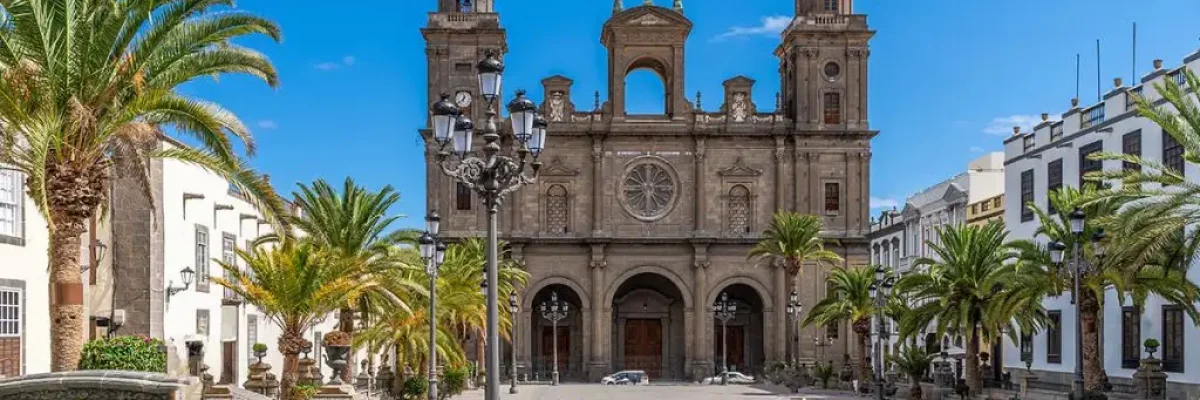
The capital preserves one of the island’s most established Holy Week traditions. Its processions pass through historic neighbourhoods and places closely linked to the city’s religious and cultural life, especially in areas such as Vegueta, Triana and San Telmo. For this reason, Holy Week in Las Palmas de Gran Canaria is one of the main draws for visitors who want to discover this part of the island’s calendar.
You can also check the Easter offers in Gran Canaria if you would like to organise a break around these dates. Choosing the right area to stay in will help you combine processions, cultural visits, walks by the sea and time to unwind without relying on long journeys.
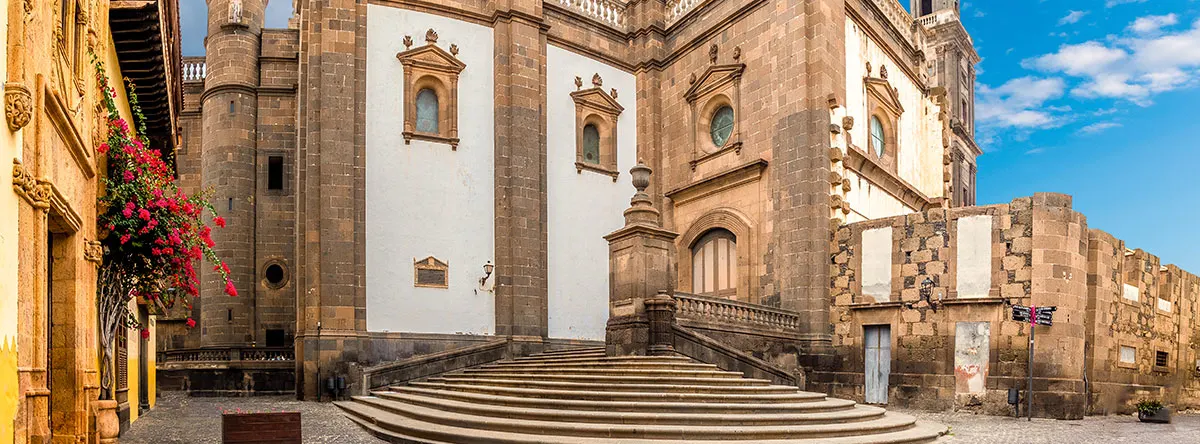
Three places to experience Holy Week in Gran Canaria
Religious celebrations form part of the cultural calendar in several municipalities across the island. Although events take place in different towns, Las Palmas de Gran Canaria, Santa María de Guía and Telde are home to some of the most representative Holy Week celebrations in Gran Canaria.
Las Palmas de Gran Canaria
Las Palmas de Gran Canaria is one of the main places to discover the island’s religious tradition. On Palm Sunday, the La Burrita procession takes place, leaving from the parish church of San Telmo and continuing to the church of Santo Domingo in Vegueta.
On Holy Wednesday, the Santa María de los Dolores de Triana procession is held, departing from the parish church of San Telmo and following a route to the church of San Antonio de Padua. On this day, many worshippers accompany the procession and take part in a celebration closely tied to the city’s religious life.
On Good Friday, the Las Mantillas procession is one of the capital’s best-known events. Women dressed in the traditional Canarian mantilla accompany Christ, while other participants wearing black veils follow the Virgen Dolorosa. These processions form part of Holy Week culture in Las Palmas de Gran Canaria and reflect the connection between heritage, tradition and local life.
Santa María de Guía
In Santa María de Guía, Holy Week also holds an important place in local life. On Palm Sunday, the blessing of the olive branches takes place, followed by the La Burrita procession, which leaves from the hermitage of San Roque and ends at the church of Santa María de Guía.
On Holy Monday and Holy Tuesday, the traditional Stations of the Cross are held. On Holy Wednesday, the Procesión del Encuentro takes place, a representation of the Passion of Christ involving different characters and local residents.
On Holy Saturday, the Procesión del Resucitado is held, following a route through the streets around the main church of Santa María de Guía. It is a way to experience Holy Week in Gran Canaria in a more local setting, through events that keep a close link with the municipality’s traditions.
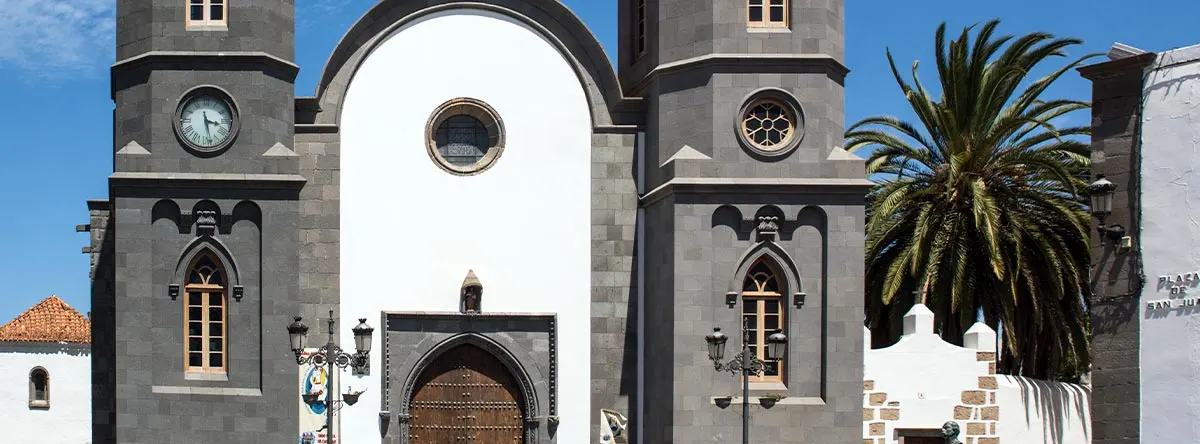
Telde
Telde is another municipality where you can get a closer look at Holy Week celebrations. The Basilica of San Juan Bautista is at the centre of much of the religious calendar, with processions taking to the streets after the liturgical celebrations.
On Good Friday, several processions are held in connection with the crucifixion and death of Jesus. The most notable religious figures include El Señor Predicador, the Santísimo Cristo con la Cruz a cuestas and the Santísimo Cristo de la Agonía.
At the end of Holy Week, the rosary is said with the Sorrowful Mysteries and the Procesión del Retiro takes place, with the figures of San Juan Evangelista and Nuestra Señora de la Soledad de Telde. This programme makes the municipality another interesting stop if you want to see how these dates are marked in different parts of the island.
Things to do during Holy Week in Gran Canaria
Holy Week is not limited to processions. If you organise a trip to the Canary Islands at Easter, you can combine religious celebrations with music, cultural visits, city walks and time by the sea.
Concerts and Holy Week music
During Holy Week, Las Palmas de Gran Canaria usually has a music programme linked to these dates. Classical music lovers can find concerts and events in cultural venues such as the Alfredo Kraus Auditorium or the Pérez Galdós Theatre.
This type of plan works well if you want to add a cultural element to the more traditional side of the trip. After attending a procession or exploring the historic quarter, a concert can be a peaceful way to end the day in the capital.
Museums and the historic quarter of Las Palmas
The capital also gives you the chance to spend part of your break in its museums and historic neighbourhoods. Vegueta and Triana are two easy areas to explore on foot, with landmark buildings, cultural spaces and local gastronomy close at hand.
During Holy Week in Las Palmas de Gran Canaria, these routes help place many of the processions in context. The streets, churches, squares and historic façades form part of the atmosphere of these dates and add depth to the visit.
Coastal walks and beaches in Gran Canaria
Gran Canaria also makes it easy to alternate tradition with time to relax by the sea. If the weather is good, you can set aside part of the trip for a coastal walk, a few hours on the beach or a meal overlooking the Atlantic.
This contrast is one of the attractions of travelling to Gran Canaria at Easter. In the same break, you can attend a procession in the morning, explore a historic quarter in the afternoon and end the day close to the sea. The island gives you plenty of scope to combine different activities without building the whole trip around a single plan.
Where to stay during Holy Week in Gran Canaria
Choosing the right accommodation makes it much easier to organise a break around these dates. If you want to attend processions, visit historic municipalities and keep some time free to rest, a well-located hotel will help you reduce travel times and make the most of each day.
If you are looking for accommodation in Gran Canaria that allows you to combine culture, coast and relaxation, prioritise the location offered by Lopesan Hotel Group so you can travel easily between Las Palmas de Gran Canaria, Santa María de Guía, Telde and other places of interest.
Gran Canaria offers an easy mix for this type of trip: religious tradition, cultural spaces, beaches, gastronomy and hotel areas well suited to a spring break. Checking dates, availability and services before booking will help you organise your days on the island more easily.