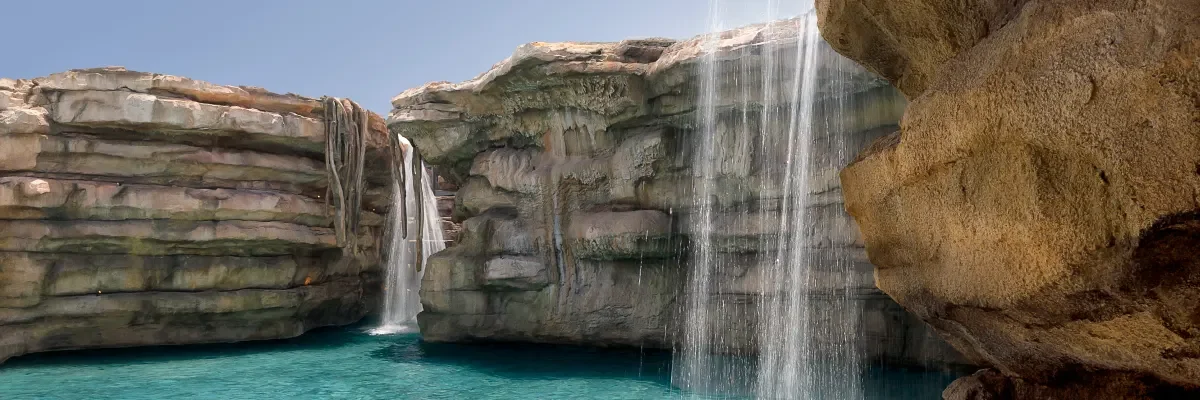
Water is an essential part of any vacation in Punta Cana. Along with its beaches, the destination is home to caves, natural lagoons and cenotes that reveal a lesser-known side of the Caribbean landscape. Beneath the limestone terrain, water has flowed for thousands of years, gradually shaping underground chambers and passageways.
The appeal of Punta Cana’s cenotes has also influenced resort design. Some hotels feature artificial cenotes, lagoon-style pools and swimming areas surrounded by tropical vegetation, bringing the connection between water, rock and the tropical landscape into the resort itself. This article explains how cenotes form and how their appearance has inspired the design of certain hotels in Punta Cana.
Punta Cana’s underground landscape
Beneath Punta Cana’s coastal scenery lies a network of cavities, cracks and channels through which water flows. This underground system is linked to the geology of the eastern Dominican Republic, where limestone formed from ancient marine sediments is especially common.
Rainwater seeps through the porous ground and reaches the aquifer. It then travels through fractures in the rock, gradually widening them and creating caves, passageways and depressions typical of karst landscapes.
The nearby ocean adds another distinctive feature. Fresh water occupies the upper layers of the aquifer, while denser salt water moves beneath it. Cenotes are visible openings into this complex underground landscape, which may extend far beyond the area seen at the surface.
How a cenote forms
A cenote begins to form when rainwater filters through limestone terrain. As the water passes through the soil, it becomes slightly acidic and slowly dissolves the calcium carbonate in the rock. Small fractures widen over time and eventually develop into underground channels, passageways and chambers.
As the cavity grows, its ceiling becomes less stable. A partial or complete collapse creates an opening to the surface and exposes the water in the aquifer below. The extent of the collapse determines the cenote’s appearance. Open cenotes have lost much of their rock ceiling, semi-open cenotes retain some covered areas and underground cenotes remain inside caves with narrower entrances.
What can be seen at the surface is only one part of a system that may stretch much farther beneath the ground.
Why cenotes are so fascinating
Cenotes reveal spaces that normally remain hidden beneath the landscape. Their depth, rock walls, vegetation and filtered light create an environment unlike an open beach or swimming pool. In semi-open and underground cenotes, the temperature, humidity and acoustics also change.
The color of the water adds to their appeal. Depth, water composition, low levels of suspended particles and the angle of the light all affect the shades of blue, turquoise and green. Their appearance may shift throughout the day as the sunlight changes and shadows move across the rock and vegetation.
Swimming in a cenote also changes the way you experience the surroundings. The nearby walls and the depth of the water make the geological structure of the space much more noticeable. This combination of water, rock, vegetation and light explains why cenotes are so captivating and why they have inspired certain resort designs.
From Punta Cana’s natural cenotes to resort design
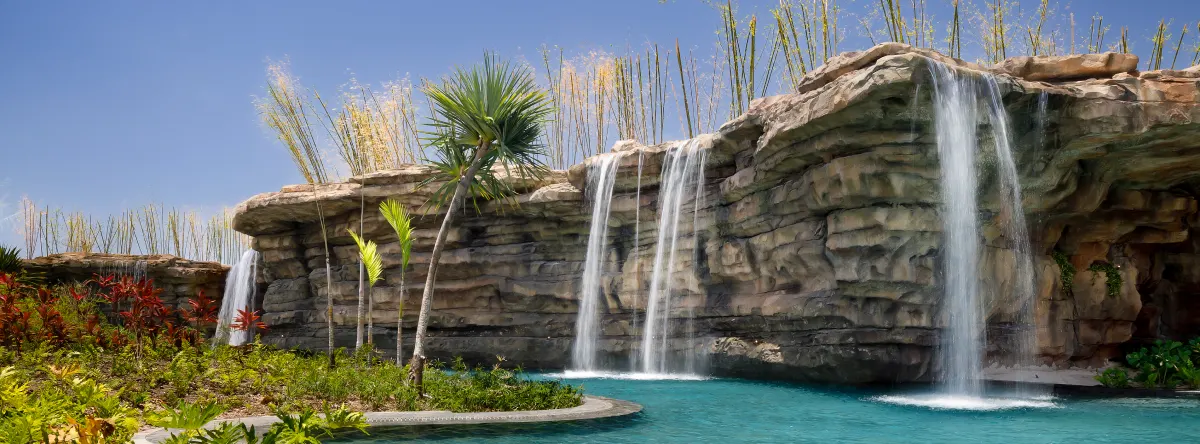
The visual appeal of cenotes has inspired resort architecture in Punta Cana. Some hotels include artificial cenotes, lagoon-style pools and swimming areas inspired by the shapes of karst landscapes. The aim is to recreate the relationship between water, rock, vegetation and light within the hotel grounds.
Designers use stone-textured walls, waterfalls, changes in elevation and abundant tropical landscaping. Shaded areas and more enclosed spaces recall natural caverns, while shifting light changes the appearance of the water throughout the day.
These features become part of the overall landscaping and connect the swimming areas with gardens, guestrooms and the paths that run through the resort.
The pool is no longer treated as a separate feature. Instead, water helps organize much of the outdoor layout. It appears along resort walkways, in views from different areas and in spaces designed for relaxation.
The result combines the safety and services of a hotel pool with a setting inspired by the visual depth and atmosphere of natural cenotes.
What cenote-inspired design adds to a resort
A cenote creates a more layered swimming environment than a standard open pool. It helps shape the outdoor layout, creates more secluded areas and provides a gradual transition between the architecture, gardens and swimming spaces.
This approach is particularly well suited to large resorts in Punta Cana. These properties spread guestrooms, restaurants, pools and common areas across extensive grounds. Water can connect those spaces and create visual landmarks as guests move through the resort.
The appeal lies in the way cenote-inspired design brings together shade, rock, vegetation and moving water. A conventional pool is generally more open and direct, while a cenote-style space feels more immersive because of its depth, volume and sound.
Hotels use this type of design to integrate swimming areas more naturally into the resort landscape.
Staying at a hotel with cenotes
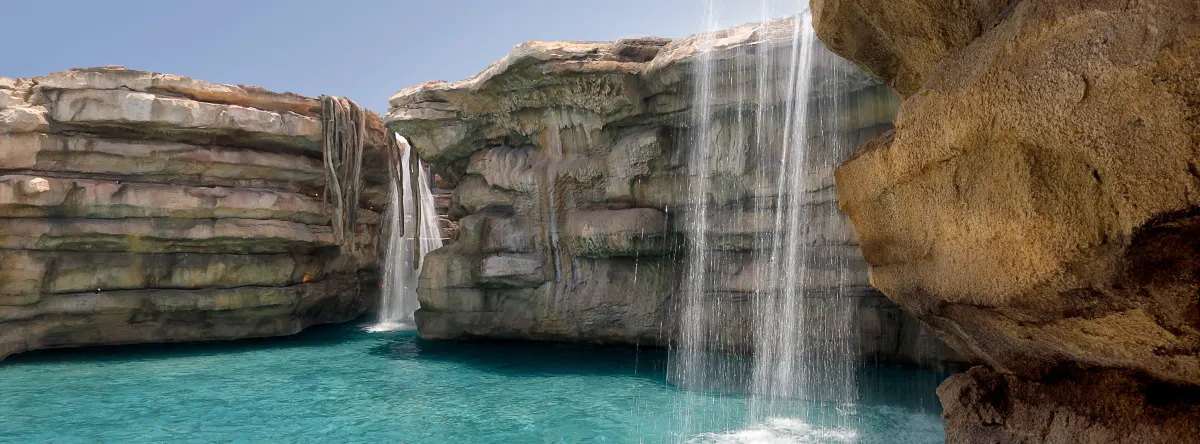
Lopesan Caoba Lagoon Resort, Spa & Casino offers a five-star all-inclusive experience for guests of all ages. The resort has eight pools, including a main lagoon-style pool, three cenotes with waterfalls, a beach club with a pool, a wave pool and two water parks.
Swimming among lagoons, pools and waterfall cenotes
The resort’s aquatic areas are spread across several swimming spaces. The main lagoon-style pool is one of the property’s central features, while the three cenotes with waterfalls reinforce the connection to cenote imagery.
The resort also includes a beach club with a pool, a wave pool and two water parks. This variety gives adults and families with children several ways to spend the day by the water without leaving the property.
Guestrooms and swim-up areas by the water
The guestrooms also have a close connection to the resort’s outdoor spaces. Lopesan Caoba Lagoon has 554 rooms in several categories, all with spacious balconies or terraces.
Some rooms overlook the tropical gardens, others face the water park and selected categories offer direct access from the terrace to a semi-private pool.
Swim-up rooms bring the pool directly to the guest’s private terrace, extending the water-focused experience beyond the resort’s shared swimming areas.
Places to relax by the water
The Beach Club & Pool Club, 10 bars and the resort’s dining options complete the experience. The hotel has eight restaurants, including seven themed restaurants and an international buffet.
Its location on Bávaro Beach adds the beach setting to a resort where water structures much of the guest experience.