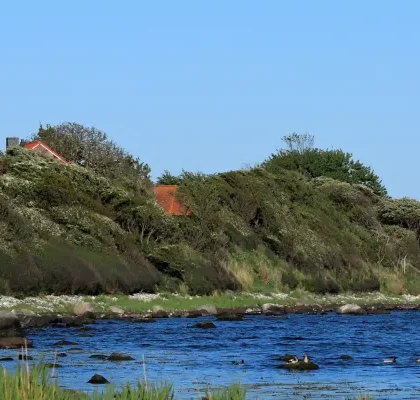
Palm trees lining the shore are one of Punta Cana’s most familiar sights, but the vegetation in this part of the Dominican Republic is far more diverse. Beyond the beaches, a remarkable variety of plants thrives in the tropical climate, each adapted to the area’s distinctive growing conditions.
Punta Cana’s flora includes plants from a range of origins. Some are native to Hispaniola, while others are endemic, meaning they occur naturally only within a particular geographic area. Alongside them are species introduced from other regions, many of which now grow as ornamentals in gardens and developed areas.
This guide explores some of the most characteristic plants and flowers you may encounter in Punta Cana and the eastern Dominican Republic.
What is the vegetation like in Punta Cana?
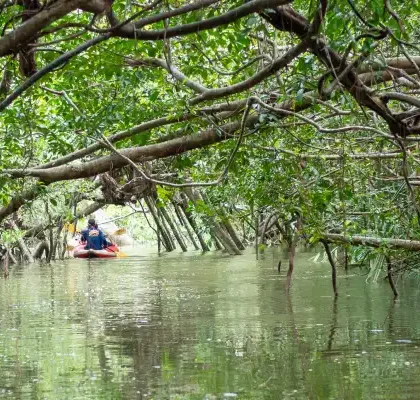
Punta Cana’s tropical climate and proximity to the sea have a strong influence on its vegetation. Along the coast, plants have adapted to sandy soils and salt exposure. In wetlands and mangrove forests, species thrive in waterlogged ground and areas where moisture is abundant.
Forests also grow on limestone terrain. Much of the Dominican Republic’s eastern coastal plain rests on highly permeable coral limestone, and some of its vegetation is adapted to periods when water is scarce.
These varied habitats support an impressive range of plant life. One example is the Indigenous Eyes Ecological Park, where a tropical forest shelters more than 500 plant species and twelve freshwater lagoons.
Native plants you may encounter in Punta Cana
Punta Cana is home to numerous species native to the Dominican Republic. Some grow in forests and natural habitats, while others are also used in reforestation projects, gardens, and urban landscapes.
Here are some of the most distinctive.
West Indian Mahogany
West Indian mahogany (Swietenia mahagoni) holds a special place in Dominican plant life. Native to the Dominican Republic and other parts of the Caribbean, it has also been documented in the Bávaro–Punta Cana area.
Its straight trunk and valuable timber made it a target of intensive logging for centuries. Today, the species is protected, and in 2011, West Indian mahogany was officially designated the national tree of the Dominican Republic.
Lignum Vitae
Lignum vitae (Guaiacum officinale) is another tree found in the natural landscapes of eastern Dominican Republic. It grows slowly, produces exceptionally hard wood, and is especially recognizable when its blue or violet flowers are in bloom.
The tree is well adapted to relatively dry environments and limestone soils, both common in parts of the eastern region. Declining wild populations have led to its inclusion in conservation and reforestation programs.
Gumbo-Limbo
Gumbo-limbo (Bursera simaruba) is native to the tropical Americas and grows in a variety of Caribbean ecosystems, including those found in Punta Cana.
One of its most distinctive features is its reddish or copper-colored bark, which peels away in thin layers. The tree is also well suited to periods of dry weather.
Sea Grape
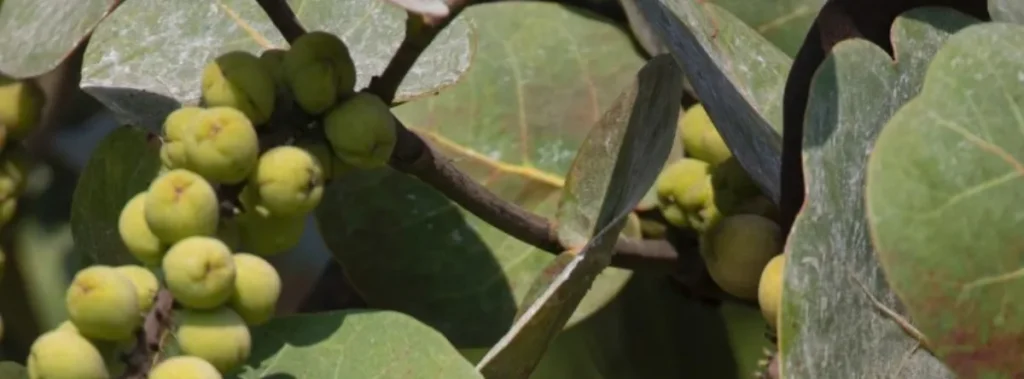
Sea grape (Coccoloba uvifera) is a familiar sight along Caribbean coastlines. It grows close to the shore, where it withstands strong winds, sandy soils, and salty conditions.
Its large, rounded leaves and clusters of grape-like fruit give the plant its common name. In the Dominican Republic, sea grape is part of the natural coastal vegetation, helping stabilize sand and protect the shoreline against erosion.
Thatch Palms
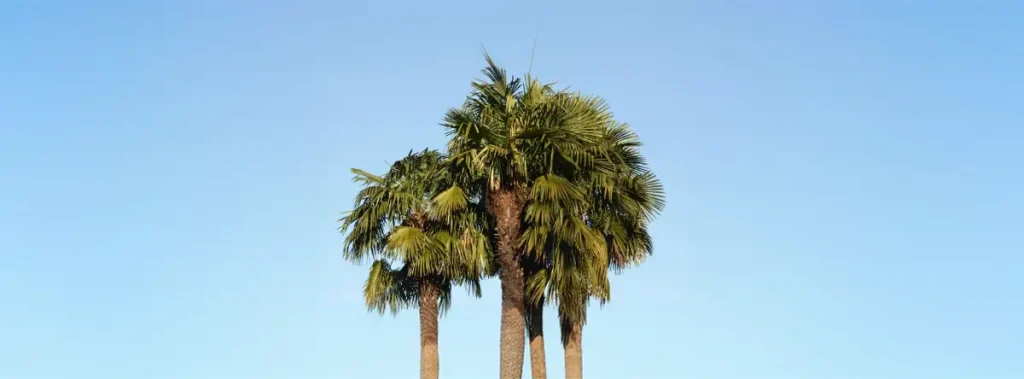
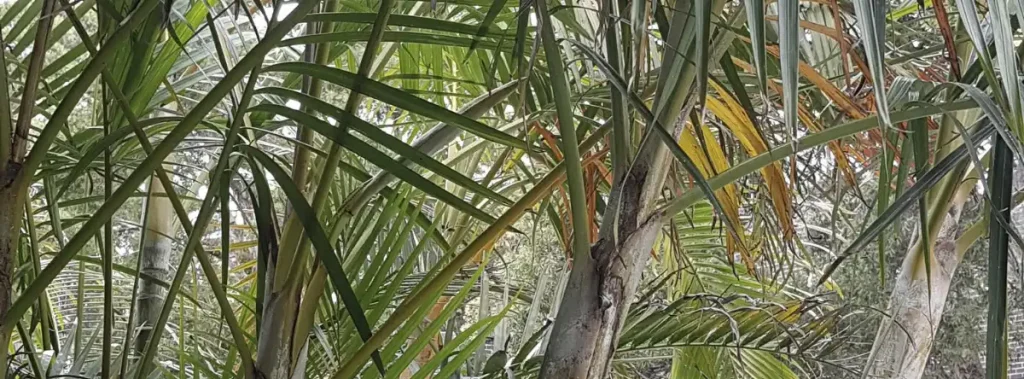
Several palm species grow in Punta Cana, including those locally known as guano palms. Identifying individual species within the genus Coccothrinax requires care, as their taxonomic classification has changed over time.
Their fan-shaped leaves make them easy to distinguish from coconut palms.
Royal Palm
The royal palm (Roystonea borinquena), also identified as Roystonea hispaniolana in earlier sources, is another species documented in Punta Cana. Its tall, smooth trunk is crowned with long, sweeping fronds, distinguishing it from palms with fan-shaped leaves.
Royal palms also provide food and shelter for various animals, including the palmchat, the national bird of the Dominican Republic.
Flowers of Punta Cana and the Eastern Dominican Republic
Beyond the ornamental plants that brighten hotel grounds and gardens, Punta Cana and the eastern Dominican Republic have a number of wild flowering species of particular botanical interest. Some are endemic, occurring naturally only in the Dominican Republic or on the island of Hispaniola.
Bayahibe Rose
The Bayahibe rose (Leuenbergeria quisqueyana), formerly classified as Pereskia quisqueyana, is one of the Dominican Republic’s most unusual plants. This leafy cactus produces striking pink flowers and was first described by scientists in 1977.
Endemic to the Dominican Republic, it grows naturally primarily around Bayahibe, in the eastern part of the country. Its habitat includes limestone outcrops and areas near the coast.
Its significance extends beyond botany. Law 146-11 designated the Bayahibe rose the national flower of the Dominican Republic. The species is critically endangered, prompting dedicated propagation and conservation programs to help restore its populations.
Although native to the eastern Dominican Republic, the Bayahibe rose is found naturally mainly around Bayahibe, so visitors are unlikely to encounter it growing wild in Punta Cana.
May Flower Orchid
The May flower orchid (Broughtonia domingensis) is native to Hispaniola and other Caribbean islands. Specimens have been recorded in botanical surveys of the eastern Dominican Republic.
Like many tropical orchids, it can grow as an epiphyte on trees without drawing nutrients from them. Instead, it uses their branches for support, gaining access to better light and moisture conditions.
Native and endemic plants found in Punta Cana
The terms native and endemic are sometimes used interchangeably, but they describe different things. A native plant occurs naturally in a particular region, even if it also grows elsewhere. Lignum vitae, gumbo-limbo, and sea grape are good examples of plants native to the Dominican Republic whose natural ranges extend beyond the country’s borders.
An endemic species, by contrast, occurs naturally only within a defined geographic area. The Bayahibe rose, for example, is endemic to the Dominican Republic because its natural range is restricted to that country.
Punta Cana also has species endemic to the Dominican Republic or Hispaniola. These plants occur naturally in the area, although they are not exclusive to Punta Cana itself.
Conservation initiatives in Punta Cana have focused on threatened native and endemic species, including cotoperí (Melicoccus jimenezii), the Bayahibe rose, and lignum vitae.
Mangroves and wetland plants
Some of Punta Cana’s richest biodiversity can be found in its aquatic and coastal ecosystems. Lagoons, wetlands, and mangrove forests support plant communities quite different from those growing in dry forests or landscaped gardens.
Red Mangrove
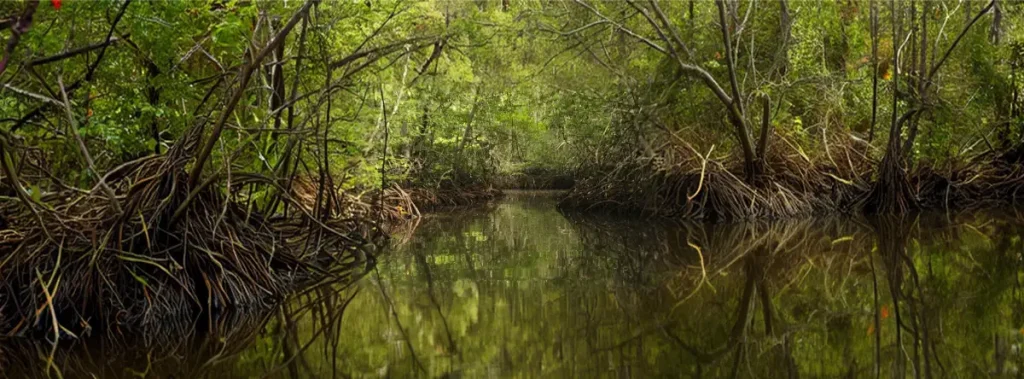
The red mangrove (Rhizophora mangle) is perhaps the easiest mangrove species to recognize, thanks to its distinctive aerial roots, which form intricate structures above the water.
These roots trap sediment and create sheltered habitats for fish, crustaceans, and other wildlife. Mangrove forests also help absorb wave energy and protect coastlines from erosion.
Buttonwood
Buttonwood (Conocarpus erectus) generally grows on slightly higher, less frequently flooded ground than other mangrove species. It occurs in coastal ecosystems throughout the Dominican Republic and has also been used in restoration projects in La Altagracia Province.
Although it may look more like an ordinary terrestrial tree or shrub, buttonwood belongs to the plant communities associated with these coastal environments.
Coconut palms and other tropical plants in Punta Cana
The coconut palm (Cocos nucifera) dominates many beach landscapes and has become one of the Caribbean’s most recognizable symbols. In Punta Cana, coconut palms grow along the coast as well as in gardens and resort grounds.
Yet their widespread presence does not make them endemic to the Dominican Republic. Coconut palms have a long history of dispersal and cultivation throughout tropical regions worldwide.
The same is true of many tropical plants found in Punta Cana, prized for the colorful flowers and foliage they bring to landscaped gardens. Flamboyant trees and certain ornamental palms are common in developed areas and resorts, but their presence does not mean they originated in Punta Cana.
Recognizing the distinction offers a different perspective on the landscape. Tropical gardens bring together plants from many parts of the world, while nature reserves, forests, and wetlands preserve plant communities rooted in the region’s natural history.
Where to discover Punta Cana’s flora
To appreciate the diversity of Punta Cana’s plant life, venture beyond the developed areas. Nature reserves and protected landscapes offer opportunities to see plants growing in the habitats to which they are naturally adapted.
The Indigenous Eyes Ecological Reserve is one of the best places to explore Punta Cana’s flora. Its trails wind through tropical forest and pass the freshwater lagoons that give the reserve its name. The Puntacana Foundation also carries out biodiversity conservation projects here, including programs to propagate and protect plant species.
The wetlands of Cabeza de Toro and the area surrounding Bávaro Lagoon reveal another side of the landscape, where vegetation associated with water and coastal habitats takes center stage.
Punta Cana’s biodiversity beyond the beaches
There is much more to Punta Cana’s vegetation than the palm-fringed beaches for which it is famous. The region encompasses forests growing on limestone, coastal vegetation, wetlands, and mangrove forests, each supporting species adapted to its particular environmental conditions.
Exploring these landscapes also reveals why protecting native and endemic plants has become an increasing priority in the region’s environmental initiatives. Urban and tourism development, habitat alteration, and the introduction of nonnative species all place pressure on Dominican plant life.
If you would like to experience Punta Cana’s natural landscapes alongside its beaches, Lopesan’s hotels in Punta Cana provide a convenient base for exploring the region and its protected areas. Among the palms, mangroves, tropical forests, and unique species of Hispaniola, you will discover a side of Punta Cana that rarely makes it into the familiar beach photographs.