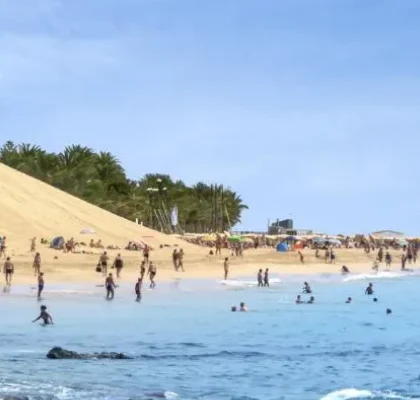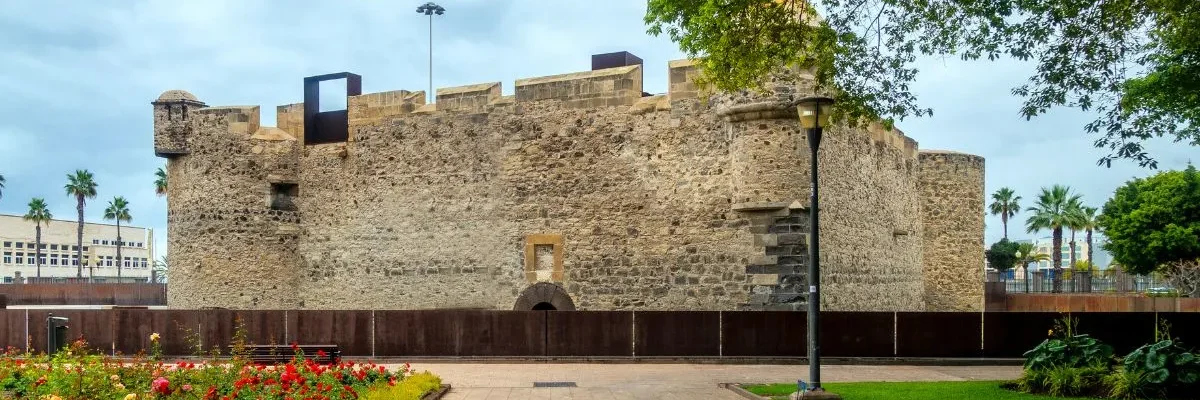
The island of Gran Canaria is not only popular for its exclusive beaches but also for its rural heart and its wide range of water and outdoor sports. However, its monumental heritage should not be overlooked, as it is home to Castillo de la Luz in Las Palmas. Also known as Fortaleza de la Luz, it is the oldest fortification in the province and holds a great history within its walls. For years, it served as the only defense for the city of Las Palmas de Gran Canaria and its inhabitants against possible attacks by pirates, corsairs, and conquerors.
Declared a Historic-Artistic Monument in 1941, it left behind its military past. Castillo de la Luz in Gran Canaria, located on Juan Rejón Street in the popular neighborhood of La Isleta, now serves cultural purposes. It is currently the headquarters of the Martín Chirino Art and Thought Foundation and dedicates its spaces to promoting the culture and art of the region.
History of Castillo de la Luz
Castillo de la Luz was built by order of Alonso Fajardo, Marquis of Vélez and governor and chief justice of Gran Canaria. Around the year 1494, he ordered this fortress to be constructed on the site where the foundations of a former modest tower built by Juan Rejón once stood. Rejón was the founder of the city of Las Palmas de Gran Canaria after his arrival on the island in 1478, and today the street where this monumental building stands is named after him.
The choice of location was far from accidental. Built on a coral reef, the fortress would become isolated from the mainland when the tide rose. Today, this is no longer the case, and it is surrounded by streets full of tourists, buildings, and the important Port of La Luz, a transit port between three continents—Europe, America, and Africa—frequented by sailboats, cruise ships, and large ocean liners.
The castle was built in a strategic location to protect the city and its inhabitants from potential attacks. In fact, during its early years, Gran Canaria only had this castle as its defense. It is a building with thick, solid walls that have withstood sieges by historically renowned pirates such as the British Sir Drake and the Dutch fleet of Peter Van der Does. However, it is true that its role in these two major attacks, which took place in 1595 and 1599 respectively, was not particularly decisive.
Characteristics of Castillo de la Luz
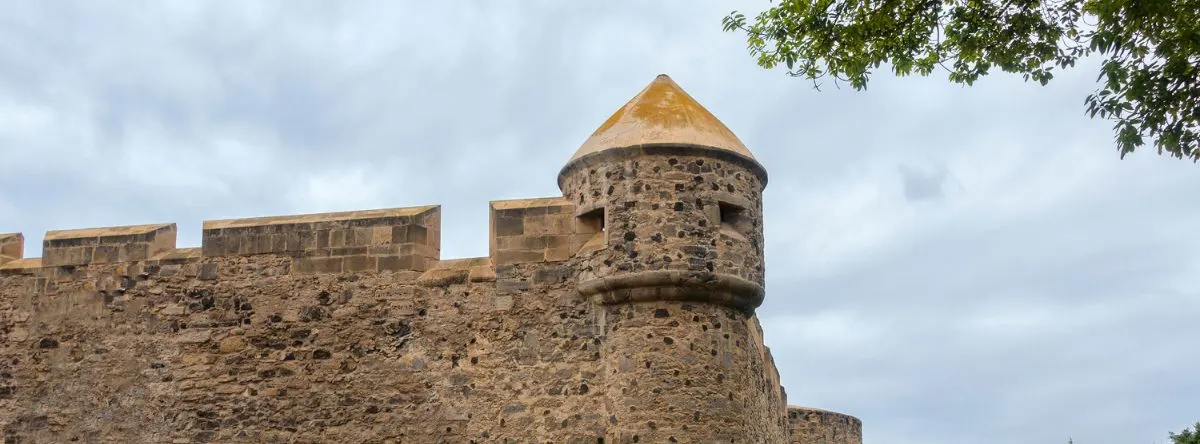
This monumental gem of Gran Canaria is one of the island’s major tourist attractions. It was built following the principles and requirements of the Renaissance artistic period. You can observe its square floor plan, as well as its towers and embrasures. One of its most distinctive features is access via a drawbridge over a deep moat.
One of its main characteristics, highly valued by visitors, is that the building has preserved its original essence since the 15th century. This is despite the numerous expansion works it has undergone over the centuries, as well as restoration and conservation processes. It retains its distinctive quadrangular layout, with yellow stone masonry walls and striking towers where watchmen were stationed to observe the horizon and check for enemies. Inside, the most notable feature is the parade ground with its cistern, from which you can access the different rooms and galleries arranged across three levels, including the two floors and the rooftop.
Function of Castillo de la Luz
Initially, this site was designed to serve as a defense for the city. However, this could not be the only protection for Gran Canaria, so castles such as Mata, San Cristóbal, and San Francisco were soon built for the same purpose. These were integrated into the city walls, thus improving defensive efficiency. As a result, Castillo de la Luz gradually fell into disuse and was eventually left almost abandoned.
Fortunately, its importance and value were soon recognized, and efforts were made to give it a new life. Restoration work was carried out in 1969, expanding its structure with an outer moat and new arches. It was then transformed into a center for promoting art and culture, becoming the headquarters of the Martín Chirino Art and Thought Foundation. This space hosts exhibitions, educational projects, and other cultural activities designed for all ages.
Visiting hours
The foundation opens its doors to the public on Wednesday afternoons and offers free guided tours of Castillo de la Luz. Visitors are taken through its rooms, highlighting not only the wonders within its walls but also the work of Martín Chirino. No prior reservation is required; simply arrive at the foundation’s ticket office at 5:00 PM to enjoy the experience.
Additionally, there is free access to the site from Monday to Saturday from 10:00 AM to 7:00 PM, while on Sundays and public holidays it can only be visited from 10:00 AM to 2:00 PM. When visiting the fortress, you can choose to be guided by an expert or explore it on your own with the help of information available through QR codes located at key points along the route.
In conclusion, Gran Canaria is a perfect destination for vacations all year round. Its privileged climate allows you to enjoy its beaches and tourist offerings even in winter months, with average temperatures of 68°F (20°C). Visiting the island also gives you the great opportunity to discover Canarian culture, traditions, and history.