Fuerteventura’s traditional architecture has been shaped by the wind, the scarcity of water and centuries of rural life. Its distinctive houses tell the story of how generations of islanders have lived in a dry, exposed landscape where the climate has always played a major part in everyday life.
During your holiday in Fuerteventura, you’ll notice how stone, limewash, thick walls, inner courtyards and rainwater cisterns reflect a building tradition closely adapted to the island’s environment. In villages such as Betancuria, La Oliva, Pájara and Antigua, you can still discover wonderful examples of traditional Fuerteventura architecture, including modest homes, chapels, manor houses and rural buildings.
In this article, we’ll explore what traditional houses in Fuerteventura look like, the materials used to build them, the defining features of the island’s architecture and the villages where you can discover some of its most interesting examples.
What is traditional architecture in Fuerteventura like?
Traditional architecture in Fuerteventura reflects the island’s landscape and climate. Rather than elaborate decoration or grand designs, the emphasis has always been on practicality: sheltering homes from the wind, making the most of natural light and keeping indoor temperatures more comfortable.
Traditional majorero houses, as those native to Fuerteventura are known, typically have simple shapes, thick walls, whitewashed façades and relatively few openings to the outside. This understated style reflects both the materials available and a rural way of life in which the home was closely connected to farming, livestock and water storage.
The relationship between the house and its courtyard is another distinctive feature. Many traditional buildings were arranged around sheltered inner spaces where families could carry out everyday tasks away from the wind. This approach to building offers a fascinating insight into majorero culture and the way islanders adapted to their surroundings.
Materials and design of traditional majorero houses
Fuerteventura’s traditional architecture is characterised by local materials and building techniques developed to withstand the island’s weather conditions. Limited resources, scarce rainfall and persistent winds all influenced the design of homes, storage buildings and agricultural outbuildings.
Stone, limewash and thick walls
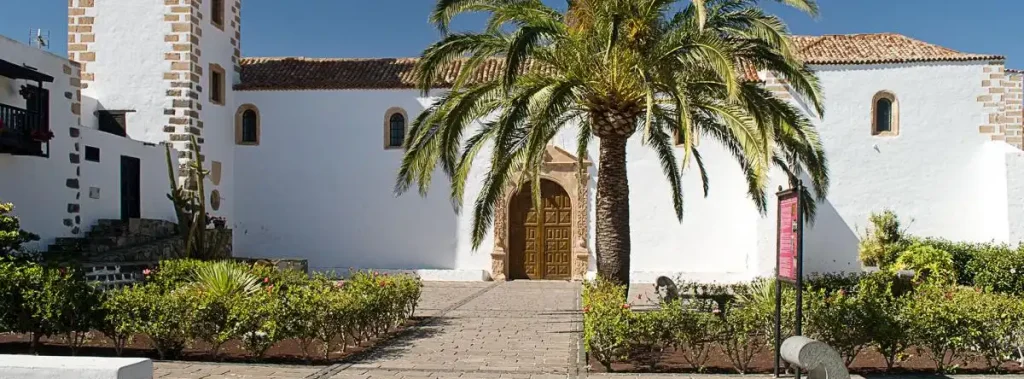
Stone has long been one of the main materials used in traditional majorero architecture. Sourced locally, it was used to construct strong, durable buildings capable of withstanding the island’s weather conditions.
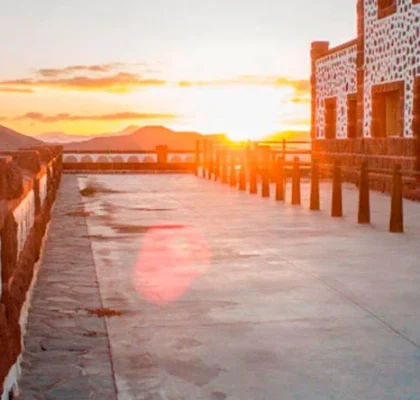
These stone walls were often coated with white limewash, which helped reflect the sun’s rays and protect the buildings. Over time, the contrast between whitewashed façades and the volcanic landscape has become one of Fuerteventura’s most recognisable sights.
Thick walls also served a practical purpose. They helped keep interiors cooler during the hottest hours of the day and provided shelter from the wind, a constant presence across much of the island.
Courtyards, cisterns and protection from the wind
Many traditional houses were built around inner courtyards. These sheltered spaces were used for everyday chores, storing tools and carrying out tasks close to home without being exposed to the wind.
Water was another essential consideration. With so little rainfall, cisterns played a vital role in daily life. These structures collected and stored rainwater for household use and agricultural activities.
The orientation of houses was also influenced by the surrounding environment. Doors, windows and courtyards were positioned to reduce exposure to prevailing winds and create more sheltered spaces for everyday living. Traditional majorero architecture is therefore about far more than appearance. It reflects centuries of adapting to an island where water has always been scarce and the weather can be unforgiving.
Traditional houses in Fuerteventura and rural life
Traditional houses in Fuerteventura were closely tied to rural life. They were more than places to live, with spaces dedicated to daily work, caring for livestock, storing food and managing water supplies.
In many homes, rooms were arranged in a simple, practical way. Kitchens, bedrooms, courtyards, animal enclosures and storage areas reflected a lifestyle centred on agriculture, livestock farming and making careful use of the resources available.
This close connection between home and countryside is still visible in many inland villages. Whitewashed buildings, stone walls, threshing floors, ovens and small courtyards reveal an essential part of majorero culture. It’s a quieter side of Fuerteventura than its famous beaches, but one that tells an important part of the island’s history.
Canarian architecture in Fuerteventura: what makes it different?
Fuerteventura’s traditional architecture shares certain features with other Canary Islands, including limewashed walls, inner courtyards and designs adapted to the local climate. Yet here, these elements tend to appear in a more restrained, understated form, strongly influenced by the dry landscape and persistent winds.
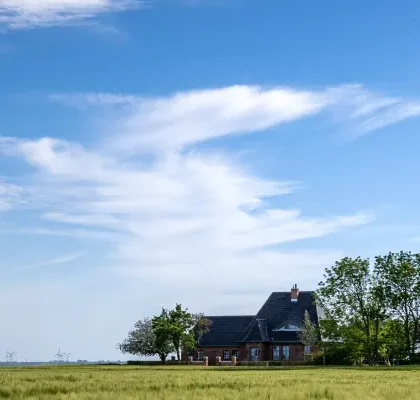
Elsewhere in the archipelago, you’ll find more elaborate façades, wooden balconies and larger historic centres. Traditional majorero architecture, by contrast, tends to be lower, simpler and more functional. Its houses sit within small villages, surrounded by tracks, traditional agricultural plots known as gavias, windmills, chapels and open countryside.
These differences give Fuerteventura’s traditional architecture its distinctive character: white buildings, solid walls, sheltered courtyards and a close connection to rural life. Rather than dominating the landscape, the buildings respond to it through practical designs and locally sourced materials.
Villages where you can discover traditional architecture in Fuerteventura
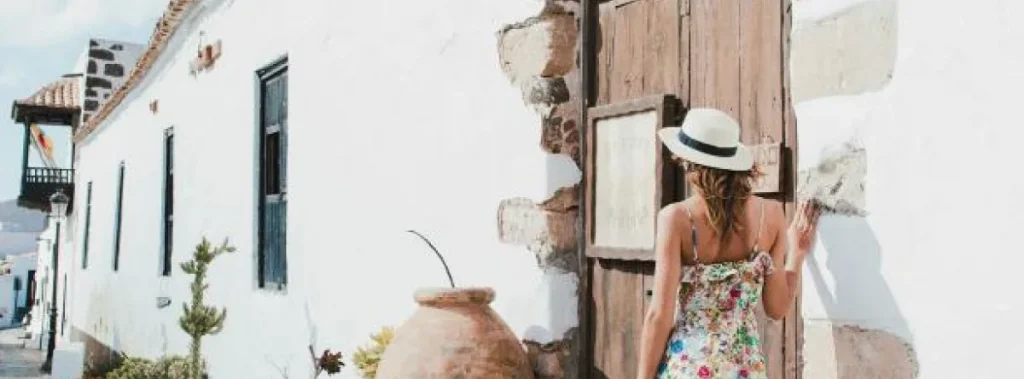
Some of Fuerteventura’s villages have preserved particularly fine examples of traditional majorero architecture. A stroll through their streets reveals whitewashed houses, historic churches, peaceful squares and buildings that still retain many of the island’s distinctive architectural features.
Betancuria
Betancuria was Fuerteventura’s first capital and remains one of the best places to discover the island’s architectural heritage. Its streets, whitewashed houses and historic buildings, including the Church of Santa María, offer a wonderful introduction to traditional Canarian architecture adapted to Fuerteventura’s landscape.
Surrounded by mountains, the village has a peaceful atmosphere that has helped preserve much of its historic character.
La Oliva
La Oliva is home to some of Fuerteventura’s best-known historic buildings. Among them is Casa de los Coroneles, one of the Canary Islands’ most important examples of civic architecture, alongside traditional houses that reflect how building styles have evolved across the island.
Walking through the historic centre, you’ll notice the stone, limewash and inner courtyards that characterise many majorero buildings.
Pájara
Pájara has an interesting mix of religious heritage and traditional architecture. The Church of Nuestra Señora de Regla is one of the municipality’s best-known landmarks, particularly for the unusual decoration on its façade.
Around the main square, traditional houses and other buildings reflect the construction methods once used throughout inland Fuerteventura, with simple façades and designs closely adapted to the local environment.
Antigua
Antigua is another municipality where you can discover numerous examples of traditional majorero rural architecture. Its historic houses, old windmills and agricultural buildings offer a glimpse into everyday life in Fuerteventura before the growth of tourism.
The municipality also preserves several historic sites connected with water management and the rural economy, two essential aspects of the island’s past.
After a day exploring some of Fuerteventura’s finest examples of traditional architecture, returning to somewhere designed for relaxation is a lovely way to round off the experience and continue discovering the island at your own pace.
To explore these places comfortably, it’s worth choosing well-located accommodation that makes travelling around the island easier. Lopesan Hotel Group offers several accommodation options in Fuerteventura, giving you the chance to enjoy relaxing days by the coast alongside cultural excursions during your stay.