Fehmarn is a Baltic Sea island known for its peaceful, open landscapes and close connection to the coast. Much of a visit here is spent outdoors, enjoying seaside walks, cycling routes, nature reserves and country lanes that link different parts of the island.
Although the coastline is one of its main attractions, Fehmarn has much more to offer than beaches. You’ll also find cliffs, dykes, farmland, lagoons, wetlands and protected areas where birdlife is an integral part of the scenery. This variety makes the island appealing to beach lovers and anyone who enjoys walking, birdwatching or cycling across gently rolling terrain.
In this article, we’ll explore Fehmarn’s main landscapes to help you get to know the island before your trip and choose which natural areas you’d like to discover at your own pace.
Fehmarn’s coastline: natural beaches, dykes and cliffs
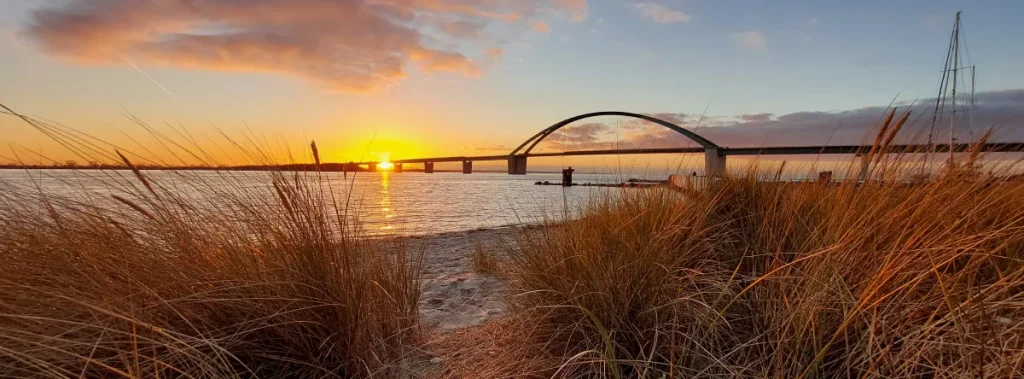
The coastline is Fehmarn’s most obvious natural feature, but it looks quite different depending on where you go. In the south, Südstrand and Burgtiefe offer well-equipped beaches for swimming, with a seafront promenade and facilities nearby. Elsewhere, you’ll find more natural, largely undeveloped stretches of coast, with vegetation, low dunes and unspoilt shores. Before exploring Fehmarn’s coastline, it’s worth deciding what appeals to you most: swimming, walking, open scenery or a more natural setting.
On the eastern coast, Staberhuk is one of the most interesting places to see cliffs. The lighthouse is a prominent feature of the landscape, while the shoreline has a wilder feel, with rocky stretches, low-growing vegetation and open views across the Baltic Sea. It’s not the typical place to spend hours with a beach towel and parasol, but it’s well worth visiting to discover Fehmarn’s more rugged side.
In the north, Grüner Brink brings together natural beaches, low dunes and stretches of water that attract numerous birds. The coastline here is constantly changing, with the wind, light and seasons all shaping the scenery. If you’d like to explore more of the island’s beaches, you can also read our article on the best beaches in Fehmarn.
Farmland and country lanes in the island’s interior
Head inland and you’ll discover a very different side of Fehmarn. Instead of extensive forests or mountains, you’ll find open, remarkably flat farmland, with paths winding between cultivated fields, meadows and small villages.
Areas such as Landkirchen, Bannesdorf and the countryside around Wenkendorf reveal Fehmarn’s more rural character, with quiet roads, scattered houses and far-reaching views. In spring and early summer, growing crops bring more colour to the landscape. At other times of year, the appeal lies in the wide horizons, changing light and wonderful sense of space.
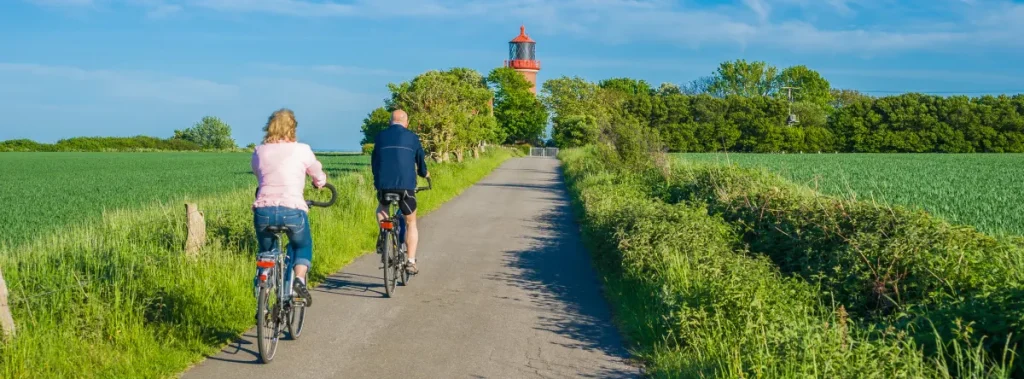
This rural countryside is ideal for exploring by bike. Distances are manageable, the terrain is almost entirely flat and quiet minor roads make it easy to travel between villages and open countryside while never being far from the coast. If you’d like to plan specific routes, take a look at our guide to walking routes and trails in Fehmarn.
Nature reserves and birdlife in Fehmarn
Fehmarn has several natural areas where birds take centre stage. The best known is Wallnau, on the western side of the island. Here you’ll find the NABU Wallnau Waterbird Reserve, a waterbird reserve with wetlands, birdwatching hides and designated paths for exploring the surroundings.
Wallnau reveals a different side of Fehmarn. Rather than dramatic scenery, its appeal lies in the details: migratory birds, reed beds, lagoons, resting areas and the changing light across the water. Fehmarn lies along an important route for many bird species, reflected in the abundance of birdlife, the constant movement of different species and the activity in its wetlands.
Another important area is Nördliche Seeniederung, in the north. This protected landscape stretches from the Fastensee area, north of Bojendorf, to Markelsdorfer Huk and Grüner Brink, and includes several inland lakes. It’s a fascinating place to discover the mixture of coastline, lagoons, meadows and birdlife that characterises the northern part of the island.
Routes for exploring Fehmarn’s landscapes
Fehmarn is a lovely island to explore on foot or by bike. The terrain is mostly flat, and many routes follow the coastline or cross rural areas before returning towards the sea. On your first visit, you can choose shorter routes and decide as you go whether to extend your walk, stop in a village or explore another stretch of coast.
For a coastal outing, consider Staberhuk, Altenteil, Westermarkelsdorf or Grüner Brink, depending on the scenery you’d like to see. Staberhuk has a more rugged coastline, while Grüner Brink is particularly interesting for its combination of beach, water and birdlife. Altenteil and Westermarkelsdorf are appealing if you’re looking for quieter, more open stretches of coast.
If you’re planning to explore the interior by bike, villages such as Landkirchen, Bannesdorf and Wenkendorf make useful reference points. Between them, you’ll find peaceful roads, farmland and routes leading towards the coast, making it easy to explore without always relying on a car. For help planning your outings, read our article on walking routes and trails in Fehmarn or our Fehmarn travel guide if you’re organising your entire stay.
Tourist information points in Fehmarn
If you’re planning coastal walks, nature reserve visits or cycling trips, you can visit the tourist information offices in Burg and Burgtiefe. They provide information about routes, activities, events, transport and useful recommendations for different times of year.
Fehmarn also has several Infozellen, former public telephone boxes converted into small self-service tourist information points offering free leaflets. They’re accessible outside tourist office opening hours and can be recognised by a large letter “i”. You’ll find Infozellen in Burg, Burgtiefe, Petersdorf, Landkirchen, Gollendorf, Avendorf and Gammendorf.
To help organise your trip, you can also explore the available accommodation in Fehmarn and choose a convenient base for discovering the island.
Tips for visiting Fehmarn’s natural areas
Before heading out for a walk, bike ride or visit to one of Fehmarn’s natural areas, check a few practical details. The island is easy to explore, but wind and rain can have a considerable impact on your plans.
- Check the forecast before setting off – Wind can be particularly noticeable along dykes, cliffs and exposed stretches of coast.
- Stick to marked paths – In nature reserves and bird habitats, follow designated routes and stay within permitted areas.
- Bring a lightweight jacket – The wind chill beside the Baltic can make even mild days feel cool.
- Take water and suitable footwear – Some natural areas have few facilities nearby, so make sure you have the essentials.
- Check routes and weather conditions in advance – Read our articles on the weather in Fehmarn, the best time to visit Fehmarn or walking routes and trails in Fehmarn to help plan your outing.
Fehmarn’s landscapes bring together coastline, farmland, nature reserves, easy routes between villages and protected natural areas. You won’t find towering mountains or demanding mountain trails here. Instead, the island’s appeal lies in its accessible, light-filled natural scenery, which is never far away during your stay.
If you’d like to discover Fehmarn’s natural beauty, start with its coastline, visit Wallnau or Grüner Brink, cycle through the countryside and set aside some time for birdwatching or a walk beside the sea. You’ll come away with a fuller picture of the island and the distinctive blend of coastline, farmland and wetlands that shapes so much of its landscape.