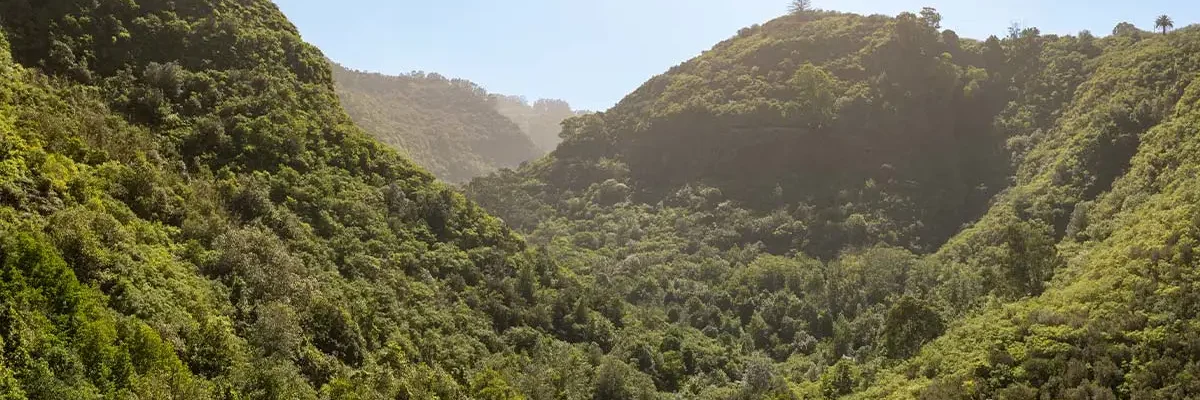
If there’s one place where landscapes keep you on your toes, it’s the Canary Islands. Beyond their golden beaches and headline resorts, the islands harbour unique natural spaces brimming with life and beauty. Among them, Gran Canaria’s laurel forests stand out for their lush greenery and enveloping atmosphere—mountains, mist and an intense, almost improbable green that you won’t often see elsewhere on the island.
These forests—also known as laurel woodlands—are subtropical cloud forests where species such as laurels and fayal-brezal thrive thanks to constant humidity. Although this vegetation appears on several islands across the archipelago, Gran Canaria preserves a particularly representative pocket that’s well worth discovering.
In this article we take you to Los Tilos de Moya, a spot rich in history and biodiversity that nature lovers shouldn’t miss. It’s a perfect outing for those keen to uncover a different side to Gran Canaria, a little off the beaten track.
What laurel forest is and where to find it on Gran Canaria
Laurel forest is an evergreen woodland typical of subtropical climates, defined by dense foliage that stays verdant year-round. It grows in Macaronesia—which encompasses the Canary Islands, Madeira and the Azores—in areas where humidity and sea mist help retain moisture in both soil and plants.
On Gran Canaria, the remnants of ancient laurel forest are concentrated mainly in the north, where the trade winds create ideal conditions for their survival. Los Tilos de Moya, within Doramas Rural Park, is one of the last refuges of this ecosystem and a key place to appreciate the island’s natural wealth.
Los Tilos de Moya: Gran Canaria’s laurel forest
Location and features
Los Tilos de Moya lies in the municipality of Moya, inside Doramas Rural Park in the island’s north. This woodland is one of the final vestiges of the laurisilva that once cloaked much of Gran Canaria. At 91.5 hectares it may be modest in size compared with other Macaronesian forests, yet its natural richness makes it unmissable for anyone who relishes the outdoors.
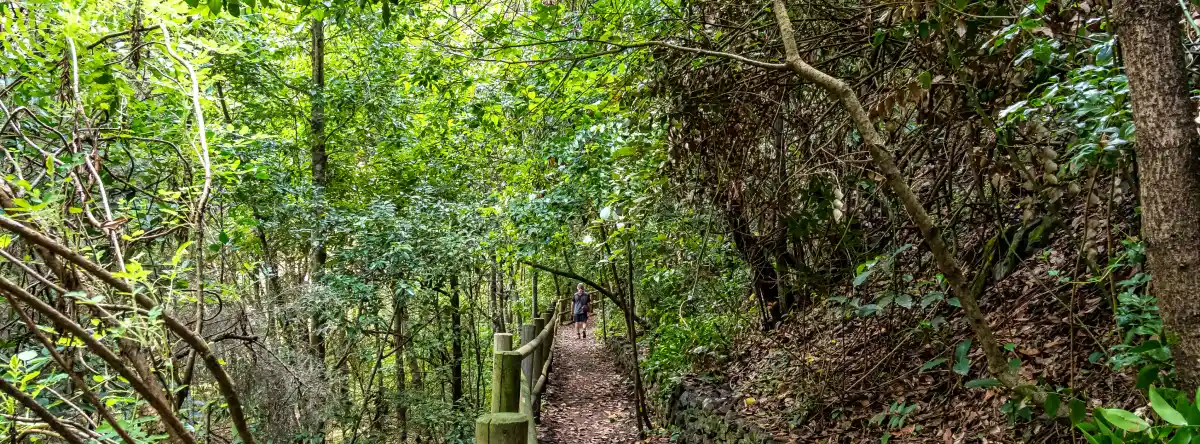
The forest is renowned for its dense canopy and humid atmosphere, created by the phenomenon known as horizontal rain. Moisture-laden clouds brush the treetops and condense into fine droplets that steadily water the ground. Thanks to this constant drip, Los Tilos de Moya remains luxuriant throughout the year.
Ecological importance
Los Tilos de Moya has been declared a Special Nature Reserve for its exceptional ecological value. It shelters plant and animal species found only in the Canary Islands, many of them threatened by habitat loss.
Beyond its biodiversity, the forest plays a vital role in regulating water on the island, helping to recharge aquifers and protecting the soil from erosion. Safeguarding it is essential to keeping Gran Canaria’s natural systems in balance.
Flora and fauna of Los Tilos de Moya
Notable plant species
Los Tilos de Moya is a sanctuary for native Canarian flora. Wander its paths and you’ll encounter a broad range of species, many characteristic of laurel forest. Standouts include:
- Canary stinkwood (Ocotea foetens)
- Canary laurel (Laurus novocanariensis)
- Tree heath (Erica arborea)
- Palo blanco (Picconia excelsa)
- Mocán (Visnea mocanera)
- Canary holly (Ilex canariensis)
- Canary elder (Sambucus palmensis)
- Large fern beds carpeting the forest floor
This mix of towering trees, shrubs and ferns creates a dense, evergreen habitat ideal for the wildlife that lives here.
Birds and other animals
It isn’t just the flora that shines—fauna is plentiful too. Birds take centre stage, their song accompanying you along the trail. Frequent sightings include:
- Chaffinch (Fringilla coelebs)
- Grey wagtail (Motacilla cinerea)
- Common kestrel (Falco tinnunculus)
- European robin (Erithacus rubecula)
- Buzzard (Buteo buteo insularum)
You’ll also find small mammals, reptiles and a wide variety of insects, all essential to the forest’s balance.
Hiking in Los Tilos de Moya
Los Tilos de Moya offers several walking routes, the best known being a circular path of roughly 2 kilometres. It’s short and easy—ideal for families or as an add-on to other visits nearby.
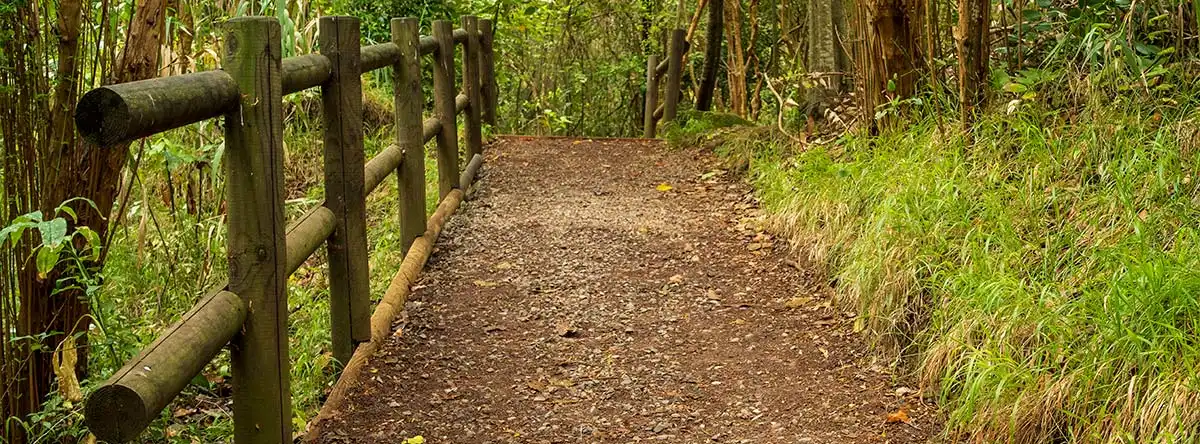
The trail starts near the Visitor Centre, where panels explain the area’s history and biodiversity. From here the path heads straight into the woodland and the immersion begins. The vegetation thickens as you go: giant ferns carpet the ground and centuries-old trees weave a green canopy overhead.
Along the way, natural viewpoints reveal the Moya ravine and the forest’s dense foliage. Birdsong is a constant companion—particularly chaffinches and robins, which thrive in this environment.
A short flight of steps at the start can feel a touch steep, but it’s brief; beyond that, the route is well marked and comfortable underfoot. Thanks to the cool humidity and generous shade, the walk stays pleasant even on warmer days.
This trail is an excellent way to connect with nature without tackling a long or demanding hike. It suits visitors of all ages and offers an easy introduction to one of Gran Canaria’s most fascinating ecosystems.
Tips for your visit
To make the most of Los Tilos de Moya, keep these pointers in mind:
- Pick your moment: mist and humidity are common, especially in the morning. For clearer views, aim for mid-morning or early afternoon.
- Wear the right footwear: the ground can be slippery—sturdy walking shoes or boots are your best bet.
- Layer up: despite Gran Canaria’s mild climate, the forest is cooler and damper. A light jacket comes in handy.
- Bring water and a snack: even on a short walk, it’s nice to pause and enjoy the setting.
- Respect the reserve: keep noise down, take your litter with you and follow local guidance to protect flora and fauna.
- Check the forecast: after heavy rain, the path can be trickier—worth checking conditions before you set off.
Follow these tips and your time in Los Tilos de Moya will be all the more rewarding, letting you explore one of Gran Canaria’s most enchanting natural spaces in comfort.
After a day discovering this landscape, there’s nothing like a good night’s rest. Lopesan Hotel Group invites you to explore its Gran Canaria hotels and choose the one that suits your stay. Unwind in superb facilities, enjoy attentive service and recharge before setting off again to discover the island’s natural wonders and beaches.