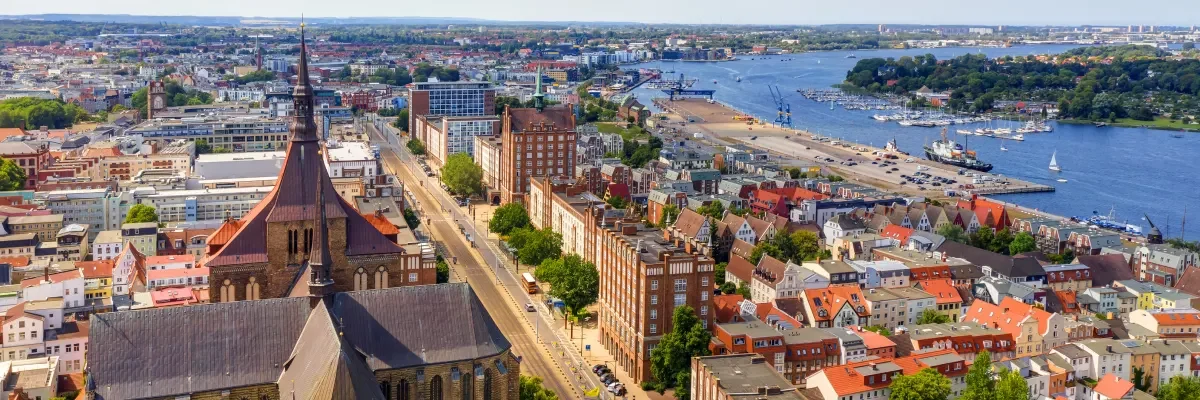
Just half an hour from the calm of Graal-Müritz lies Rostock, a city that combines its past as a powerful member of the Hanseatic League with the lively atmosphere of a working port. It is the ideal day trip if you are looking for a contrast between Baltic nature and the urban history of northern Germany.
The heart of the city is Neuer Markt, where the colourful façades of former merchants’ houses surround the imposing pink Town Hall. A few steps away, St Mary’s Church (Marienkirche) is a must-see, not only for its Brick Gothic architecture, but also for its famous 15th-century astronomical clock, which still works with astonishing precision.
Walking around Stadthafen, the old harbour on the banks of the River Warnow, is the best way to end the day. Today, it is an area full of restaurants and restored former warehouses where you can enjoy fresh fish while watching the boats come and go. It is a simple, authentic route and a perfect way to discover the region’s maritime character.
In this article, we explain what to see in Rostock in one day and how to organise the day trip easily from your accommodation in Graal-Müritz.
Hanseatic history and architecture
Rostock’s historical importance can be felt in every corner of the old town. When taking a day trip to Rostock from Graal-Müritz, the first thing that stands out is the use of red brick, characteristic of Baltic Gothic architecture. This aesthetic defines the identity of the cities that formed part of the powerful Hanseatic League, a trading federation that dominated the North Sea and the Baltic for centuries.
Walking along Kröpeliner Straße, the main pedestrian artery, gives you the chance to admire buildings that have survived the passage of time and post-war reconstruction. At the end of this street stands Kröpeliner Tor, one of the gates of the original city wall and once an entrance into the city. Its six storeys are a reminder of the wealth Rostock accumulated through maritime trade.
The University of Rostock and its legacy
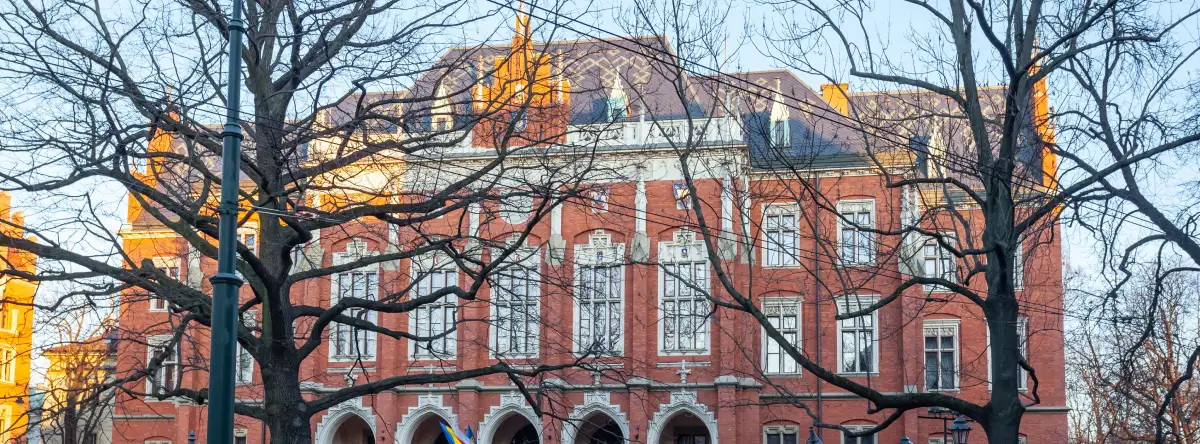
Founded in 1419, the University of Rostock is one of the oldest universities in the world and the oldest in the Baltic region. Its main building, located on Universitätsplatz, is an architectural gem in Neo-Renaissance style and deserves a quiet stop. The student atmosphere brings youthful, dynamic energy that contrasts with the sobriety of the historic monuments.
Opposite the university stands the statue of Gebhard Leberecht von Blücher, the Prussian field marshal born in the city who played a key role in Napoleon’s defeat at Waterloo. It is a perfect corner to sit for a while and watch local life before continuing towards the harbour area.
The charm of Stadthafen: the old harbour
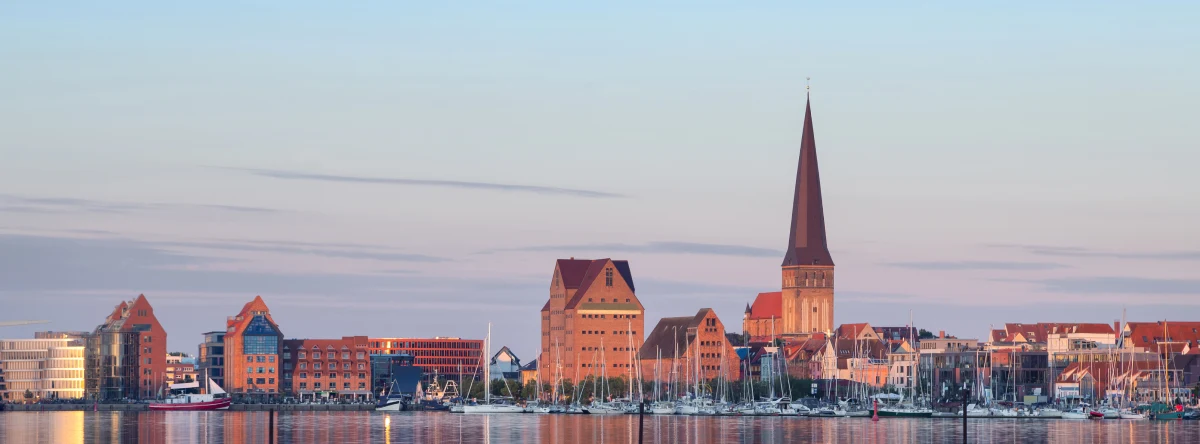
If there is one place that defines Rostock’s soul, it is Stadthafen. This former commercial harbour has been recovered for residents and visitors to enjoy. Over several kilometres, the waterfront promenade offers some of the best views of the city, especially at sunset, when the sun reflects on the River Warnow.
In this area, it is common to see large traditional sailing ships moored along the quay, creating the setting for events such as Hanse Sail, one of the most important classic ship gatherings in the world. Even if you do not travel during the festival, the nautical atmosphere is constant. It is the ideal place to try a Fischbrötchen — a typical fish sandwich — at one of the local stalls or have dinner in one of the former industrial warehouses now converted into modern design-led venues.
Warnemünde: Rostock’s gateway to the sea
Although Rostock’s historic centre lies inland, its coastal district, Warnemünde, is a must during your day trip to Rostock from Graal-Müritz. What was once a humble fishing village has become one of the busiest cruise ports in the country, while still preserving its distinctive traditional charm.
The Alter Strom canal is the heart of Warnemünde. It is lined with colourful fishermen’s houses, craft shops and boats selling fish directly on the quay. At the end of the walk, you will find the 1897 lighthouse and the famous Teepott, a distinctive building that marks the beginning of one of the widest beaches on Germany’s Baltic coast. Walking along its fine sand and watching the huge ferries heading towards Scandinavia completes the day perfectly.
How to organise the journey from Graal-Müritz to Rostock
The logistics of travelling from Graal-Müritz to Rostock are simple:
- By train: The train journey is direct and takes barely 30 minutes. Graal-Müritz station connects with Rostock Central Station (Hauptbahnhof), from where you can walk or take a tram to the centre in just a few minutes.
- By car: If you prefer the flexibility of your own vehicle, the L22 road takes you directly to the city centre in around 25-30 minutes. There are several public car parks near the harbour and the historic centre.
- By bike: For more active travellers, there is a cycle route that crosses the Rostocker Heide forest. It is a flat, pleasant route that lets you enjoy nature before entering the urban setting.
Practical tips for your visit
To make the most of your stay, keep these recommendations in mind:
- Local transport: If you are travelling between central Rostock and Warnemünde, the suburban train (S-Bahn) is the best option. It runs very frequently and takes you to the beach in less than 20 minutes.
- Food: Do not leave without trying the local beer, Rostocker. It is the perfect accompaniment to the area’s herring or cod dishes.
- The astronomical clock: Try to be in St Mary’s Church at midday. Seeing the astronomical clock mechanism in action is a technical detail that impresses with its age and precision.
Rostock is a city of red brick, northern wind and a harbour that sets the rhythm of daily life. That direct character, without ornament or pretension, is what best defines the experience of visiting it.
To extend that feeling of calm when you return from the city, all you need is the right place to rest. The IFA Graal-Müritz Hotel, Spa & Tagungen blends into the landscape on the shores of the Baltic and works as a wellness retreat whether you are travelling with family, as a couple or on your own. Its spa is the ideal corner for looking after your body after long walks, with a 25-metre pool, water jet circuits and a massage offer that includes everything from hot stones to facial or foot treatments. It is the perfect finishing touch, combining exceptional food with activities such as aquagym, bowling and nature routes to bring the trip to a peaceful close.