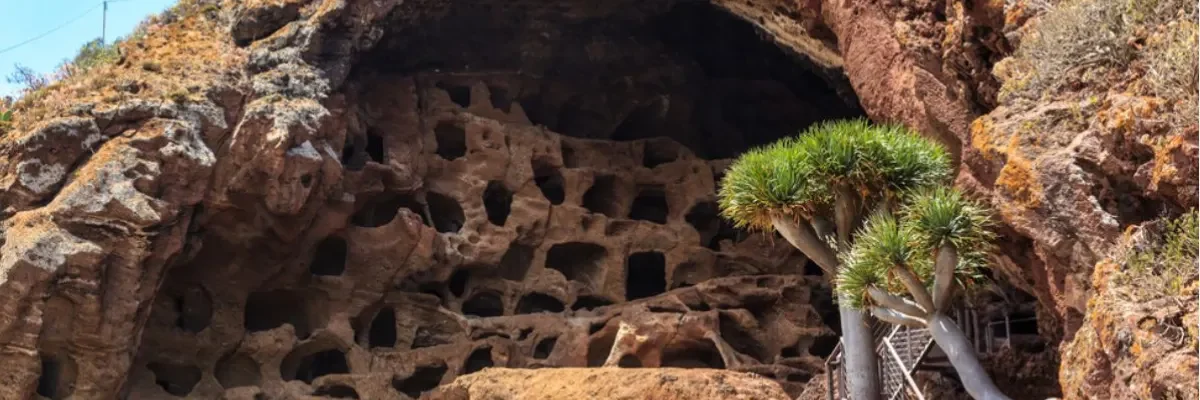
During your visit to Gran Canaria, you will have the opportunity to discover precious natural treasures. Cenobio de Valerón (Cenobium of Valerón), an archaeological site of great value located in Montaña del Gallego (Santa María de Guía), is one of them.
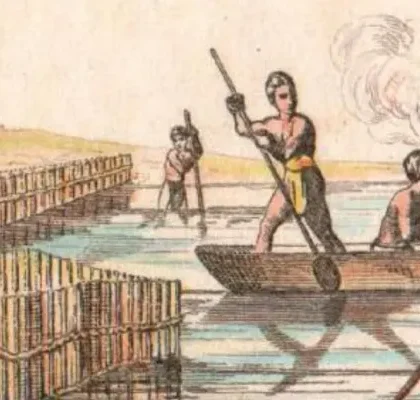
This impressive collective granary was built and used by the aborigines more than 800 years ago. Today it is one of the most important archaeological sites on the island, along with the Cueva Pintada in Gáldar. Find out more about this fascinating site!
What is a cenobium?
A cenobium is a religious community in which monks or nuns live together. The term comes from the Greek koinobion, meaning ‘common life’. There has long been a belief that the silos on this site were the living quarters of an ancient monastery, hence the name Cenobio de Valerón.Today, this theory (which prevailed until the 20th century) has been completely discredited. The new hypothesis drew parallels between these structures and the agadirs that existed in North Africa for the preservation of food. These granaries had a common storage area (guarded by the community), although their use and maintenance were individual.
History of Cenobio de Valerón
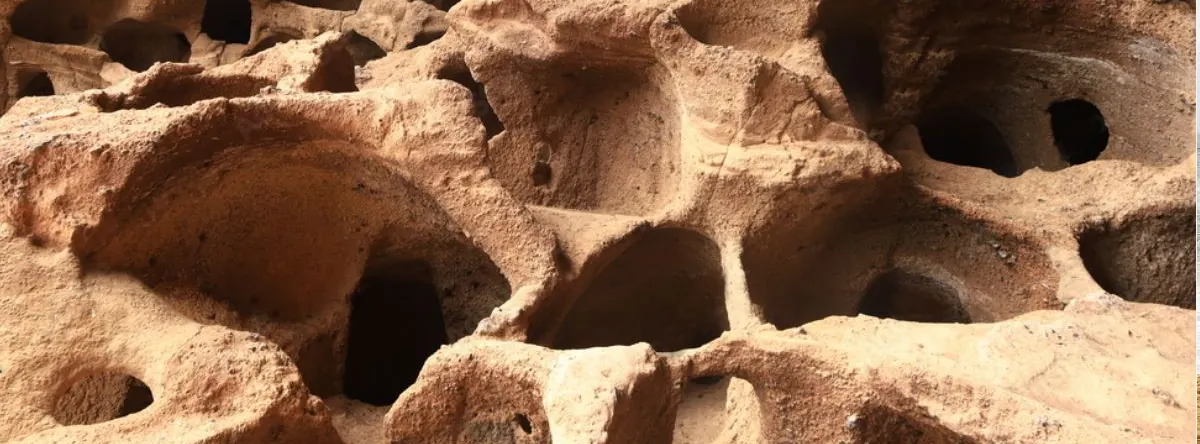
The Cenobio de Valerón in Gran Canaria is a surprising place for the history it contains. It is located on the GC-291 road in the municipality of Santa María de Guía. It consists of a series of caves on several levels, with a total of 298 compartments. The capacity of each one is between 1 and 3 square metre
According to research, these storehouses could have been dug with stone or wooden tools; the silos have different shapes and communicate with each other. The end result was a large collective granary for the storage of grain in a place that offered natural protection thanks to the arch of the mountain.
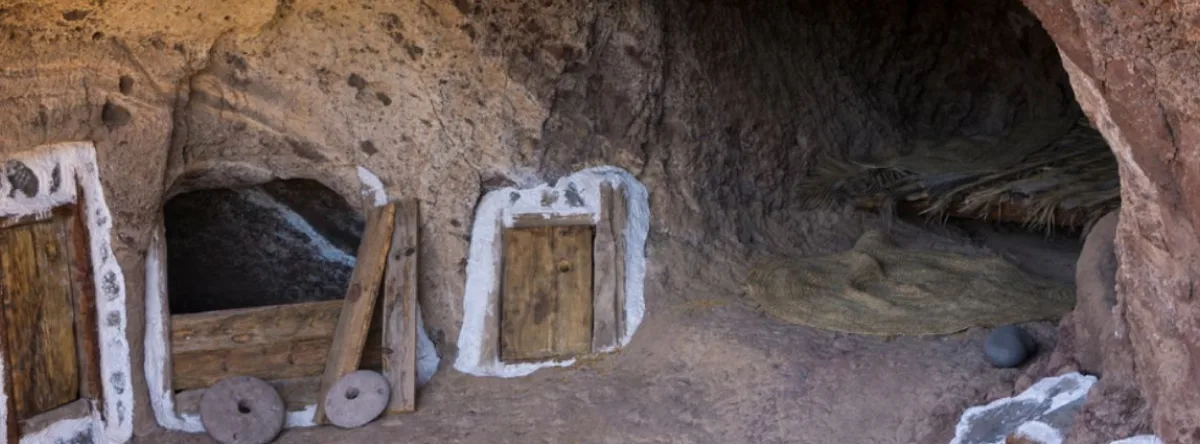
The site has yielded a number of artefacts, including gravestones, pottery, ashes and human bones. These may have belonged to the people who guarded the site. Stone tools and mills were also found, which could have been used to grind cereals.
At that time, the cultivation of wheat or barley was a significant contributor to the islands’ economy. This explains the importance of preserving the grains from the harvest. Similar stories can be found in the caves of El Pósito, El Álamo, La Montañeta and Las Palomas
.
This prehistoric engineering work is of immense heritage and cultural value for the Canary Islands. While it may be overlooked from the outside due to its strategic location, it is accessible. It is equipped with various ramps and stairs to navigate the steep terrain.
Why visit the Cenobio de Valerón in Gran Canaria?
The Cenobio de Valerón offers a distinctive experience that provides insights into the lives of the indigenous Canary Islanders. It showcases their economic activities and early architectural examples. The landscape is also a notable feature, while the opportunity to explore Santa María de Guía is also available.
With a population of less than 14,000, this town is located on the Pico de la Atalaya and is renowned for its rich heritage and artistic and ethnographic value. It has also been the birthplace of numerous celebrated artists and maintains centuries-old traditions, such as the traditional Fiesta de Las Marías.
Visiting Cenobio de Valerón is a unique experience that offers a glimpse into the island’s rich history. If you are planning a visit to this remarkable location and are seeking accommodation in Gran Canaria, the Lopesan Hotel Group can assist you in selecting the ideal accommodation option. Our team is dedicated to ensuring your stay is enjoyable and memorable.