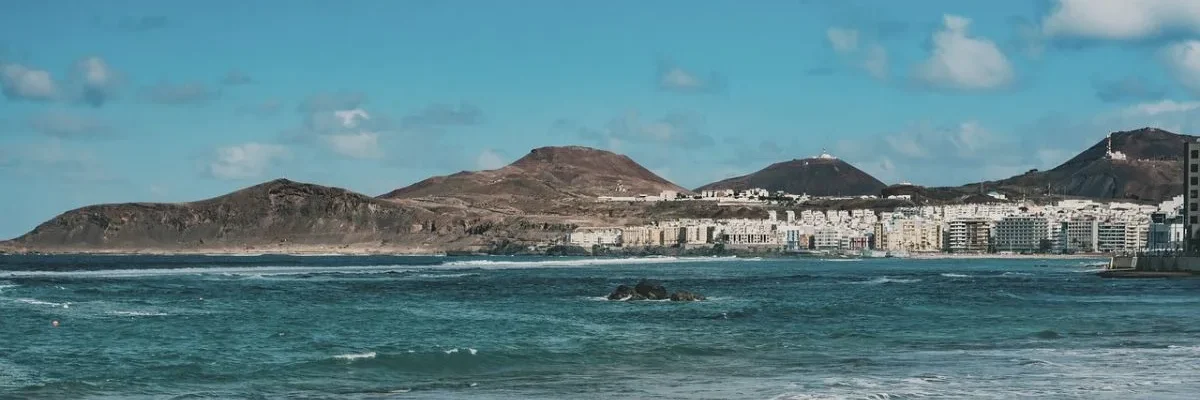
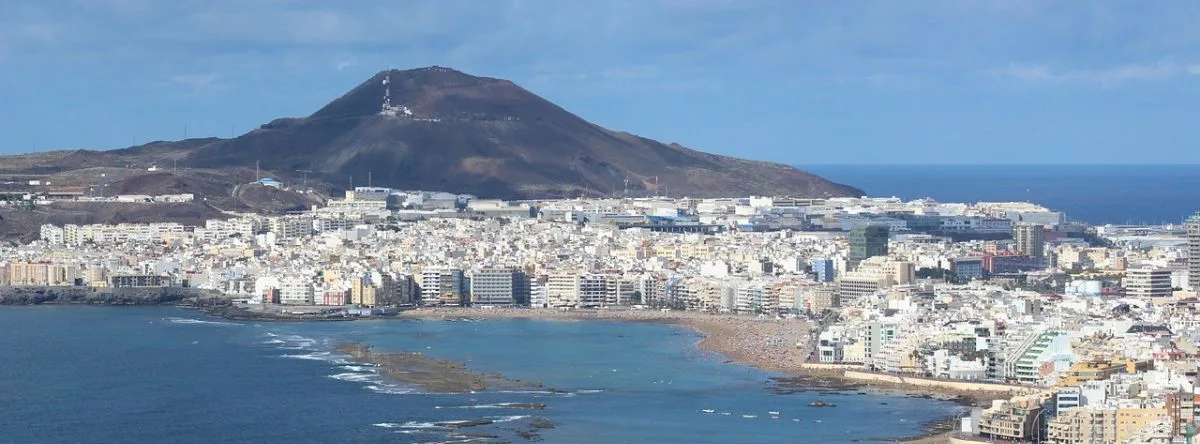
At the heart of the pulsating city of Las Palmas de Gran Canaria is a corner that has withstood the test of time and the waves of urban change: the Isleta neighbourhood. Located on a peninsula to the north of the capital, it offers a variety of attractions, such as natural parks, beautiful landscapes and the Confital beach to the north, and interesting historical monuments to the south.
The district of La Isleta in Gran Canaria is characterised by the fact that it has undergone little change over the last few centuries, so we suggest that you discover it from a unique perspective: history.
Origin of La Isleta: toponymy and geomorphology
La Isleta owes its name to the fact that it was originally an island separate from the rest of Gran Canaria, which emerged from the sea about a million years ago. Its origin is volcanic and, over time, the sediments of the island that fell into the sea ended up joining it to Gran Canaria.
The pre-Hispanic Isleta
The Cave of the Canary Islanders
The Cave of the Canary Islanders
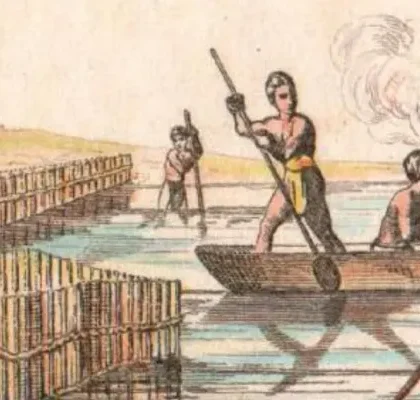
We begin our historical journey in this cave, where the remains of the Canarian aborigines have been found. They have also been found in other places on La Isleta, but this one stands out because it is very representative of the way of life of the time. It is made up of two large man-made caves where the Guanches lived, and other smaller ones that were used as silos, storehouses and the like. They have been excavated in what may have been an ancient crater, over a large natural arch, on two levels. All these caves face west, so that the complex was protected from bad weather.
The Montaña Quemada (Burnt Mountain)
Also known as Montaña Colorada, it is very close to these caves and is where the aborigines used to extract the stone to build mills to grind grain by hand. It can be walked (it is classified as an easy trail) and is part of the Gran Canaria Volcanoes Route.
Necropolis of La Isleta
Today it is located on the streets of Mari Sanchez and Prudencio Morales, in the area known as La Puntilla, on the beach of Las Canteras. It is a volcanic cinder heap. It seems to have contained hundreds of burial mounds. The bodies were not mummified, but wrapped in a coarse cloth.
Castilian conquest and raids by English corsairs.
The aboriginal period ended with the arrival of Diego de Herrera, who conquered Gran Canaria in 1461 and arrived at the port of Las Isletas. Later, other conquerors arrived and one of the first defensive bastions to be built was right here, on the Isleta de Las Palmas de Gran Canaria. This was the Castillo de la Luz, which defended access to the city and the island in general.
Later, the fortress or castle of Santa Catalina was built to support the castle of La Luz. It is currently buried under the naval base. However, archaeologists believe that the remains of its foundations may still be under the naval base.
La Isleta came to prominence again when English corsairs, specifically Francis Drake and Hawkins, tried to conquer Gran Canaria on 6 October 1595. The island would have gone to the British Crown had it not been for the Spanish arquebusiers who came to its defence. Soon other inhabitants of the island, including peasants, fought to dissuade the corsairs and finally defeated them. All this took place in front of the Isleta.
La Isleta lighthouse and the construction of Puerto de la Luz
Until the construction of the lighthouse of La Isleta in 1865 and the Port of La Luz in 1883, La Isleta was practically uninhabited. The lighthouse was the first to be built in Gran Canaria and the site of the Puerto de la Luz was already a natural harbour, so all that was needed was to build a few docks.
The growth of trade in the area was largely due to the cambulloneros. They were the merchants who were experts in buying, selling, ordering or exchanging what the city needed, such as food, tools or medicines, from the crews of the ships. At the same time, they offered the sailors cigars, alcohol, fruit, fretwork, etc.
La Isleta at the beginning of the 20th century
The Parroquia de Nuestra Señora de la Luz was built between 1900 and 1913, but there was already a chapel on the site where people went to pray in the 16th century. It contains the image of the Virgen de la Luz, carved by José Luján Pérez in 1799. The Fiestas de la Virgen, known as La Naval, are held on the second Saturday in October.
During the Franco dictatorship, a large part of the island was used as a concentration camp, and there are still bunkers from the Civil War. Two of them can be visited as part of the Confital route.
La Isleta in the present
In the more recent past we find the Mercado del Puerto, a metal structure inaugurated in 1891. It is one of the few buildings on the island made of this material, which was widespread in the Iberian Peninsula at the time. It is the work of the Eiffel brothers, just like the famous tower in Paris.
Nowadays, the buildings of the city can be seen in the southern part of Isleta. At first sight, they do not look very different from the rest of Las Palmas, but thanks to the cultural initiative Isletarte, you can find a large wall, more than two metres high, on which important people of the city are represented, such as the singer Mary Sánchez, the cambulleros or the anonymous Canarian neighbours of the neighbourhood. You will find this wall at the level of Concejal Manuel Rodríguez Costas street, in the extension of Paseo de Las Canteras.Visit La Isleta in Gran Canaria and stay at one of our Lopesan Hotel Group hotels in the south of the island, perfect for relaxing after a day of historical visits to La Isleta.