Hiking up to Roque Nublo is one of the best ways to discover the island’s interior. The trail is short, well signposted and popular with walkers. It winds through a pine forest, climbs gently over rocky ground and ends on a wide plateau with sweeping views across half the island. It doesn’t require major preparation, but sturdy shoes, water and avoiding the hottest hours are essential. It’s not difficult, but it’s more than just a casual stroll.
Roque Nublo is one of Gran Canaria’s most recognisable landmarks. Not only for its striking shape, but for what it represents: a rugged, isolated landscape at the centre of an island that changes character depending on where you stand. For years it has appeared in tourism campaigns and as the backdrop of countless photographs. Declared a Natural Monument, it forms part of the Nublo Rural Park, one of the island’s most important protected areas. It’s also an ideal route for those looking to start hiking on Gran Canaria.
The setting of Roque Nublo: landscapes and geology
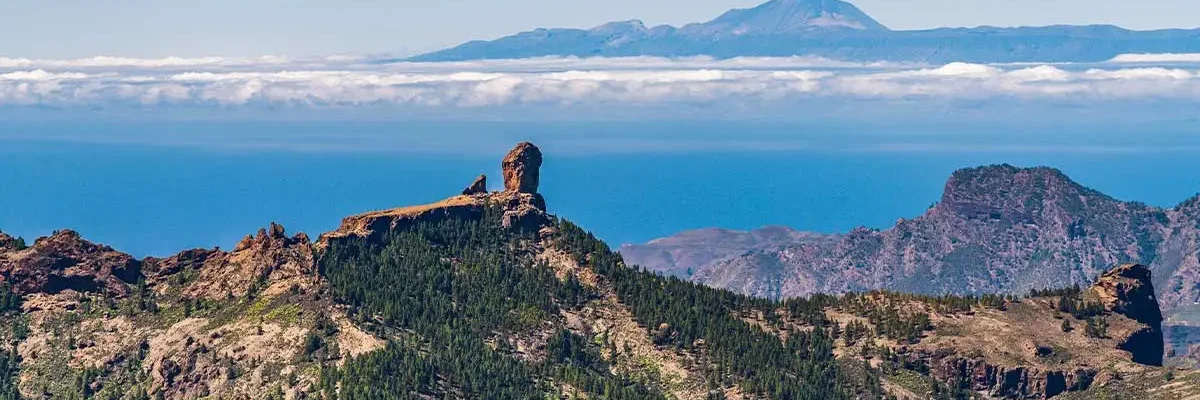
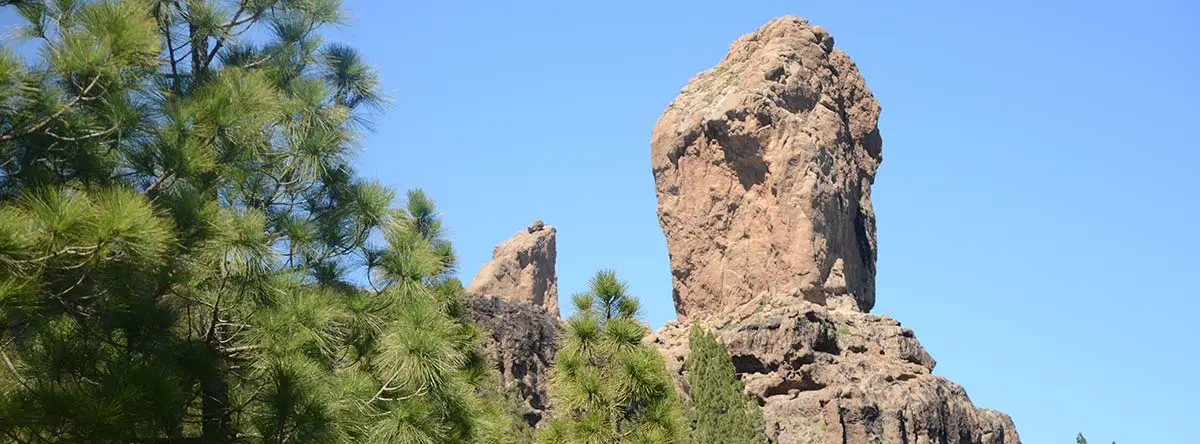
Roque Nublo is a volcanic formation created millions of years ago during an explosive phase in the island’s geological history. It is a phonolite monolith – magma that solidified inside an ancient volcanic vent. Over time, erosion wore away the surrounding rock, leaving this tougher structure exposed.
Around it lies a series of lava platforms carved by erosion, with views in every direction. The landscape is dry and rocky, with sparse vegetation, though Canarian pine forests still dominate the lower slopes. as direcciones. El paisaje es seco, pedregoso y con vegetación dispersa, aunque los pinares canarios siguen dominando en los tramos más bajos.
How to reach the start of the trail
A permit is now required to access Roque Nublo, available free of charge online. Without it, entry to the trail is not allowed.
The most common starting point is La Goleta, on the GC-600 road between Ayacata and the Pico de las Nieves junction. Parking at the trailhead is no longer permitted. Visitors must leave their cars in a designated car park and from there take a Global shuttle bus to the start of the trail.
The path is straightforward and clearly signposted, but it’s best to book both the permit and parking in advance, especially at weekends and on holidays. From Las Palmas de Gran Canaria, the drive to the car park is around 43 kilometres and takes about ninety minutes.
Planning your visit: timings, driving route and useful stops
It pays to plan ahead. With the new permit system and mandatory parking, timings need a little more margin – particularly at weekends and holidays when visitor numbers are higher.
Starting early or later in the afternoon helps avoid the crowds and makes the most of the day. Check the shuttle schedule too, as it dictates the timing of your hike.
The most direct driving route from Las Palmas de Gran Canaria is via Santa Brígida, La Vega de San Mateo and Tejeda. It’s around 43 kilometres of winding mountain road – slow in parts, but with spectacular scenery that makes a stop at one of the viewpoints worthwhile.
Best time to hike up to Roque Nublo
The route can be done at any time of day, but afternoons are usually quieter. If you time it with sunset, the views gain depth and colour. In summer, avoid the midday heat. Many visitors prefer to climb later in the day to enjoy the sunset and a calmer atmosphere. Remember to check the shuttle times, as these set the real starting point of your walk.
What to see along the way
Driving from Las Palmas de Gran Canaria, the most direct route passes through Santa Brígida, La Vega de San Mateo and Tejeda. It’s a 43-kilometre mountain road with slow stretches but dramatic views. The scenery changes as you climb: from green valleys to volcanic rock and pine forests.
The journey from Las Palmas to the start of the trail takes about ninety minutes by car. Allow longer if you plan to stop for food, photos or simply to take in the views.
Recommended stops on the climb
Two places that often impress first-time visitors are Cruz de Tejeda, with stalls selling local products such as cheese and honey, and the Degollada de Becerra viewpoint, which offers sweeping views of the island’s centre. On clear days you can make out Roque Bentayga, the village of Tejeda and, in the distance, Mount Teide.
From here you can also spot Roque del Fraile, a slimmer and less well-known rock formation beside Roque Nublo. Although the trailhead is not here, many people stop to take in the panorama and snap photos before continuing to La Goleta.
Hiking up to Roque Nublo
The trail is just over 3 kilometres there and back. The ground is dry and volcanic with some loose stone, but the ascent is steady and not too demanding. It begins among Canarian pines and, as you gain height, the landscape opens to the west of the island.
On clear days, you’ll see the Caldera de Tejeda, Roque Bentayga and, with luck, even Mount Teide on the horizon. The final stretch opens out onto a plateau of reddish rock, where the towering 90-metre Roque Nublo comes into full view.
Views from Roque Nublo
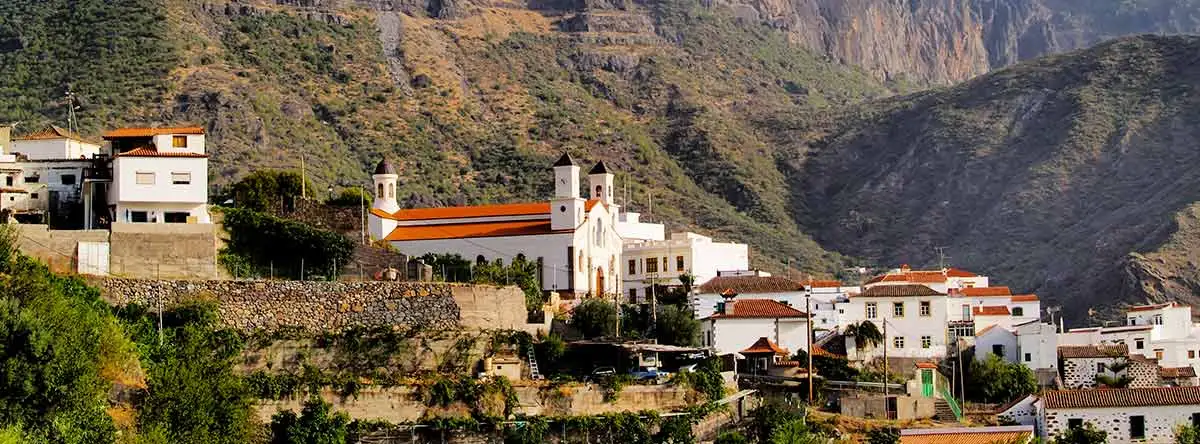
From the plateau beside the rock, the views of central Gran Canaria are breathtaking. Beyond Roque Bentayga and the Caldera de Tejeda, you can clearly see the village of Tejeda, Roque del Fraile and, on very clear days, the outline of Mount Teide. The sense of space is immense, especially at sunset, when the contrasts between rock, sky and peaks are at their most striking. You can also see the Tablón del Nublo, a broad plain where Roque de la Rana and Nublo itself rise, both visible from many points on the island.
Alternative routes to Roque Nublo
Most visitors take the La Goleta path, but it isn’t the only way up. You can also reach it on foot from La Culata, a small rural hamlet on the far side of the rock, or from La Niña reservoir. These trails are longer, steeper and require more preparation, but they offer a different perspective on the area.
For those looking for more than a short walk, they’re excellent alternatives – and far less busy.
What to know before the hike
Although the walk to Roque Nublo is short and well marked, it shouldn’t be taken lightly. Expect loose stone, direct sun and no services nearby. Essentials include:
- Sturdy walking shoes or trainers
- Plenty of water
- Sun protection (glasses, cream, hat)
- Comfortable clothing, with an extra layer in winter
- A fully charged phone, in case you need orientation or contact
On weekends and holidays, the trail can be crowded. Going early or midweek usually makes for a better experience. There is no shade or water along the way, and once you start the climb there is little chance to improvise.
Where to stay when visiting Roque Nublo
Roque Nublo is in the centre of the island, but it’s easy to visit in a day from the south. From Meloneras or Playa del Inglés, the drive to the trailhead is less than ninety minutes. For this reason, many travellers stay in the south and dedicate a day to exploring the interior.
At Lopesan Hotel Group we have everything you need to make your visit to Roque Nublo seamless. Our hotels – Lopesan Costa Meloneras, Lopesan Baobab Resort and Hotel Faro, a Lopesan Collection Hotel – are excellent bases for your excursion. Each combines comfort with good connections to the island’s interior, offering stays designed for both relaxation and adventure. We look forward to welcoming you!