Rügen may not make it onto Europe’s best-known travel lists, but that doesn’t mean it isn’t worth a visit. Germany’s largest island, set in the Baltic Sea to the north of the country, is a place of white cliffs, quiet villages and forests that spill down to the shore. It has a character all its own, without ever needing to demand attention.
This isn’t a warm or tropical island. The weather changes quickly, the wind can be brisk, and sunshine is never guaranteed. Yet that’s exactly what makes travelling to Rügen different. Here you walk at an unhurried pace, take time to notice the details and enjoy life in a slower rhythm.
In this guide, you’ll find out what to see on Rügen and what kind of weather to expect throughout the year. The climate plays a bigger role than you might think – exploring a national park under blue skies feels very different from doing so in thick fog. Even so, there are places here that are rewarding whatever the weather.
What to see on Rügen: highlights worth your time
The island isn’t huge, but it’s varied enough to fill several days of travel. Here are some of the most rewarding spots, best enjoyed slowly and without feeling the need to cover every corner.
Stubbenkammer cliffs (Jasmund National Park)
These chalk cliffs are among Rügen’s most famous sights and one of the most striking landscapes in northern Europe. Rising more than 100 metres above the Baltic Sea in places, they’re nothing short of dramatic. The most iconic viewpoint is the Königsstuhl (or “King’s Chair”), though the coastal path offers equally breathtaking views without needing to reach the summit.
The park also features UNESCO-protected beech forests and well-marked trails for easy walks. Visit early in the morning or outside peak season, as it’s one of the island’s busiest spots.
Cape Arkona
At Rügen’s northern tip, Cape Arkona is a windswept headland with several lighthouses. You can get there on foot or by bike from the nearby village of Putgarten, as cars aren’t allowed beyond that point. Alongside the cliffs and sweeping views, there are remains of a Slavic fortress and small exhibitions telling the story of the site. In the mist it feels almost cinematic; in sunshine you can see all the way to the neighbouring island of Hiddensee.
Sellin and its famous pier
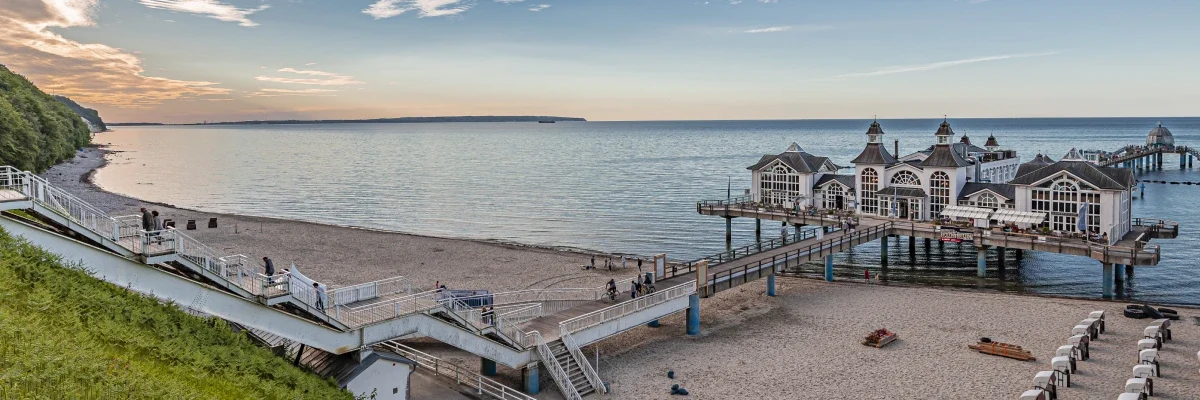
Sellin is one of the best-known resorts on Rügen’s eastern coast, thanks largely to its Seebrücke – a wooden pier stretching more than 300 metres out to sea. The current structure is a 1990s reconstruction, but it still captures the spa architecture of the early 20th century.
The beach around it is wide and family-friendly, dotted with traditional wicker chairs. Sellin also makes a good base for exploring other parts of the coast or hopping on the tourist train that links several of the historic resorts.
Binz and other historic seaside resorts
Binz is the largest of Rügen’s traditional seaside resorts. It has a lively promenade, imperial-era architecture and a wide choice of cafés, terraces and places to stay. In summer it hums with life, but outside the peak months it keeps the feel of a quiet town by the sea.
Rügen Bridge and Stralsund
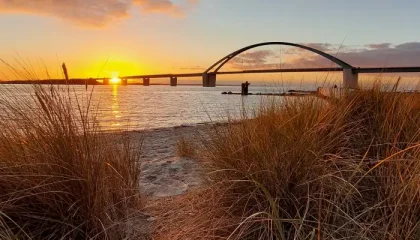
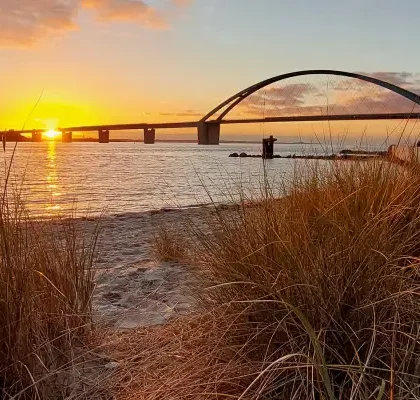
The island connects to the mainland by a causeway and a modern bridge, the Rügenbrücke, which brings you to Stralsund in just a few minutes. While technically outside Rügen, Stralsund is worth a stop. Its Hanseatic old town, Gothic churches and revitalised harbour make it a fascinating detour before or after your time on the island.
Nature, trails and excursions
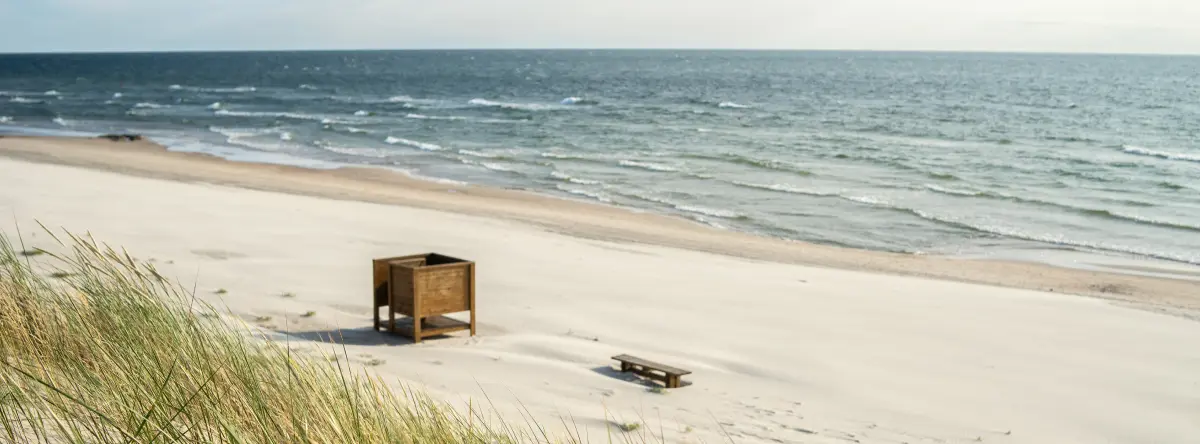
Much of Rügen’s appeal lies in its paths, open spaces and the chance to explore on foot, by bike or by boat. With protected areas, viewpoints, local wildlife and endless trails, the island invites discovery at your own pace.
Jasmund National Park
Renowned for its cliffs, the park is also home to ancient beech forests listed as a UNESCO World Heritage Site. Well-marked trails, many flat and easy, guide you through dense woodland with occasional clearings that open onto the sea.
The coastal path from the Königsstuhl to Sassnitz is especially rewarding, with sea views, shady stretches and rest spots along the way. In spring and autumn, the changing foliage ensures each visit feels different.
Boat trips, cycling and hiking
One of the most relaxing ways to see Rügen is from the water. From ports such as Sassnitz, Lauterbach or Breege, boats trace the coastline, offering new perspectives on the cliffs – particularly at sunset. There are also excursions to the nearby island of Hiddensee.
On land, the network of cycle routes and walking trails is extensive, linking many of the island’s highlights without using the main roads. Routes vary in difficulty, both inland and along the coast. Bicycles are available for hire in almost every tourist town.
Safari in the south
Not a safari in the African sense, but a unique way to see another side of Rügen. In the south, around Middelhagen and the Zicker Hills, you’ll find reserves and rural areas where migrating birds, deer, foxes and wild boar are easy to spot. Local companies offer adapted vehicle tours or guided walks at dawn and dusk.
This area is also a prime spot for crane watching in autumn, when they pause here on their migration south.
Culture and local history
Although Rügen’s natural beauty is its main draw, the island also has a rich history and cultural life that add depth to any visit. From archaeological remains to 20th-century architecture, local museums and seasonal festivals, there’s plenty to explore.
Rügen Heritage Museum
In Göhren, in the southeast of the island, this small museum is a worthwhile stop if you’re after a cultural interlude. The Mönchguter Heimatmuseum displays objects, costumes, tools and documents that illustrate life here in centuries past, particularly in rural and maritime settings.
The exhibition is modest but well presented, combining historic buildings with original artefacts, and takes less than an hour to explore.
Soviet relics and Prora
One of Rügen’s most striking landmarks is Prora, a vast resort complex built by the Nazi regime as part of the “Kraft durch Freude” (“Strength through Joy”) programme. Stretching for several kilometres along the coast, it was designed to host more than 20,000 people, though it never fulfilled its purpose.
After the war it was used by the Soviet army and later by East Germany’s military. Today, parts of the site house a museum, hostels, apartments and cultural spaces. Visiting Prora is less about beauty and more about what it represents.
Festivals and cultural life
Rügen’s cultural calendar is livelier than it first appears. In summer there are open-air concerts, craft markets and small music or theatre festivals, particularly in Binz, Putbus and Bergen. There are also film screenings, food fairs and seasonal traditions.
It may not be a cultural capital, but it does offer appealing alternatives to the beach and hiking – especially when the weather isn’t kind.
Practical tips for your trip
Rügen isn’t a large island, but it’s varied enough to warrant some planning – from where to stay to how to get around and what to expect on the road. Here are some useful pointers.
Where to stay
If you’re after comfort, a good location and attentive service, the IFA Rügen Hotel & Ferienpark, part of Lopesan Hotel Group, is an excellent choice. Located in Binz – one of the island’s liveliest areas – it offers easy access to the beach and good connections to other points of interest.
The hotel is noted for its attention to detail and guest-focused approach, with an indoor pool complex, family facilities and everything needed for a worry-free stay. It also reflects the quality and excellence for which Lopesan Hotel Group is known.
How to get to Rügen
The island is connected to the mainland by road and rail, so getting there is straightforward. By car, you can cross via the Rügendamm causeway or the newer Rügenbrücke bridge, which helps avoid the traffic jams of high season.
There are also direct trains from cities like Berlin and Hamburg, stopping at key island towns such as Bergen, Binz and Sassnitz.
In summer, ferries arrive from other Baltic locations such as Trelleborg (Sweden) or Bornholm (Denmark), though this is a slower and less common option.
How long you need to explore the island
Although not particularly large, Rügen’s secondary roads, protected areas and rural landscapes can make journeys longer than expected. Driving from one end to the other takes about an hour and a half, but the best way is to take your time. Distances can be deceptive, especially if you want to stop along the way.
Is Rügen worth visiting in bad weather?
Not every day on Rügen is sunny, and that’s worth bearing in mind. But a grey sky doesn’t mean your trip will be wasted. In fact, the island has several indoor attractions that are perfect for days of wind, rain or fog.
Among the museums, highlights include the Heritage Museum in Göhren, the visitor centre at Prora and the small harbour museum in Sassnitz, focused on local maritime history. They’re all quick to explore and shed light on Rügen’s links with the sea, tourism and 20th-century politics.
Wellness facilities are another option. If you’re staying at the IFA Rügen Hotel & Ferienpark, you’ll have access to indoor leisure and relaxation spaces – ideal for days when the beach isn’t an option.
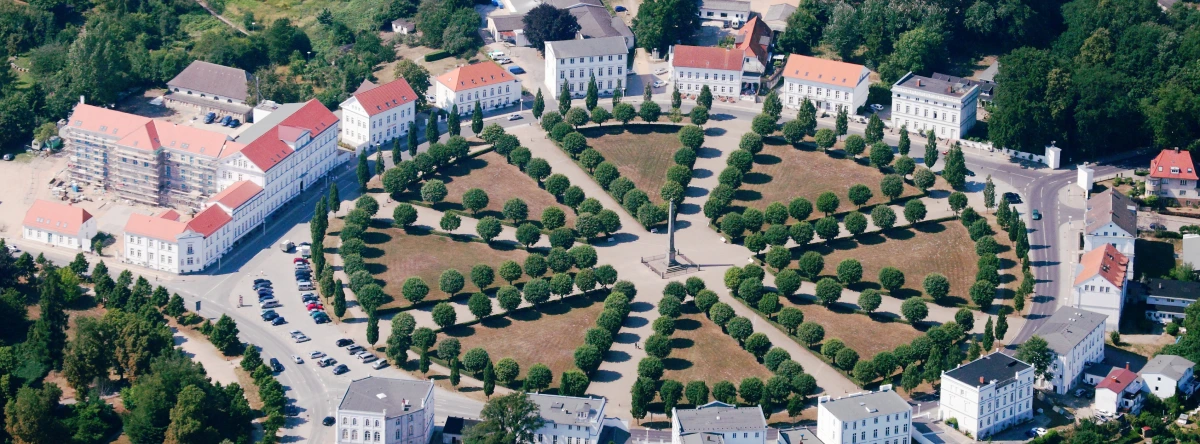
You’ll also find a good selection of cafés, restaurants serving local food and traditional houses worth discovering. Towns like Putbus and Bergen have historic centres perfect for short walks, even with an umbrella in hand.Rügen doesn’t need sunshine to work its magic. With cloud or mist, the scenery changes, but it still captivates. That ability to adapt to the day – and to your mood – is part of its charm. Ready to discover it?