The Canary Islands are characterised by their great natural attraction. The great diversity of the whole territory is a product of the geographical conditions of the archipelago, such as its subtropical latitude, its insular nature and the volcanic nature of its soils. The flora of the Canary Islands includes a large number of endemic and relict species that have survived from past climates in specific areas of the islands.
In this article, we want to show you the most curious plants of Gran Canaria, in order to appreciate their value as unique species that connect us with this wonderful environment.
8 endemic plants of Gran Canaria
When we talk about endemism, we are referring to species, plants or animals, which are limited to a specific geographical area. Here are 8 of the island’s endemic plants for you to discover on your next excursion:
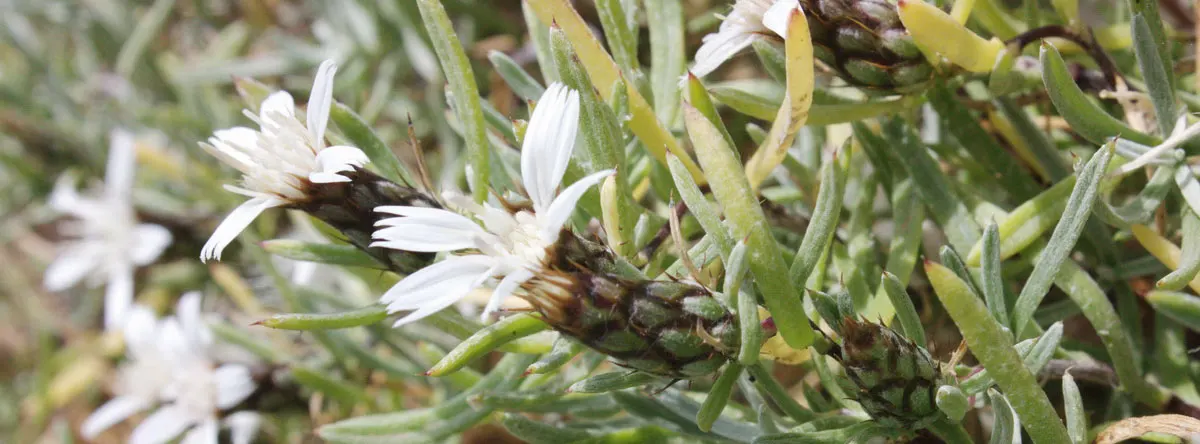
Cabezuela marina (Atractylis arbuscula)
We begin this list of the plants of Gran Canaria with this rare endemic species. The variety Cabezuela marina schizogynophylla Svent. et Kaen is a shrub of about 50 centimetres that is characterised by its linear leaves of 2 to 4 cm. These leaves are rigid in structure and silvery in colour, with thorns and pink or white flowers. Although there are very few specimens in the wild, it is possible to find an excellent sample in the Canarian Botanical Garden “Viera y Clavijo”.
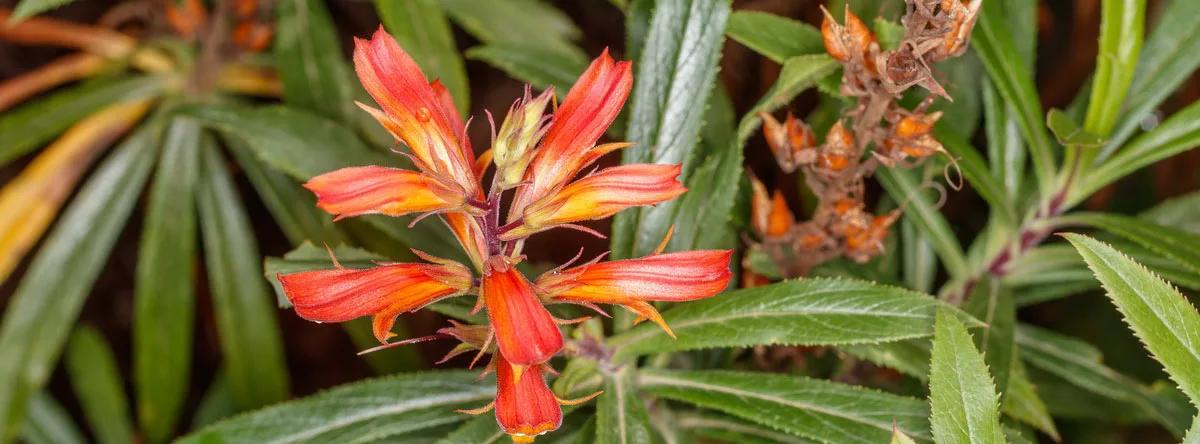
Moya crested cockscomb (Isoplexis chalcantha)
Although it is one of the best known native plants of the Canary Islands, it is rare and scarce. Its origin is associated with the remains of the laurel forest that remain in the mountainous and more humid part of the island.
The Cresta de gallo de Moya is a shrub that can reach a metre in height, with simple, lance-shaped, serrated-edged leaves of about 15 cm and a beautiful dark green colour. However, the most characteristic and beautiful aspect of this plant are its flowers, which can reach 20 cm in length and have a striking dark red or copper tone. The flowering of this type of plant endemic to Gran Canaria takes place from May to June and its fruits are borne later, until August.
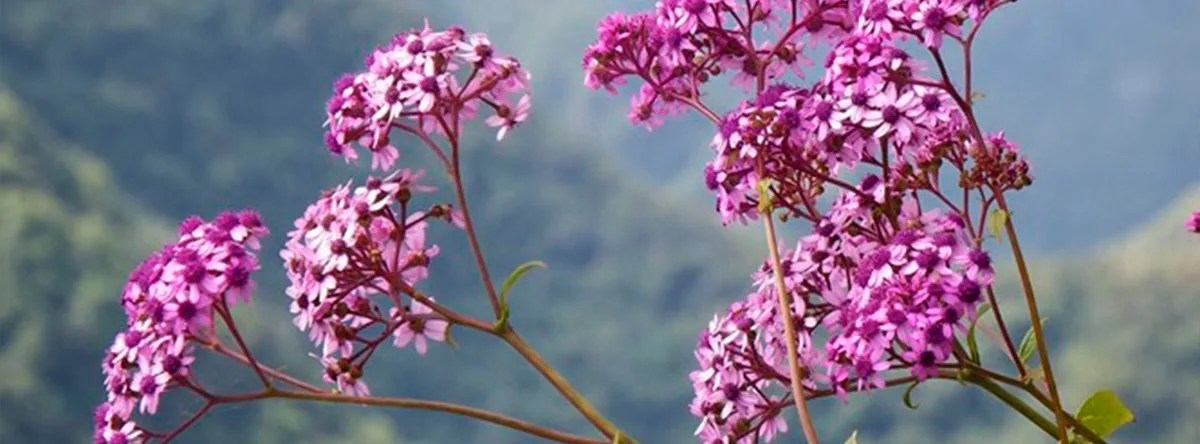
Woody mayflower (Pericallis hadrosoma)
Among the plants of Gran Canaria, the Flor de Mayo is one of the most common. It grows between 1,200 and 1,400 metres above sea level, on inaccessible cliffs and in high humidity areas.
This herbaceous plant can grow to a height of about 80 cm and has slender, highly branched, dark purple stems. The leaves are small and form a kind of sphere where, when in flower, they are arranged in inflorescences of about 20 small flowers. These flowers are a beautiful violet colour that will not go unnoticed by your eyes.
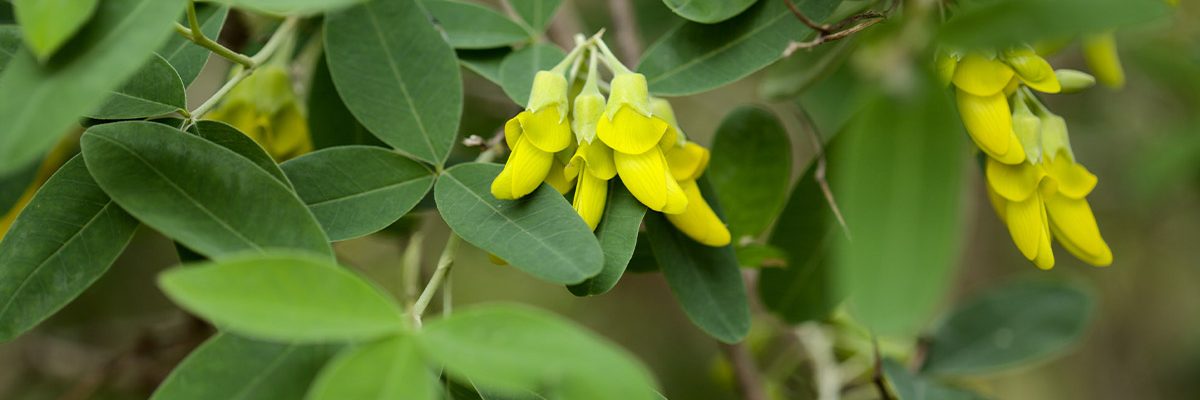
Oro de risco (Anagyris latifolia)
This is one of the typical plants of the Canary Islands that is in danger of extinction, due to overgrazing, traditional uses and even predation by rabbits. However, it can be found naturally in the surroundings of the Jardín Canario.
It is a shrub-like leguminous plant that can grow up to 5 metres in height. It flowers from autumn to mid-winter and its fruits are borne between January and March. Once the fruits ripen, the plant begins to lose its leaves.
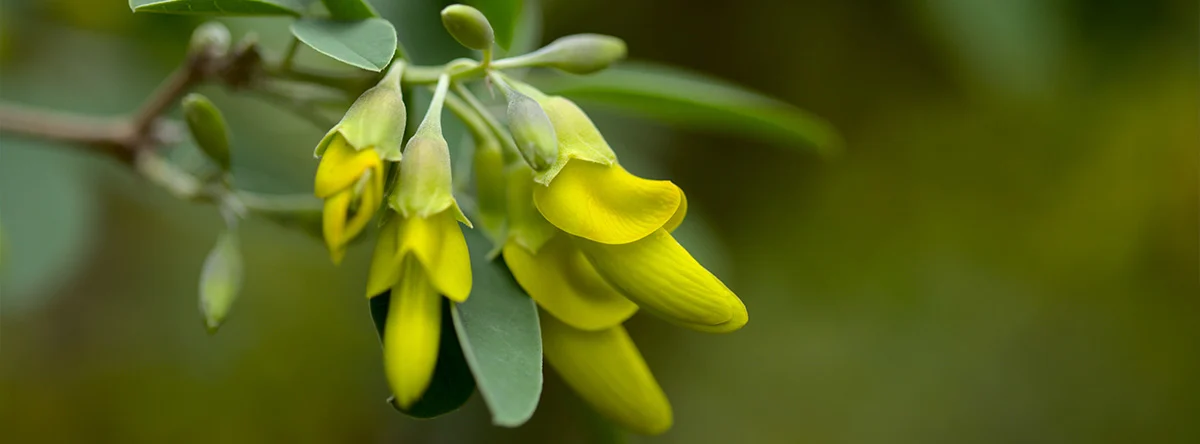
Mountain broom
It is one of the most characteristic endemic plants of the Canary Islands, present in both Gran Canaria and Tenerife. Unlike other plant species endemic to the Canary Islands, its population has been constantly increasing. It can be found in many areas, especially in rocky soils. If you dare to go hiking in Gran Canaria, you are sure to come across it.
It is a shrub about 4 metres high, with green tones, very branched and with greyish-brown branches. Its flowers are a striking yellow colour and are used in various traditional medicinal treatments. However, its harvesting is currently prohibited.
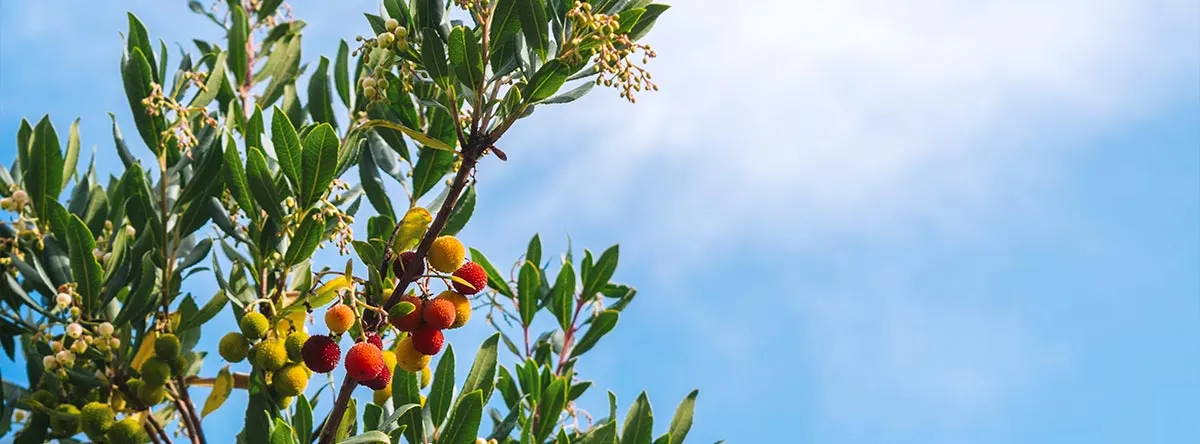
Canary Island strawberry tree
This is another typical Canary Island plant that can be found on almost all the islands, except Lanzarote and Fuerteventura, as it grows in steep and humid areas.
The strawberry tree is a tree capable of reaching heights of up to 15 metres. Its leaves stand out, which are elongated, about 15 centimetres long and lance-shaped. The flowers of this tree are bell-shaped and can show shades of pale green to white. The fruits, in turn, are fleshy and orange, and are also edible.
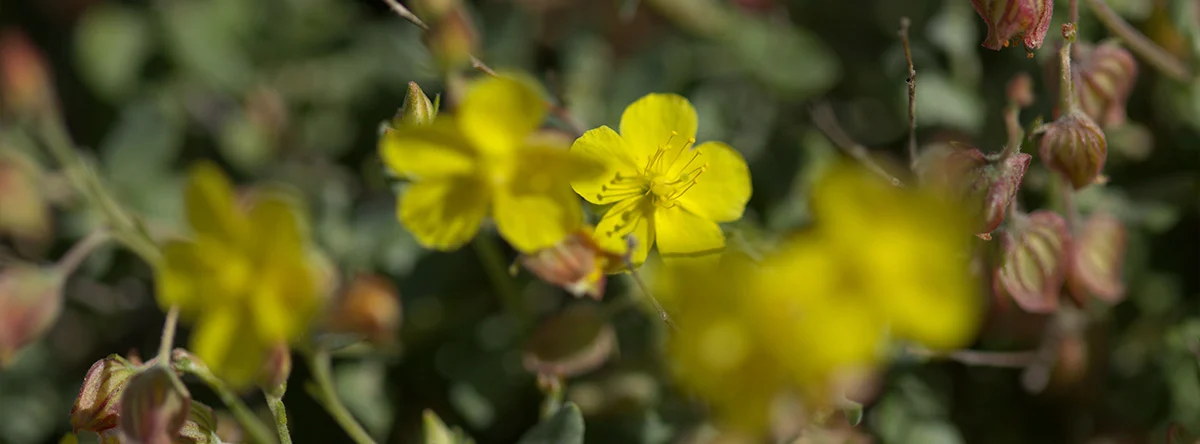
Jarilla turmera (Helianthemum canariense)
Jarilla turmera is another of the native plants to the Canary Islands. It is abundant in the central and eastern islands, where it covers large areas in low and medium arid zones.
This shrub can reach up to 30 centimetres in height and is easy to identify by its dense branching and grey bark on the trunk. Its leaves also have a greenish-grey tone. Its flowering occurs between winter and spring and is scarce, even showing solitary pieces all over the bush. The most beautiful and outstanding feature of these flowers is their pale yellow colour.
Tajinaste red (Echium wildpretii)
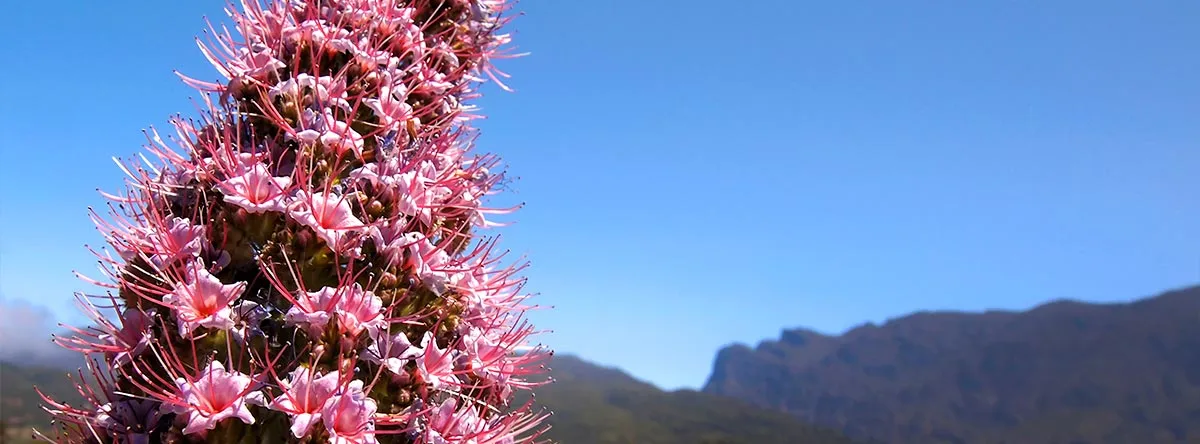
Another of the typical plants of the Canary Islands are the tajinastes in different shades, ranging from white to blue and even red. The red variety is really quite particular and attractive, due to the striking colour of its red rosettes.
This species of red tajinaste can reach up to 3 metres in height and, among the curiosities of this specimen, it is also known as Sangre del Teide. Nowadays it can also be seen on the summits of Gran Canaria, although it is native to the neighbouring island of Tenerife.
Get to know Gran Canaria with the Lopesan Hotel Group
In short, the endemic plants of Gran Canaria offer a wide and colourful range of varieties that will not fail to impress you during your visit to the island. You will be able to appreciate them while hiking, and marvel at this important part of the beauty and richness of the Canarian flora. From the Lopesan Hotel Group we encourage you to explore Gran Canaria and stay in our magnificent hotels, discover a unique nature resulting from the extraordinary geographical conditions of the archipelago!