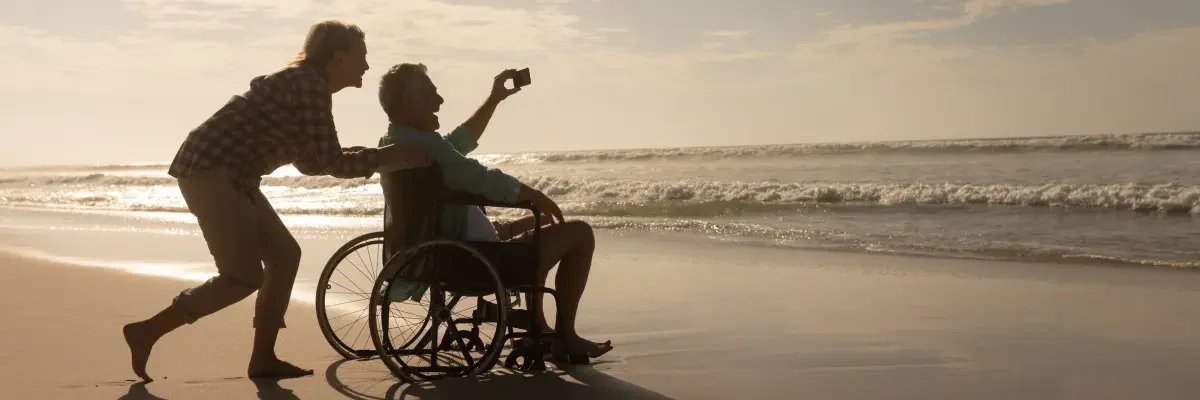
Travelling to Fuerteventura with reduced mobility is no longer the challenge it once was. Over the past few years, the island has invested in improving its infrastructure so that its volcanic landscapes and endless beaches can be enjoyed by everyone, removing many of the architectural barriers that once limited access. Today, Fuerteventura offers a network of services and accessible facilities that make it an excellent destination for travellers seeking autonomy and comfort.
Boardwalks now provide easier access to the sand in the main tourist areas, and visitors can also find assisted bathing services as well as adapted transport options. In this guide, we explain which areas provide the best facilities and what options are available for getting around the island.
Accessible beaches in Fuerteventura
Fuerteventura’s coastline includes several beaches where access to the sea is properly supported. Accessibility here goes beyond simply installing a ramp at the entrance. The goal is to provide a complete infrastructure that allows visitors to reach the water safely and comfortably.
These are some of the beaches that offer the best services for people with reduced mobility:
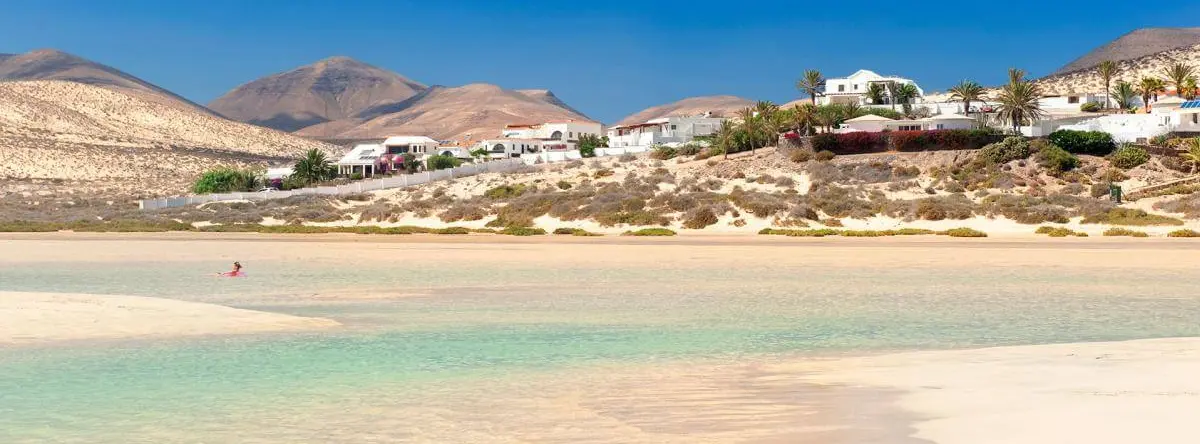
- Playa del Matorral (Morro Jable) – A benchmark beach in the south of the island. Wide wooden boardwalks cross the nearby salt marsh and extend close to the shoreline. The beach offers adapted shaded areas, accessible toilets and an amphibious beach wheelchair service available on request.
- Playa del Castillo (Caleta de Fuste) – Because it sits inside a protected bay, the sea here is usually very calm, which makes bathing much easier. The beach has access ramps, boardwalks and specialised staff who can provide assistance when needed.
- Grandes Playas de Corralejo – In the north of the island, this area offers adapted access points and reserved parking spaces very close to the beach entrance. It is advisable to check wind conditions in advance, as the wind can sometimes be stronger here.
- Playa de Los Pozos (Puerto del Rosario) – As an urban beach that has recently been renovated, it incorporates universal accessibility features, including gently sloped ramps and adapted showers.
Inclusive outdoor activities
Enjoying Fuerteventura’s natural landscapes beyond the coastline is also possible. The island council provides Joëlette wheelchairs, a specialised single-wheel all-terrain chair that allows people with reduced mobility to explore trails and volcanic terrain that would otherwise be inaccessible. The service is generally free of charge, although advance booking is required so volunteers can be organised to assist with the route.
For those looking for something more active, several surf schools in Corralejo and Costa Calma offer adapted surfing programmes. These schools provide specialised equipment and trained instructors so that anyone, regardless of physical condition, can experience the sensation of riding the waves.
Museums and cultural centres
Fuerteventura’s cultural venues have also improved their accessibility in recent years. Visiting museums can be an excellent option on windy days or simply a way to learn more about the island’s history and heritage.
- Majorero Cheese Museum (Antigua) – One of the island’s best examples of universal accessibility. The entire site is flat, with firm walkways that allow visitors to explore both the windmill and the cactus gardens without difficulty. The exhibition panels are also positioned at a comfortable height for wheelchair users.
- Salinas del Carmen Interpretation Centre – Located close to Caleta de Fuste, this centre explains the traditional production of sea salt. The route through the salt flats has been adapted with compacted paths that make it easier to reach the most visually striking areas without encountering uneven surfaces.
- Casa de la Cilla (La Oliva) – This museum dedicated to grain storage features levelled access points that allow visitors to explore traditional Canarian architecture from the inside without the usual limitations found in historic buildings.
Scenic viewpoints
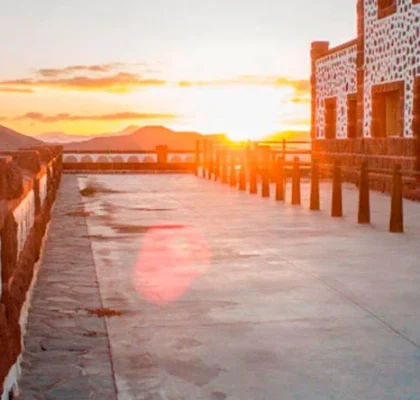
One of the greatest pleasures of travelling around Fuerteventura is its vast landscape, and many of the island’s most impressive viewpoints have been adapted so that everyone can enjoy them. Instead of requiring difficult walks, these viewpoints usually allow visitors to park nearby and access safe, level observation platforms.
The Mirador de Guise y Ayose, located on the road that climbs towards Betancuria, is an essential stop. It features a spacious parking area and a smooth path leading directly to the sculptures of the island’s ancient kings. From here, the views stretching north across the landscape are spectacular and entirely free of physical barriers.
Gastronomy without obstacles
Enjoying local cuisine is an essential part of any trip. In Fuerteventura, most restaurant areas in tourist hubs such as Corralejo, Caleta de Fuste and Morro Jable are located at street level or along flat seaside promenades, making it much easier to access terraces without needing to navigate steps.
Many restaurants specialising in fresh fish and traditional goat dishes, particularly in inland towns like Antigua or La Oliva, have adapted their entrances and bathrooms in recent years. Restaurants located along seafront avenues are usually the safest option, as the promenade itself guarantees a smooth and level surface all the way to the table. Enjoying majorero cheese or papas arrugadas with a view of the sea is an experience that, today, presents very few barriers across most establishments on the island.
Getting around the island with reduced mobility
Being able to move independently is essential when exploring any destination. In Fuerteventura, the most recommended option is renting an adapted vehicle. Local companies such as Cicar offer cars with steering wheel controls and access ramps, although it is important to reserve well in advance due to the limited availability of these vehicles.
If you prefer public transport, the intercity bus network (known locally as guaguas) includes ramps in most modern vehicles. In addition, the main tourist areas and the airport are served by Eurotaxis, adapted vehicles that allow passengers to travel without leaving their wheelchair.
Practical tips: Fuerteventura Airport
The journey begins and ends at the airport, so understanding the available assistance services is essential to avoid unnecessary stress. Fuerteventura Airport (FUE) provides Aena’s free “Sin Barreras” assistance service, which should be requested at least 48 hours in advance.
Through this service, a staff member will meet you at the terminal entrance or at the designated meeting point in the car park and accompany you through check-in and security control, right up to your aircraft seat. It is a highly valued service that helps ensure a smooth start to a barrier-free holiday in Fuerteventura.
The baggage reclaim area and car rental desks are also located on a single ground-level floor, eliminating the need to use lifts or complicated ramps when arriving.
Choosing accommodation that understands accessibility as part of comfort is equally important. In southern Fuerteventura, IFA Altamarena Hotel stands out thanks to its privileged seafront location along Jandía Beach. The resort is surrounded by spacious tropical gardens and level communal areas, making it easy to move between the pools and restaurants. As an all-inclusive hotel with a full entertainment programme, it allows guests to enjoy an active holiday without needing to travel far from the complex. The rooms are functional and feature balconies or terraces, perfect for enjoying the Canarian sunshine in an adapted environment.
For travellers seeking greater privacy and space, IFA Villas Altamarena provide an excellent alternative. These exclusive villas eliminate any sense of confinement thanks to their open-plan design and large terraces overlooking the Atlantic Ocean. The spacious interiors are particularly beneficial for guests with reduced mobility, allowing easy movement between indoor and outdoor areas. Located just a ten-minute walk from the hotel, they combine the independence of a private villa with access to all the pools, services and entertainment of the main complex. Their position next to the Morro Jable seafront promenade also ensures that outings to the beach or nearby leisure areas remain comfortable and barrier-free.