
Madrid tells its story through food. It began in taverns, shared houses and neighbourhood markets, and it still shapes the city’s rhythm today. You’ll find it in historic dining rooms, of course, but just as much at the bar counter, in the daily set menu and in recipes passed quietly from one generation to the next.
Traditional Madrid cooking is built on recognisable dishes that haven’t needed reinvention to remain relevant. Hearty stews, fried specialities and recipes tied to the festive calendar define much of it. At its core, the city’s gastronomy keeps a distinctly popular spirit, closely linked to its urban past.
Each dish carries its own story and a way of eating that still feels current. Sitting down to a cocido, ordering a bocadillo de calamares or tasting rosquillas in May means taking part in a tradition that continues to live at Madrid’s tables.
Madrid gastronomy: tradition, identity and bar culture
Madrid’s traditional cuisine grew out of everyday life. It belongs to the neighbourhoods and to a city that expanded as an administrative capital while welcoming people from all over Spain. That mixture shaped both the recipes and the habits around them.
There’s a distinctly winter character to many of the classic dishes. Slow-cooked stews sit at the centre of the calendar, suited to the city’s continental climate. Cocido, tripe and seasonal potajes reflect a cooking style that understands food as sustenance and as an excuse to gather. These were dishes built from accessible ingredients and from the need to waste nothing.
Alongside this domestic side runs Madrid’s strong bar culture. Eating at the counter, sharing raciones and moving from one place to the next are part of daily life. Freshly fried bites, a sandwich prepared on the spot or a tapa served with a drink carry as much weight as the more substantial stews. That balance between hearty dishes and quick, informal eating defines much of Madrid’s culinary identity.
As the capital, Madrid has always absorbed influences. Products and techniques from other regions were adapted to the city’s markets and pace of life. Supplies arriving through historic market halls and the constant flow of new residents helped shape a gastronomy that remains recognisably local while reflecting the city’s diversity.
Typical Madrid dishes that define its cuisine
If you’re visiting the capital and want to try its traditional food, certain dishes appear again and again on menus and bar counters. They’reeasy to recognise and often linked to particular seasons or areas of the city. You don’t need a history lesson to enjoy them — just a sense of what to order.
These classics sum up what you’ll encounter in a long-established tavern or while wandering through the historic centre.
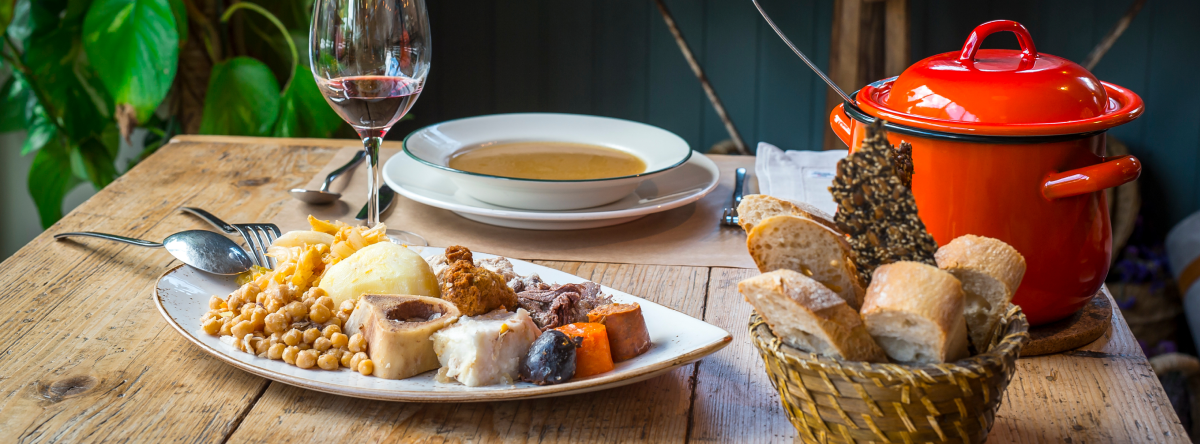
Cocido madrileño, the great classic
Cocido madrileño stands as the city’s defining dish. Made with chickpeas, assorted meats and vegetables, it is served in stages: first the broth, then the chickpeas and finally the meats — an order that forms part of the ritual. In 2026 it was recognised as Intangible Cultural Heritage by the Community of Madrid, reinforcing its historical and social significance. During the colder months, many restaurants feature cocido as a seasonal highlight.
Callos a la madrileña
Callos a la madrileña belong to the city’s most traditional repertoire and remain present on long-standing menus. The dish combines beef tripe and snout, often with chorizo and blood sausage, all bound together with paprika in a thick sauce. It is especially associated with winter and with neighbourhood taverns.
Bocadillo de calamares
The bocadillo de calamares is one of Madrid’s most recognisable street-food staples. Battered, fried squid tucked into crusty bread, it is closely linked to Plaza Mayor and the surrounding historic streets. It represents the city’s informal bar culture — quick, straightforward and still very much part of daily life.
Gallinejas and entresijos
Gallinejas reflect a more traditional side of Madrid cooking that can surprise first-time visitors. These fried lamb offal dishes have roots in popular festivals and old neighbourhood fairs. They no longer appear everywhere, but they remain a symbol of castizo Madrid and of a cuisine that has preserved very specific traditions.
Salt cod and vigilia stew
Salt cod plays an important role in seasonal cooking, particularly during Lent and Holy Week. In Madrid it appears battered and fried or simmered in stews served in classic bars. At the same time of year,vigilia stew — made with chickpeas, spinach and cod — returns to menus, tied to the religious calendar and still widely prepared.
Roast lamb and suckling pig
Roast lamb and suckling pig are not exclusive to Madrid, yet they are firmly established in its traditional offering. Rooted in Castilian cuisine, these slow-roasted dishes appear in specialist restaurants and family celebrations. Their presence reflects both geography and Madrid’s position as a gastronomic meeting point for regional traditions.
Sweet treats and traditional products
Madrid’s culinary calendar includes its share of sweets. Many traditional pastries are closely tied to specific festivities and reappear each year in bakeries across the city.
Rosquillas de San Isidro are linked to the city’s patron saint celebrations in May. The best known are the tontas and the listas, though several variations exist. They are eaten around the Pradera de San Isidro and have been part of the festivities since the nineteenth century.
Torrijas take centre stage during Holy Week. Slices of bread soaked in milk or wine, coated and fried, then finished with sugar, cinnamon or syrup. Each spring they return to bakery windows throughout the city.
Bartolillos madrileños, less familiar outside the region, are small fried pastries filled with custard cream. Also associated with Lent and Holy Week, they continue to be made in traditional bakeries.

Gastronomic tourism in Madrid
Gastronomic tourism means shaping a trip around food. The day unfolds through markets, taverns and dishes rooted in local tradition. It might begin with a stop at a municipal market, continue with an aperitif in La Latina or near Plaza Mayor, and end with a slow lunch built around a classic stew. At certain times of year, seasonal pastries add another layer to the experience.
In Madrid, this approach feels natural. Neighbourhoods have their own culinary identity and are easy to explore on foot. Food becomes a way of reading the city.
Understanding Madrid through its food
Madrid’s gastronomy shows how tradition and change sit side by side. Dishes that began in modest settings now coexist with a far broader culinary landscape. In a single afternoon, you can move from a decades-old cocido to a contemporary reinterpretation of Castilian cooking.
That contrast says much about the city itself. Madrid evolves, absorbs influences and modernises, yet keeps firm reference points in its traditional dishes. The table remains a meeting place across generations and neighbourhoods. What people eat in Madrid reveals how the city lives.
Traditional cooking still holds its ground. Cocido, callos and salt cod are not relics — they are prepared today much as they were decades ago. In a city that changes constantly, they offer a steady thread.
At Lopesan Hotel Group, gastronomy plays a central role in every property, with close attention paid to the culinary character of each destination.