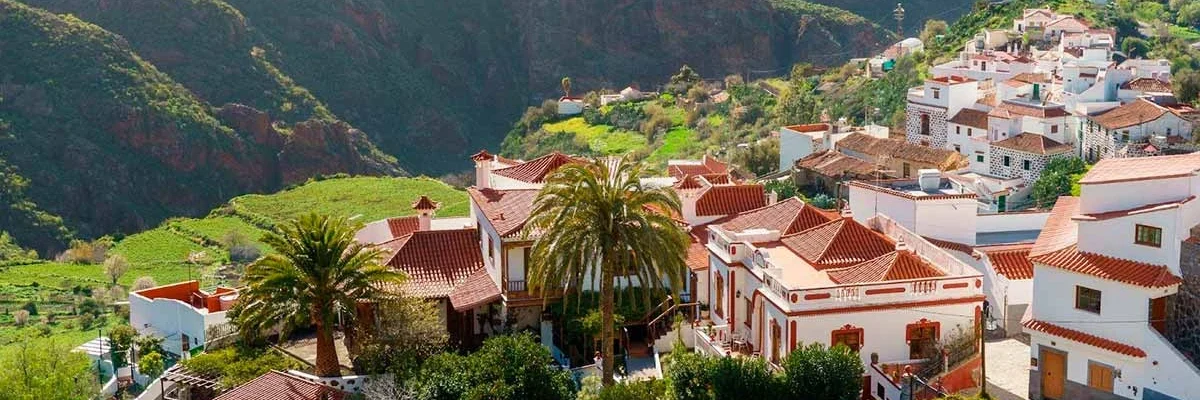
Gran Canaria has many sides, and one of the most surprising is revealed through its villages. Away from the main tourist areas, there are places that preserve the island’s essence: cobbled streets, traditional houses, quiet squares and landscapes that open up between mountains or by the sea.
Here we’ve gathered ten of the island’s most beautiful villages, each with its own special character. Some are surrounded by nature, others stand out for their history or architecture. All of them invite you to slow down, enjoy the quiet and experience the island from a different angle.
Villages in Gran Canaria worth visiting
Dotted across the island’s rugged interior and dramatic coastline, these villages captivate with their beauty, authenticity and traditions that remain very much alive. Wandering through them is another way of getting to know Gran Canaria: unhurried, with your senses on alert and your camera at the ready.
Some boast historic heritage, others charm with their natural setting, and many with the sense of peace in their streets. If you’re looking for picturesque spots in Gran Canaria, these villages have that hard-to-define magic you recognise the moment you arrive. And the best part? Most are less than an hour’s drive from each other.
The 10 most beautiful villages in Gran Canaria
Choosing just ten hasn’t been easy, but this selection takes in the best of the island’s interior, coast and most traditional areas. If you’d like to explore Gran Canaria’s prettiest villages, here’s a route that blends history, scenery and local life without artifice.
Inland villages
Artenara
High up in the island’s northwest, Artenara offers one of the most breathtaking panoramas in Gran Canaria. It’s the highest village on the island and one of the least touched by tourism, giving it a serene and authentic feel.
The landscape is defined by cave houses carved into the rock, striking viewpoints and a sense of tranquillity that’s increasingly rare. One of its most famous spots is the Unamuno Viewpoint, with a sculpture of the Spanish writer who visited in 1910 and was captivated by the surroundings.
Nearby you’ll also find the Risco Caído archaeological site, a UNESCO World Heritage Site that adds unique historical and symbolic value. If you’re after nature, altitude and silence, Artenara is a hidden gem worth seeking out.
Tejeda
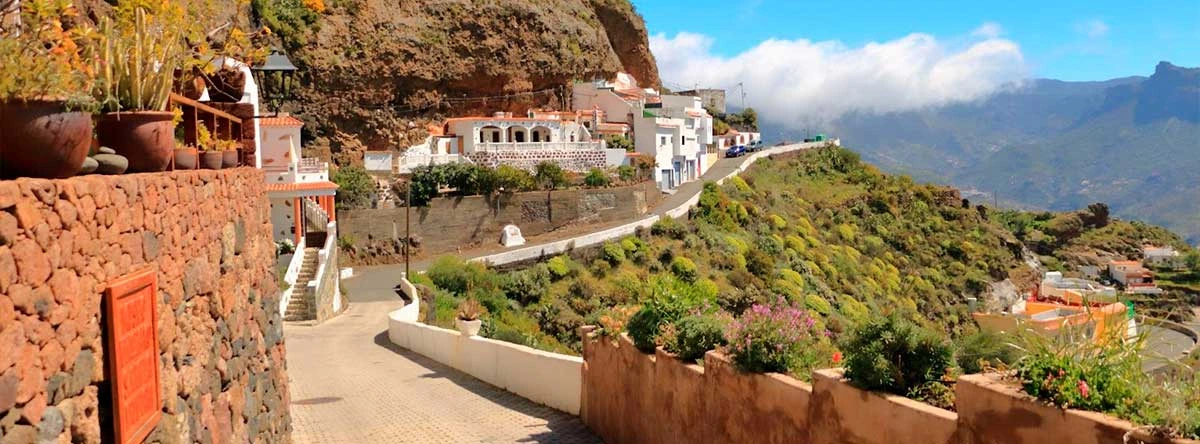
Tejeda is not only one of the most beautiful villages in Gran Canaria, but also one of the most celebrated in Spain. Nestled in the heart of the island among deep ravines and towering peaks, it’s a place made for lingering.
From its viewpoints you can admire Roque Nublo, the Caldera de Tejeda and, on clear days, even Mount Teide in the distance. Its whitewashed houses and carefully kept streets are perfect for a leisurely stroll. Here you can also try the famous bienmesabe and other almond-based sweets that are a hallmark of the area.
Tejeda is a must for anyone in search of nature, authenticity and tranquillity in a setting that feels timeless.
Firgas
Known as the “water village” for its springs and bottling tradition, Firgas is one of the most distinctive spots in the north. Though small in size, it has a strong identity: here everything revolves around water and its history.
At the heart of the old town you’ll find the Avenida de Gran Canaria, a stepped street with a central fountain flanked by the heraldic coats of arms of the island’s municipalities. It’s one of the most photographed corners of the village and a regular stop on any inland route.
Firgas is perfect for a short visit, especially if you enjoy discovering well-kept places full of character.
Agüimes
Agüimes is a quietly charming village, with a balance of tradition and calm that feels entirely authentic. Its old town is beautifully preserved, reflecting traditional Canarian architecture with pastel façades, wooden balconies and cobbled streets made for wandering.
Its proximity to the Guayadeque Ravine also makes it a great stop for those wanting to combine culture, scenery and local cuisine. Everything here encourages a slower pace: a coffee in the square, browsing a craft shop, or simply noticing the details hidden around every corner.
Veneguera
Veneguera is a small village in the south that still keeps the quiet, rural feel of another era. Surrounded by palm trees, fruit orchards and ravines, this small settlement keeps traditional Canarian architecture alive with low houses, stone walls and wooden balconies.
Although not a tourist destination, Veneguera has a discreet charm that lingers. Nearby you’ll find the Fuente de los Azulejos, a curious rock formation with colourful stripes that’s well worth a stop.
Teror
Set in the north-central part of the island, Teror is one of Gran Canaria’s most characterful villages. Its historic centre preserves traditional Canarian architecture, with colourful houses, wooden balconies and cobbled streets where every corner tells a story.
The village’s most iconic landmark is the Basilica of Nuestra Señora del Pino, a grand Catholic church dedicated to the island’s patron saint, which draws thousands of pilgrims and visitors every year. But beyond its religious importance, Teror is a place made for slow strolling, browsing its lively Sunday market or sitting at a terrace café to watch local life unfold.
If you’re looking for pretty villages in Gran Canaria where history and tradition are very much alive, this is one that simply can’t be missed.
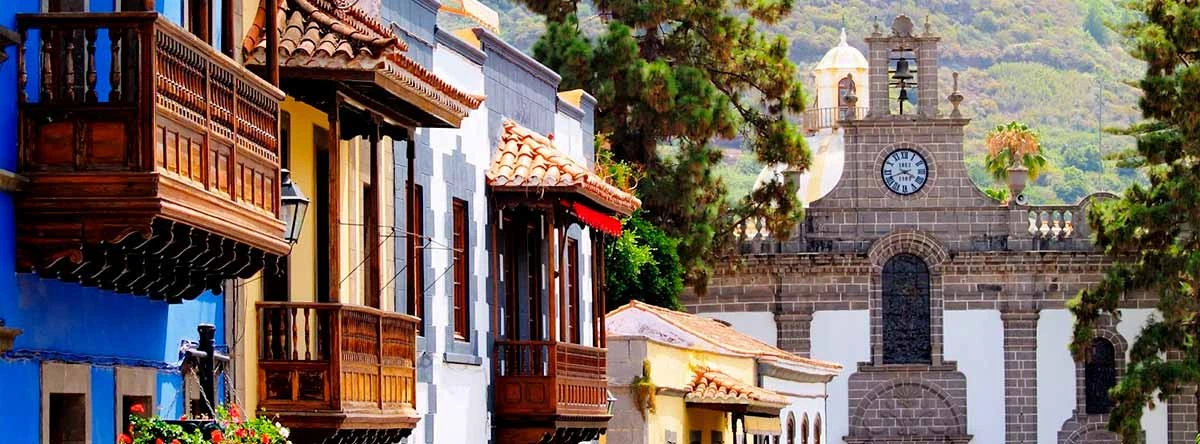
Wooden balconies, colourful façades and the Basilica del Pino: Teror keeps Gran Canaria’s traditional soul alive.
Coastal villages
Agaete
Agaete is one of the island’s most characterful coastal villages. In the northwest, it combines the seafaring atmosphere of Puerto de las Nieves with a historic old quarter of white houses and narrow streets.
Life moves at a different pace here: breakfast by the sea, a stroll around the harbour, and a plate of some of the island’s best fresh fish. Just minutes from the centre lies the Maipés archaeological site, with more than 700 pre-Hispanic tombs set among solidified lava.
Agaete is also the gateway to the valley of the same name, famous for its microclimate and coffee production — one of the few places in Europe where coffee is grown.
Arucas
North of the capital lies Arucas, a village that stands out for the elegance of its architecture and its rich history. Its most iconic building is the Church of San Juan Bautista, built from volcanic stone and visible from almost anywhere in the municipality.
Wandering through its historic centre feels like leafing through a history book: beautifully preserved façades, stately homes and lively squares. Arucas also has strong ties to banana cultivation and rum production, which add a unique flavour to any visit.
Puerto de Mogán
On the south-west coast lies Puerto de Mogán, one of the most picturesque villages in Gran Canaria. This small fishing enclave blends whitewashed houses, flower-lined streets and little bridges over canals, earning it the nickname “Little Venice”.
The harbour, full of colour and life, is perfect for an evening stroll or a meal by the sea. Inside, narrow streets adorned with bougainvillea remain peaceful even in high season.
Mogán is not only aesthetically beautiful, but also strikes a balance between tourism and local life. It’s a place that still has soul, despite its popularity.
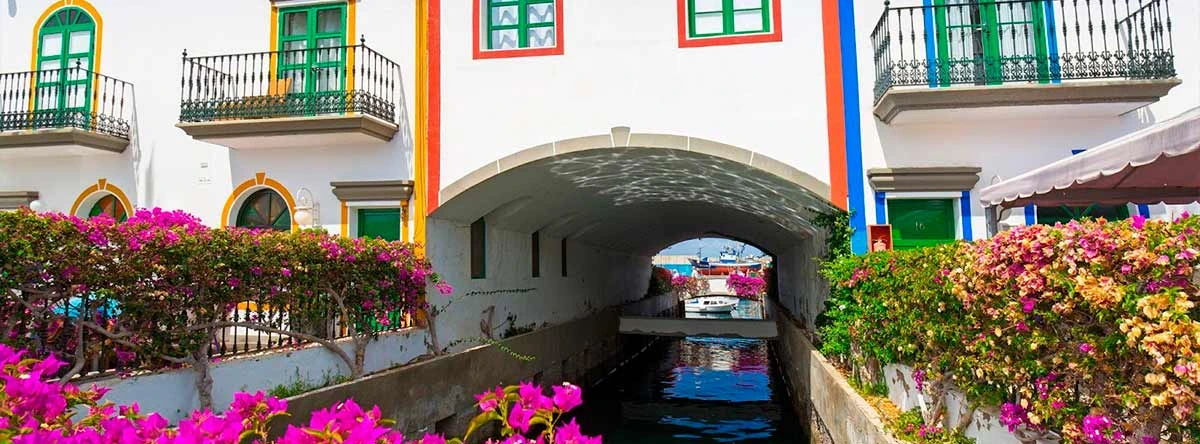
Gáldar
Gáldar
Gáldar was once one of the island’s pre-Hispanic capitals, and today it’s still a key place to understand Gran Canaria’s history. In the northwest, this village combines archaeological heritage, local life and a striking natural backdrop.
Its star attraction is the Painted Cave Museum, where you can see geometric murals, remains of dwellings and original artefacts. Strolling through the centre of Gáldar is also a pleasure, with cobbled streets, colourful façades and a lively main square.
If you want to explore the island beyond the beaches, Gáldar is a must.
Tips for getting the most out of these villages
Gran Canaria is easy to get around, but it’s best enjoyed slowly. If you’re planning to spend a few days discovering its villages, keep these tips in mind:
- Hire a car if you can: many villages aren’t well connected by public transport, and driving gives you the freedom to set your own pace.
- Avoid the hottest hours in summer: in the interior, it gets warm, and visits are more pleasant in the morning or late afternoon.
- Mix coast and inland: the island’s variety of landscapes is one of its greatest strengths. One day by the cliffs, another among almond groves.
- Take your time walking: many villages are best discovered on foot. Don’t rush; let the place set the rhythm.
- Try the local food: almond sweets in Tejeda, fresh fish in Agaete, hearty stews inland — each area has its own flavours.
Where to stay to explore Gran Canaria’s villages
Exploring Gran Canaria’s prettiest villages is a different — and deeply rewarding — way to experience the island. To make the most of it, it’s worth having a comfortable, well-located base to rest between excursions.
At Lopesan Hotel Group we offer exclusive options so you can combine inland routes with days by the sea: Abora Catarina by Lopesan Hotels, in Playa del Inglés, or Abora Interclub Atlantic, in San Agustín. We look forward to welcoming you!