Fuerteventura and its rich birdlife are one of the island’s greatest attractions that you shouldn’t miss. If you are a bird lover and are planning your holiday in Fuerteventura, you’ll likely want to know which birds you can find and photograph . In this article, we will tell you about 15 birds that you can see in their natural habitat, so don’t miss the opportunity to enjoy the unique biodiversity that this wonderful island has to offer.
Cory’s shearwater
The Cory’s shearwater (Calonectris borealis) is one of the most emblematic seabirds of Fuerteventura. With its grey and white plumage, it is often seen flying over the sea, especially at dawn and dusk. Its nocturnal songs, characteristic of the breeding season, create a unique atmosphere along the coasts of the island.
- Remarkable features: Greyish and white plumage, wingspan up to 1 metre.
- Habitat in Fuerteventura: Cliffs and sea caves.
- Where to see them: Jandía Peninsula, Corralejo Natural Park, north coast of Fuerteventura (Corralejo and El Cotillo).
Houbara bustard
The Houbara bustard (Chlamydotis undulata) is one of the island’s most representative birds. Large in size, it is perfectly camouflaged among the rocks and dry vegetation. Although rarely seen in flight, its courtship display is spectacular.
- Remarkable features: Large size, excellent camouflage.
- Habitat in Fuerteventura: Semi-desert plains and rocky hills.
- Where to see them: Central and southern plains of Fuerteventura.
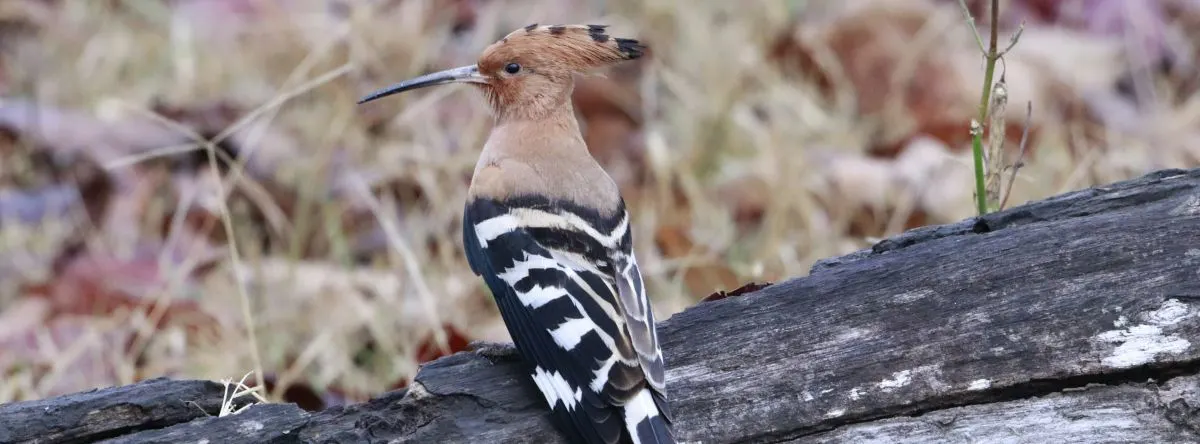
Hoopoe – locally known as ‘Tabobo’
The Hoopoe (Upupa epops), locally known as “tabobo”, is one of the most colourful birds you can see in Fuerteventura. The feathers on its head and its undulating flight make it unmistakable. It feeds mainly on insects, which it catches on the ground with its long beak.
- Remarkable features: Head crest, colourful plumage.
- Habitat in Fuerteventura: Open areas and farmland.
- Where to see them: Open areas, farmland, sunny agricultural landscapes.
Stone curlew – locally known as ‘Pedroluis’
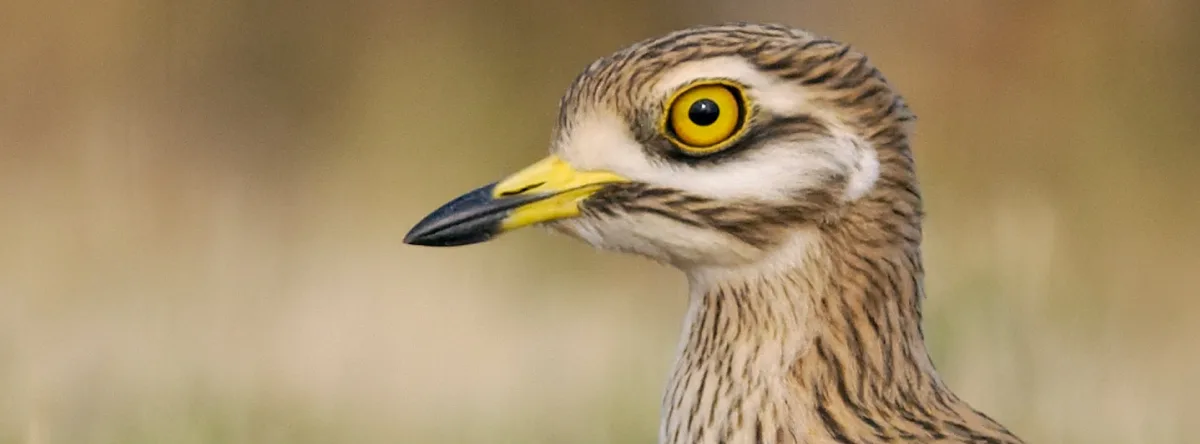
He Stone curlew (Burhinus oedicnemus insularum), known locally as the ‘Pedroluis’, is perfectly adapted to the arid landscapes of Fuerteventura. It is a nocturnal bird with a mournful call. Its yellow eyes and slender body make it unmistakable, although its ability to camouflage itself makes it difficult to spot.
- Remarkable features: Large yellow eyes, camouflaged plumage.
- Habitat in Fuerteventura: Flat or slightly rocky terrain, dry grasslands and steppes.
- Where to see it: Rocky plains, wastelands, old farmland, and agricultural areas.
Cream-coloured courser
The cream-coloured courser (Cursorius cursor) is a typical Saharan species that has found a suitable habitat in Fuerteventura. With long legs and a slender body, it is an exceptional runner, able to blend into its surroundings and move quickly along the ground in search of insects.
- Remarkable features: Long legs, excellent runner.
- Habitat in Fuerteventura: Low slopes, sandy soils.
- Where to see it: Corralejo Natural Park, areas of sparse vegetation.
Shrike
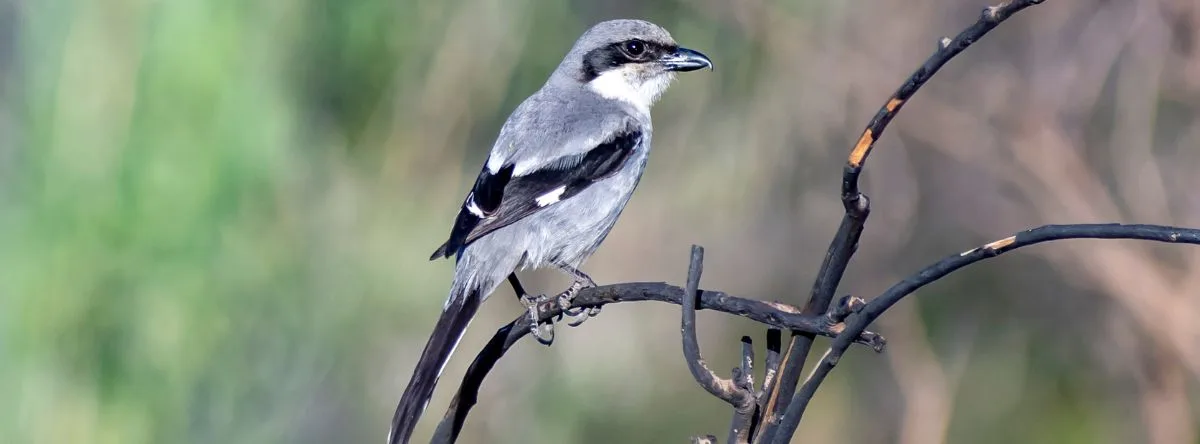
The Shrike (Lanius meridionalis) is known for its territorial behaviour and carnivorous diet. With its grey and black plumage, it perches on branches or wires to survey its territory. It is famous for its habit of impaling its prey on thorns or wires, which has earned it the nickname “the butcher.”
- Remarkable features: Grey and black plumage, territorial behaviour.
- Habitat in Fuerteventura: Open areas with scattered vegetation.
- Where see it: Agricultural areas, scrubland, areas with vertical structures.
Barbary falcon – locally known as ‘Tagarote‘
The Barbary falcon (Falco pelegrinoides), known as the Tagarote in the Canary Islands, is an impressive predator that dominates the skies of Fuerteventura. Like the peregrine falcon, it hunts birds in mid-flight, making dizzying dives. It nests in cliffs and mountainous areas.
- Remarkable features: Plumage similar to that of the peregrine falcon, skilled hunter.
- Habitat in Fuerteventura: Coastal cliffs, mountains and ravines.
- Where to see it: Jandía cliffs, Corralejo Natural Park, Betancuria cliffs.
European bee-eater
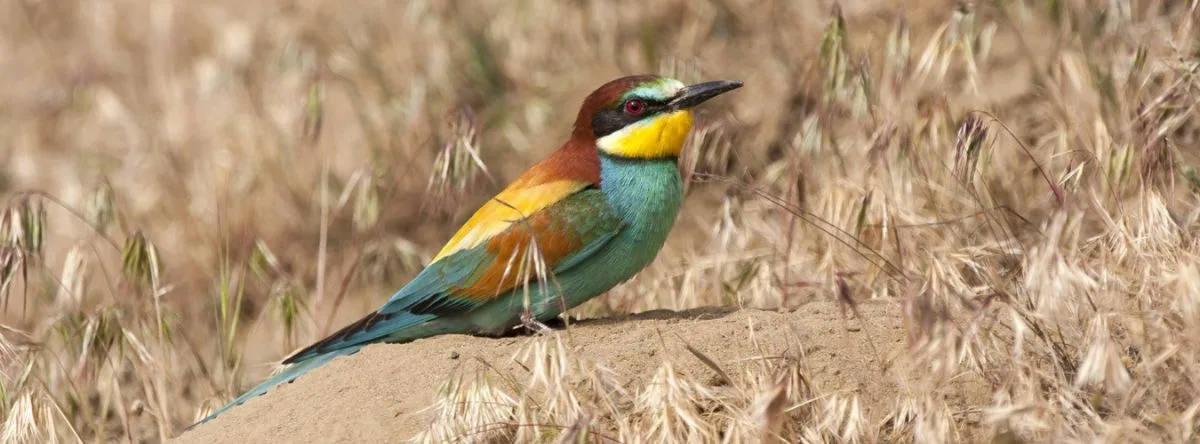
The European bee-eater (Merops apiaster) is one of the most colourful birds in Fuerteventura, with plumage combining green, blue, yellow, and brown. It is an expert hunter of bees and flying insects, catching them mid-flight with great precision.
- Remarkable features: Multicoloured plumage, expert insect hunter.
- Habitat in Fuerteventura: Semi-desert areas, steppes, coastal and inland areas near water.
- Where to see it: Gardens, urban areas, ponds and lakes, ravines and wetlands.
Osprey – locally known as ‘Guincho’
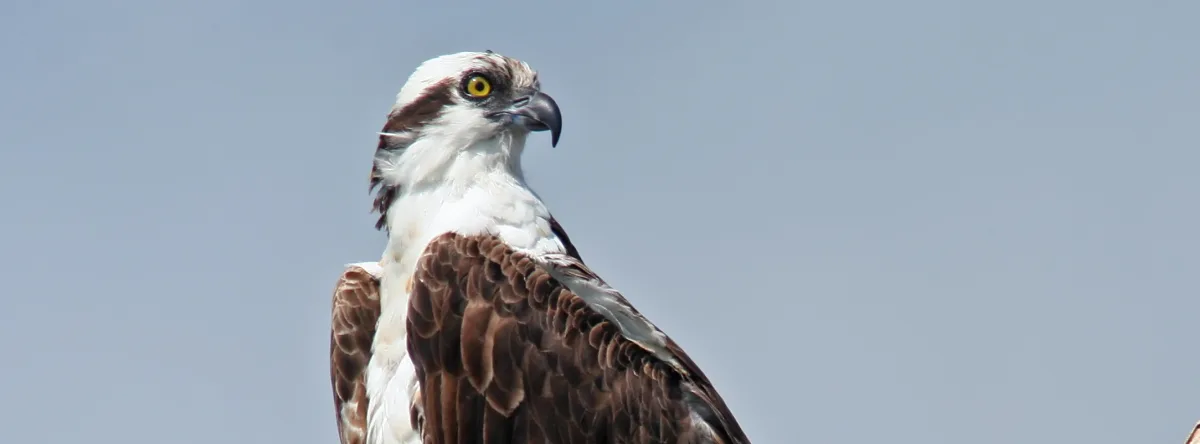
The Osprey (Pandion haliaetus) mainly inhabits coastal areas, cliffs, and areas near bodies of water in Fuerteventura, where it can easily find food. It is a specialist fish predator, with an impressive hunting technique that includes high flights and quick dives to catch fish on the surface. Although its population is small on the island, it is still possible to see it in strategic locations along the coast.
- Remarkable features: Brown and white plumage, dark stripe around the eyes, claws adapted to catch fish.
- Habitat in Fuerteventura: Coastal cliffs, islets, shallow water areas.
- Where to see it: North coast of Fuerteventura, Islote de Lobos, cliffs of the Jandía peninsula, Barranco de Los Molinos, Saladar de Jandía.
Buzzard – locally known as ‘Aguililla’
The Buzzard (Buteo buteo insularum), a subspecies of the common buzzard (Buteo buteo), is a medium-sized bird of prey that is distinguished in flight by its wide wings and circular gliding. Its brown plumage, with white or cream streaked interior parts, allows it to camouflage itself in its natural environment.
- Remarkable features: Slow and circular flight, brown plumage with streaks.
- Habitat in Fuerteventura: Ravines and mountainous areas.
- Where to see it: Betancuria, coastal cliffs.
Whimbrel – locally known as ‘Zarapito trinador‘
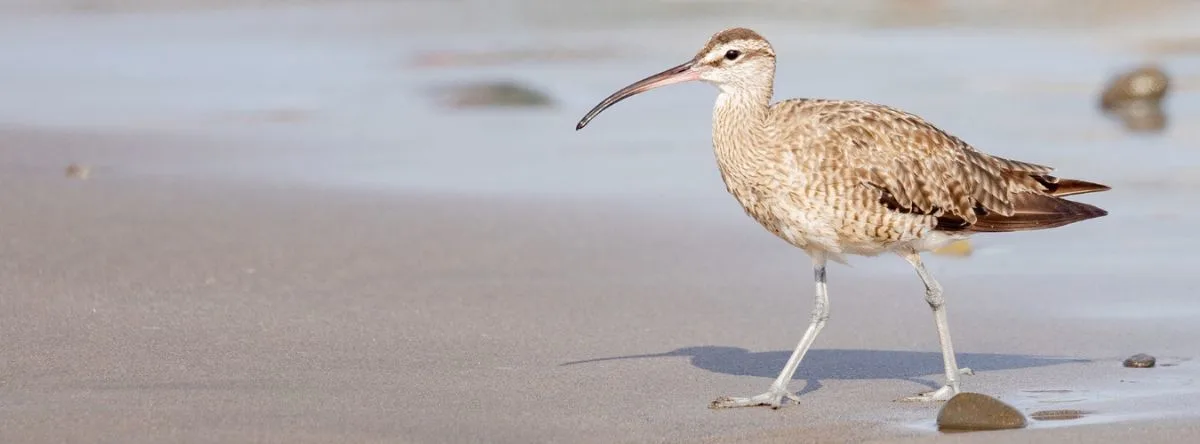
The Whimbrel (Numenius phaeopus) is one of the most common waders on the coast of Fuerteventura. t is recognised by its long, downward-curved bill, ideal for probing the ground in search of invertebrates.
- Notable features: Long, curved beak, brown and white plumage.
- Habitat in Fuerteventura: Beaches, dunes, salt flats and marshes.
- Where to see it: Corralejo Natural Park, Salinas del Carmen.
Sanderlings
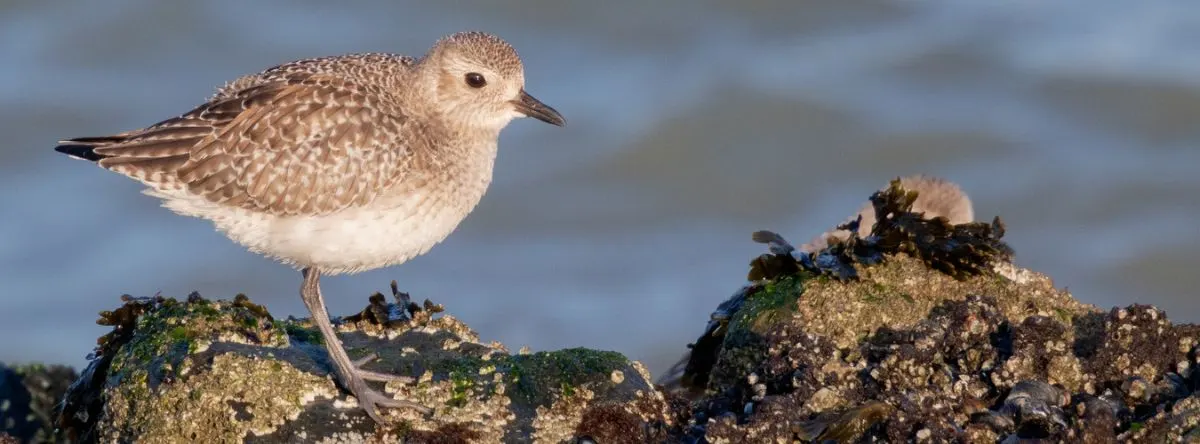
The Sanderling (Calidris alba) is a small wading bird commonly seen walking along the wet sand and intertidal zones of beaches while searching for food. Its winter plumage is pale grey and white, with a black patch on the shoulder.
- Remarkable features: Pale grey and white plumage, distinctive “tuic-tuic” call.
- Habitat in Fuerteventura: Beaches and intertidal zones.
- Where to see it: Corralejo Natural Park, Sotavento Beach, Salinas del Carmen.
The Canary Crow
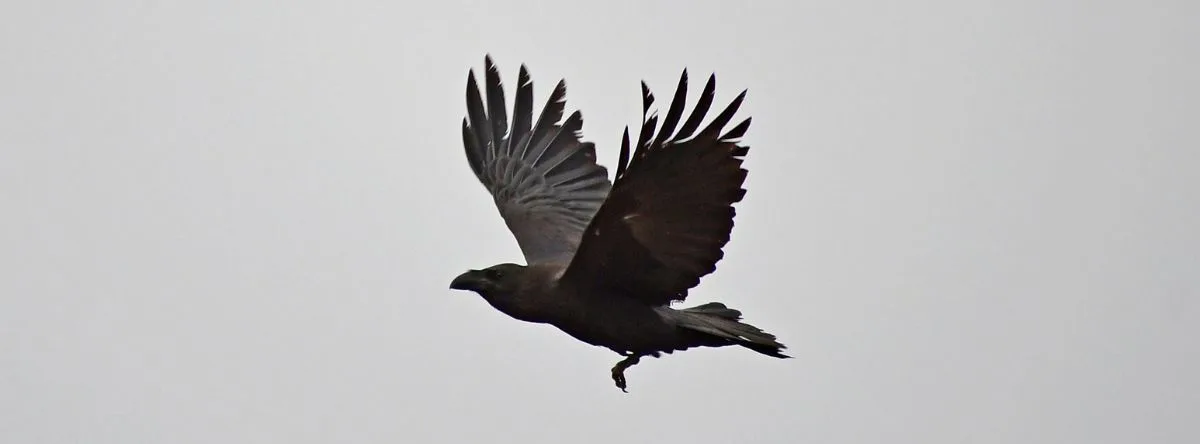
The Canary Crow (Corvus corax canariensis) is the largest passerine in Fuerteventura, with entirely black plumage and metallic reflections. It is known for its intelligence and ability to produce a variety of sounds, with the low, harsh “kro kro” being the most characteristic.
- Notable features: Black plumage with metallic reflections, large size.
- Habitat in Fuerteventura: Rural and mountainous areas.
- Where to see it: Betancuria, Mount Tindaya, Jandía.
The Guirre
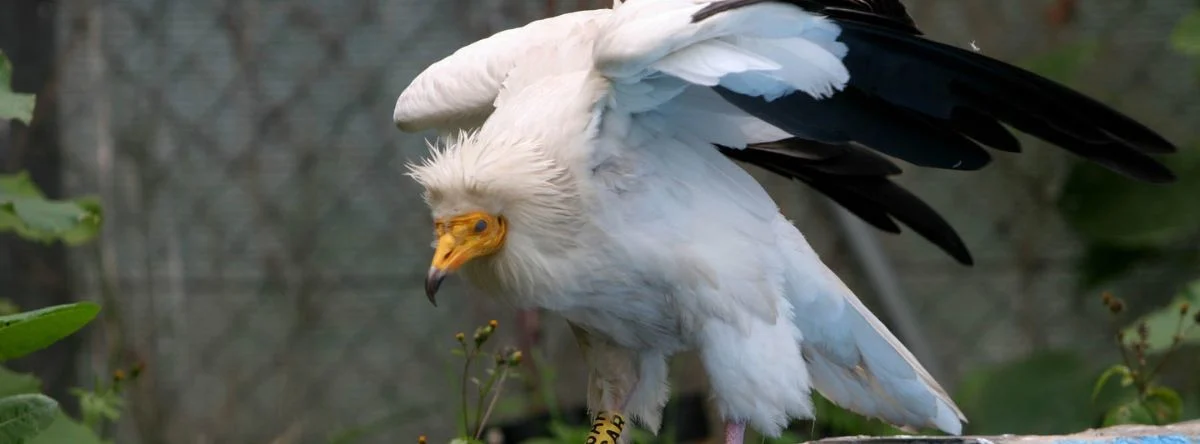
The Guirre (Neophron percnopterus majorensis), also known as the Canary Egyptian Vulture, is the only scavenging raptor in the Canary Islands. Of great ecological and cultural importance, it is considered a sacred bird in Fuerteventura. Its plumage is mostly dirty white, with a black band on its wings.
- Remarkable features: Dirty white plumage, large size.
- Habitat in Fuerteventura: Rural and mountainous areas.
- Where to see it: Jandía, Betancuria, Corralejo Natural Park.
As you already know, Fuerteventura is an ideal destination for nature and birdwatching enthusiasts. If you want your experience to be perfect, we recommend choosing accommodation in Fuerteventura that is close to everything you want to visit. Lopesan Hotel Group offers options that combine comfort and proximity to the best places in Fuerteventura, allowing you to make the most of your stay on the island. Don’t miss the opportunity to discover the natural beauty of Fuerteventura while relaxing in the perfect environment!