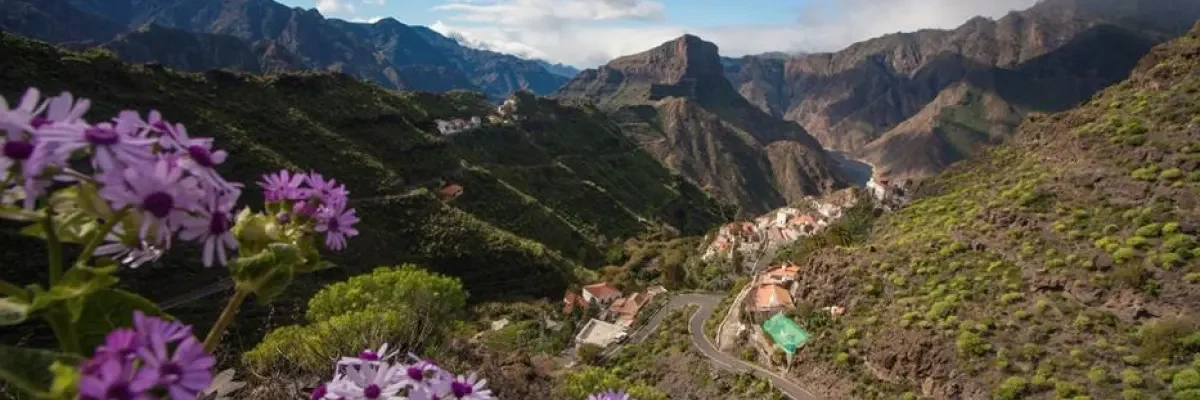
Are you a lover of the Camino de Santiago and want to experience it in a different way? Are you on holiday in Gran Canaria and want to immerse yourself in a unique experience? We recommend the Camino de Santiago in Gran Canaria, a combination of spirituality, history and nature that will not leave you indifferent.
The Pilgrim’s Way to Santiago de Compostela crosses breathtaking landscapes and offers pilgrims a journey rich in culture, tradition and natural beauty. Along the way, you will encounter centuries of tradition, enjoy the hospitality of the Canarian people and discover an enormous wealth of heritage and landscapes. What more do you need to start your adventure?
History of the Camino de Santiago in Gran Canaria
The origins
The history of the Pilgrim’s Road to Santiago in Gran Canaria dates back to the conquest of the Canary Islands by the Crown of Castile in the late Middle Ages. As the islands were integrated into the Atlantic trade routes, they became a strategic point for sailors and traders who sailed these waters.
The promise of the sailors: a tradition that endures
One of the stories most deeply rooted in the popular memory of Gran Canaria tells how a group of Galician sailors, caught in the middle of a violent storm off the coast of the island, asked the apostle Saint James, whose image they had on board, for help. In desperation, they promised to build a chapel in his honour on the top of the first mountain they sighted if they made it out alive. The miracle happened: the storm broke and the mountains of Tirajana appeared before their eyes.
True to their word, the sailors disembarked at Arguineguín and, with the image of the saint on their shoulders, set off on the difficult journey to the summit. Despite the inhospitable terrain, they managed to build a humble hermitage on the mountain that now bears the name of Santiago. Over time, this chapel became a place of worship for the island’s inhabitants. In 1850, however, the image was transferred to the church of San Bartolomé de Tirajana in Tunte, where it remains today.
Gáldar: a bastion of Jacobean tradition
In the north of the island, the town of Gáldar has been closely linked to the Jacobean tradition since the early years of colonisation. In 1481, just a few years after the beginning of the conquest of Gran Canaria, the first mass in honour of the Apostle James was celebrated in Gáldar. This act marked the beginning of a deep devotion that is still alive today.
The importance of Gáldar in this tradition was officially recognised in 1965, when Pope Paul VI granted it the privilege of celebrating the Jacobean Holy Year, an honour that until then had only been granted to Santiago de Compostela. This recognition underlined Gáldar’s role as an important centre of Jacobean devotion outside the Iberian Peninsula, strengthening its spiritual links with Europe, Africa and the Americas.
How to organize the Camino de Santiago in Gran Canaria
Organising the Pilgrim’s Way to Santiago de Compostela in Gran Canaria may seem like a simple task, but like any trip, it requires good planning to enjoy it to the full. From choosing the route to preparing the equipment, every detail is important to ensure that the experience is as enriching as it is enjoyable.
Essential preparations
The first thing you need to do is decide when and how you want to do the Pilgrim’s Way. Gran Canaria, with its mild climate almost all year round, allows you to do the route at any time of the year, although spring and autumn are the best times to do it, due to the more moderate temperatures and lower influx of tourists.
Another important aspect is physical preparation. Although it is not an extremely demanding route, it is important to be in good shape to enjoy the journey without major inconveniences. If you are not used to walking long distances, we recommend that you start training a few weeks in advance, gradually increasing the duration and intensity of your walks.
Requirements and necessary documentation
One of the most emblematic elements of the Camino is the pilgrim’s credential. This document is essential if you want to obtain the compostelana at the end of the route, as well as serving as a nice souvenir of your journey. The credential is stamped at each stage of the route, which certifies your journey. You can get it in parishes, associations of friends of the Camino de Santiago or even in some town halls of the island.
To guide you along the route and plan the stages, it is useful to use mobile applications that provide detailed and updated information about the Camino de Santiago. Some of the most recommended ones are:
- Gronze: This platform is one of the most popular among pilgrims as it offers detailed information about the different routes of the Camino de Santiago, including the one in Gran Canaria. Here you will find details of the stages, accommodation and places of interest, as well as the opinions of other pilgrims to help you plan your trip.
- La App del Camino: This specific application for the Camino de Santiago provides complete guides, maps and details of each stage. It is particularly useful for those looking for an all-in-one tool that provides information on the terrain, accommodation and transport options along the route.
- Google Maps: Although a more general tool, Google Maps is essential for navigation. It allows you to download offline maps, which is very useful in areas where network coverage may be limited. You can also mark key points, such as accommodation and rest stops, and get accurate directions along the way.
Lodging and transportation
In Gran Canaria, the Camino de Santiago offers the possibility of staying in albergues, rural houses, small hotels and hostels. Although the network of accommodation is not as extensive as on the peninsula, it is advisable to book well in advance, especially during busy periods. Make sure you get a good night’s sleep every night to be able to tackle the daily hikes. To reach the starting point, most pilgrims start their journey in Maspalomas, in the south of the island.
What to carry in your backpack
Preparing your backpack is one of the most important aspects of organising your Camino de Santiago in Gran Canaria. The key is to carry the essentials without overloading, so that the route is as comfortable as possible. Here are some essential items:
1. Clothing and personal protection:
- Clothing appropriate to the weather: Choose light, breathable clothing for the day and a jacket for cool mornings and evenings. Don’t forget a hat or cap to protect you from the sun.
- Sun protection: It is essential to wear a high protection sunscreen, sunglasses and a lipstick with a UV filter.
2. Hydration and nutrition:
- Reusable water bottle: Keep hydrated throughout the route. There are not many water sources in Gran Canaria, so take enough water with you for each stage.
- Light food for breaks: Nuts, energy bars or fruit are ideal to keep you going during the walks.
3. Health and first aid:
- Basic first aid kit: Includes plasters, bandages, disinfectant, painkillers and any personal medication you may need.
- Sleeping ear plugs: Ideal for those who have difficulty falling asleep in noisy or communal areas.
4. Essential documents and equipment:
- Pilgrim’s identity card: To be stamped at each stage and to receive the Compostelana at the end.
- Personal documents: Do not forget your identity card, health card and, if possible, a copy of both in case you lose them.
- Mobile phone charger: Make sure you bring a charger and, if possible, an external battery to keep your device charged.
5. Hygiene and toiletries:
- Basic toiletry bag: Contains personal hygiene items such as toothbrush, toothpaste, soap, quick-dry towel and other essentials.
6. Practical accessories:
- Clothes pegs: Useful for hanging up wet clothes overnight, especially if you wash some clothes on the way.
- Safety pins: Always useful to fix any small unforeseen problems with your clothing or to hang light items from your rucksack.
In addition, for a more detailed preparation, it is very useful to consult websites and blogs specialised in the Camino de Santiago. On these sites you will find packing lists recommended by other pilgrims who have done the route, practical advice and personal experiences that can help you optimise your backpack.
Choose the official itinerary. Stages of the way
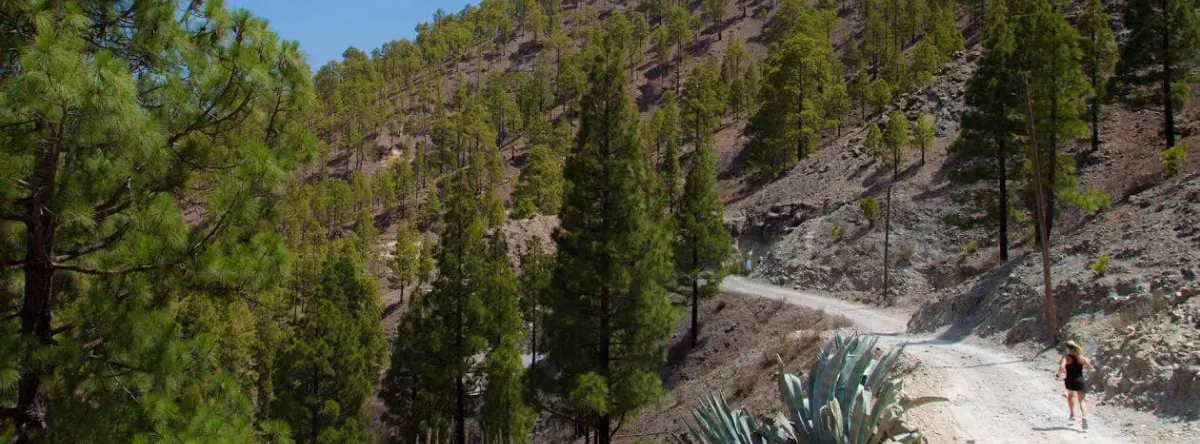
The Pilgrim’s Way to Santiago de Compostela in Gran Canaria takes you through a variety of landscapes. Along the official route, you will discover the natural diversity of the island, as well as its history and culture. Although less well known than its peninsular counterpart, this route offers an equally enriching and spiritual experience.
Stage 1: Maspalomas – Tunte
Distance: 27.8 km
Duration: 7-9 hours
Difficulty: Moderate-High
Elevation gain: 1163 m
The first stage of the Pilgrim’s Way begins in Maspalomas, a tourist resort in the south of the island, famous for its sand dunes and beaches. From here the road heads inland, gradually climbing towards Tunte (San Bartolomé de Tirajana). This is one of the most difficult stretches, due to the steepness of the road, but the panoramic views and the feeling of being away from the tourist crowds make it well worth the effort.
Along the way you will pass through small villages and hamlets, and you will be able to enjoy the native flora of Gran Canaria. It is important to bring enough water, as there are not many natural springs along this route.
Stage 2: Tunte – Cruz de Tejeda
Distance: 15.9 km
Duration: 5-7 hours
Difficulty: Difficult
Elevation gain: 1160 m
The second stage takes you from Tunte, a historic mountain village, to Cruz de Tejeda, in the heart of Gran Canaria. This stretch is famous for its spectacular mountain scenery, with deep gorges and peaks offering breathtaking views.
During the walk you will cross the Pinar de Pilancones, one of the most important Canary pine forests on the island. The climb to Cruz de Tejeda is gradual and the effort is rewarded with one of the best views on the island when you reach the cross, a landmark and crossroads for hikers.
Stage 3: Cruz de Tejeda – El Garañón
Distance: 10,6 km
Duration: 3-4 hours
Difficulty: Moderate
Elevation gain: 365 m
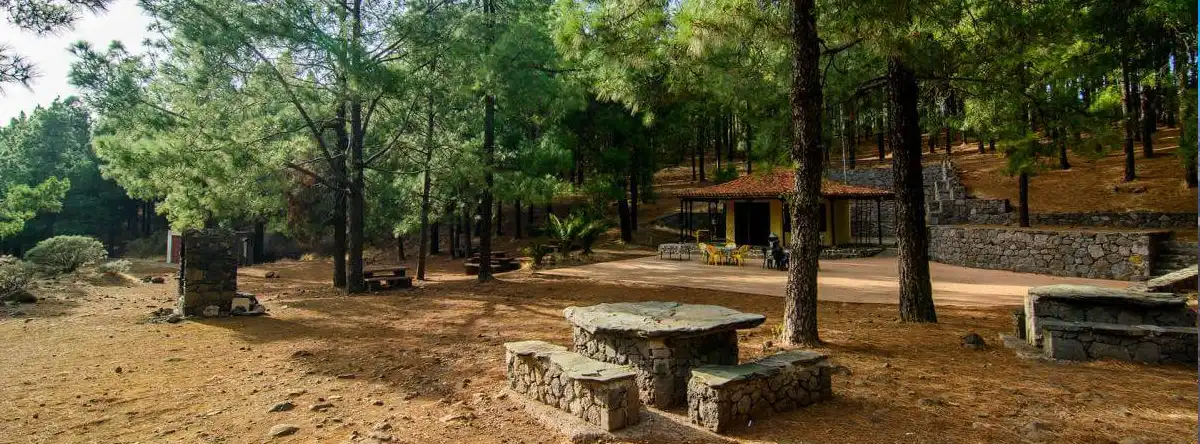
This shorter but equally beautiful stage takes you from Cruz de Tejeda to El Garañón, a campsite in a privileged natural setting. The route is mountainous, with less of a gradient than the previous stages, but with stretches that require attention due to the uneven terrain.
El Garañón is an ideal place to rest and enjoy the tranquillity of the surroundings. From here you can see some of the most emblematic points of the island, such as Roque Nublo and Roque Bentayga, two rock formations that are symbols of Gran Canaria.
Stage 4: El Garañón – Gáldar
Distance: 26.4 km
Duration: 6-8 hours
Difficulty: Difficulty:Hard
Positive elevation gain: 2116 m
The last stage of the route takes you from El Garañón to Gáldar, in the north of the island. This section combines gentle climbs and descents through rural and agricultural landscapes, offering a different view of Gran Canaria from the mountainous and coastal landscapes of the first stages.
Gáldar, the former capital of the island before the conquest, is a place full of history. Here you will find the church of Santiago de los Caballeros, where you can receive the compostelana at the end of your pilgrimage. This is a place of great spiritual significance, where not only the physical journey culminates, but also the experience of introspection and connection with nature that characterises the Pilgrim’s Way to Santiago.
The Camino de Santiago in Gran Canaria is a unique experience, do not hesitate. If you are thinking of choosing accommodation in Gran Canaria to complement this experience, the Lopesan Hotel Group has a range of exclusive and well located hotels that will offer you the peace and quiet you need. Don’t wait any longer, book your stay before, after or during the Camino de Santiago!