Ciudad Colonial, Spanish for “Colonial City”, also known as Zona Colonial, is the oldest part of the historic neighbourhood of Santo Domingo, the capital of the Dominican Republic. It extends from the north of George Washington avenue to the east of Palo Hincado street and from there it reaches the corner of Mella avenue, and from the south of Mella avenue to the west of Francisco Alberto Caamaño avenue.
History of Ciudad Colonial
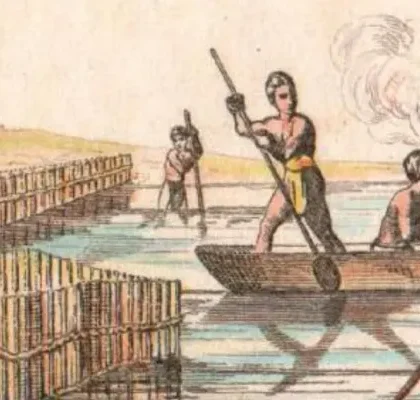
During Christopher Columbus’ first voyage to America, the Spanish founded their first settlement: Fort Navidad, built on Christmas Day in 1492 with the remains of one of their ships. This fort was destroyed in 1493 and it was at that moment that Columbus decided to create a new settlement a few miles to the east. Thus arose the first European-established settlement in America and it is here where the history of the so-called New World began.
It was at the beginning of the 16th century when the new inhabitants of the area, the settlers who arrived from Spain, began to build the first houses, as a result of their need to find accommodation similar to that available in Europe at the time. This first town was known by the name of La Isabela, in honour of Isabel the Catholic. Sadly, hunger and disease caused the population to decline. In addition, several hurricanes hit the settlement, which caused its first few years to be far from splendorous, practically disappearing in 1496 when Columbus returned to Spain.
Later his brother Bartolomé founded a new settlement, which was called Santo Domingo, a name that has survived to this day.
In 1507, the city received the title for being the first European city in the New World by the Spanish Crown and became the official seat of the administration of the New World.
What to see in Ciudad Colonial?
It is precisely thanks to its crucial role in the history of the New World that the Colonial City within Santo Domingo has more than 300 places of interest. Such is its importance and historical richness that in 1990 it was declared a World Heritage Site by UNESCO with the name of the Colonial City of Santo Domingo. These are some of the places you can’t miss in Ciudad Colonial on your next holidays in the Dominican Republic:
Columbus Park
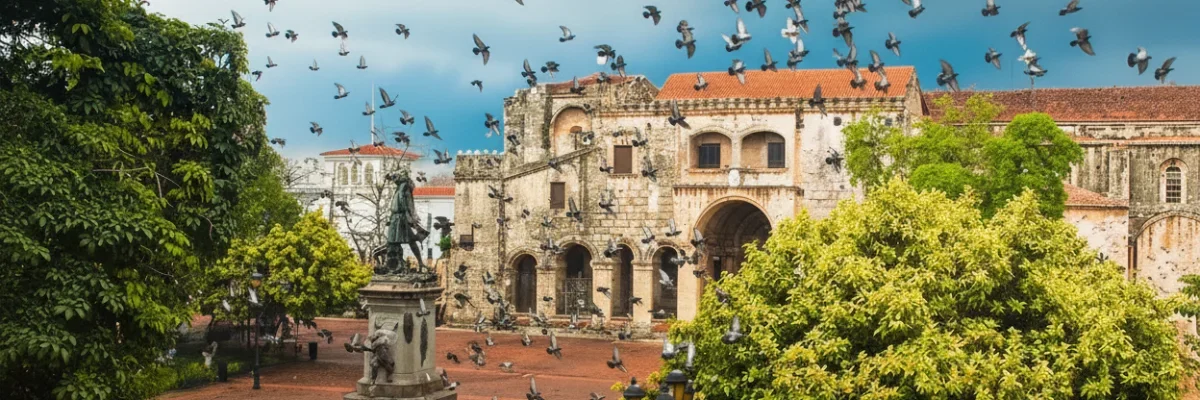
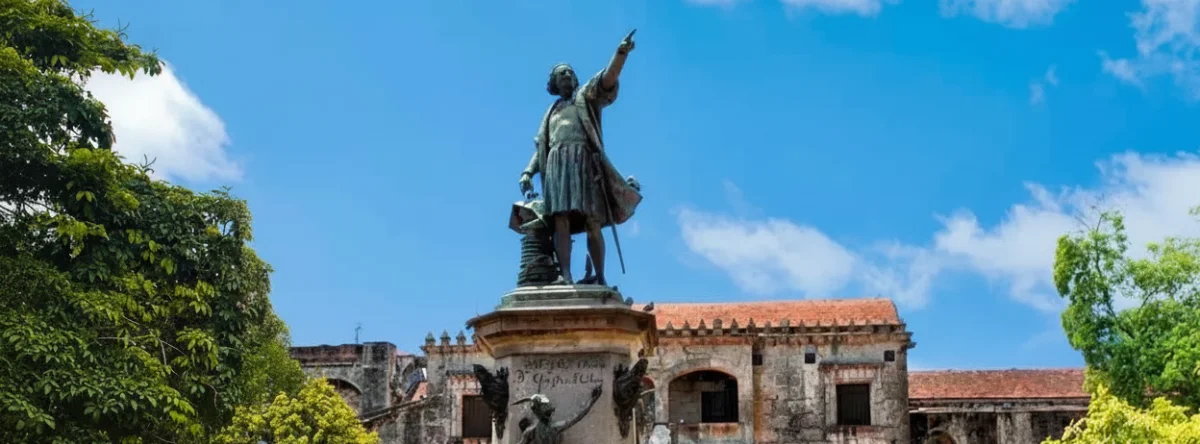
This is one of the most important landscaped areas within the Colonial City. Back in the day, it was the place where the festivals were celebrated by the inhabitants of Santo Domingo. Today it is still used as the setting for different festivals, as well as other cultural events that you can enjoy thanks to the extensive calendar of events in the city. This square reflects the purest colonial style in the buildings that surround it. In the centre, there is a statue of Christopher Columbus that gives the park its name, presiding over the space with his finger pointing towards the sky, something that draws our attention since it is more common to see representations of Columbus with his finger pointing forward.
Las Damas Street
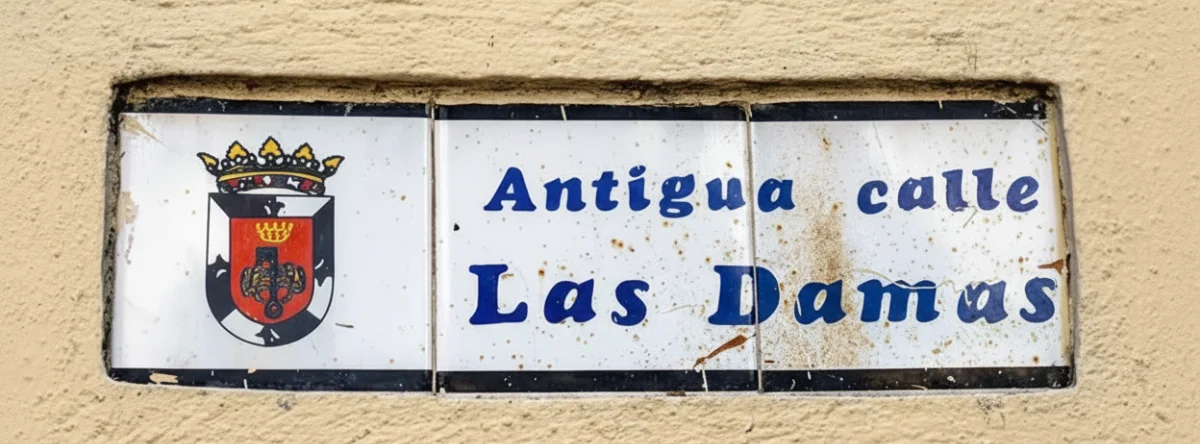
This was the first street in Ciudad Colonial and, therefore, in America. Its name is due to the fact that in its beginnings, women or ladies (“damas” in Spanish) used to walk along this street. Today you can find many people walking here and admiring the colonial-style tiles that decorate it. It was also on this street where the most distinguished families of the colonies decided to build their homes.
Old Town Hall
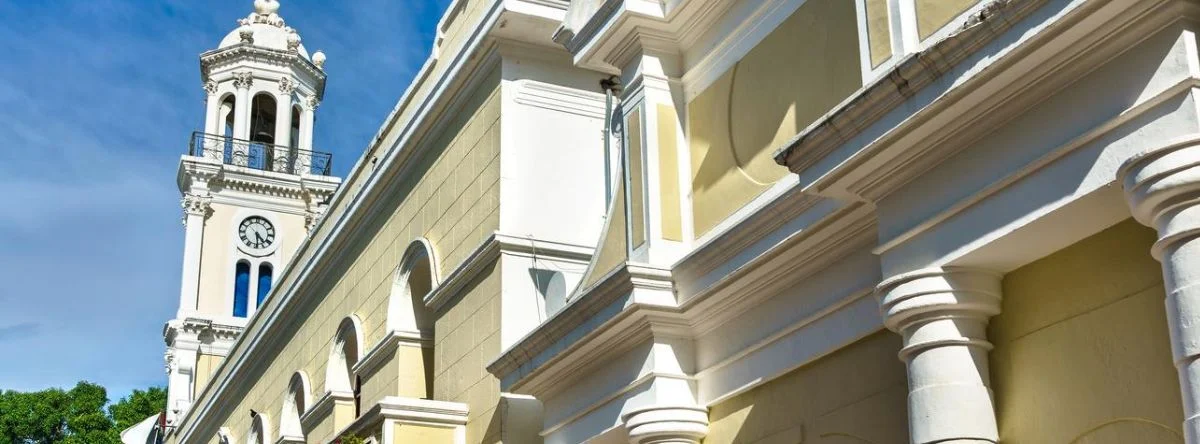
The old Town Hall (or “Palacio Consistorial” in Spanish) is currently the seat of the city’s government, but it is also another of the most important historical/artistic monuments in the Colonial City, since it has been witness not only to history, but has also been the place where important decisions were made that have transcended the rest of the New World. Eclectic in style, the building is remarkably beautiful. The clock tower with its crowned dome, known as El Vivaque, is striking.
Ozama Fortress
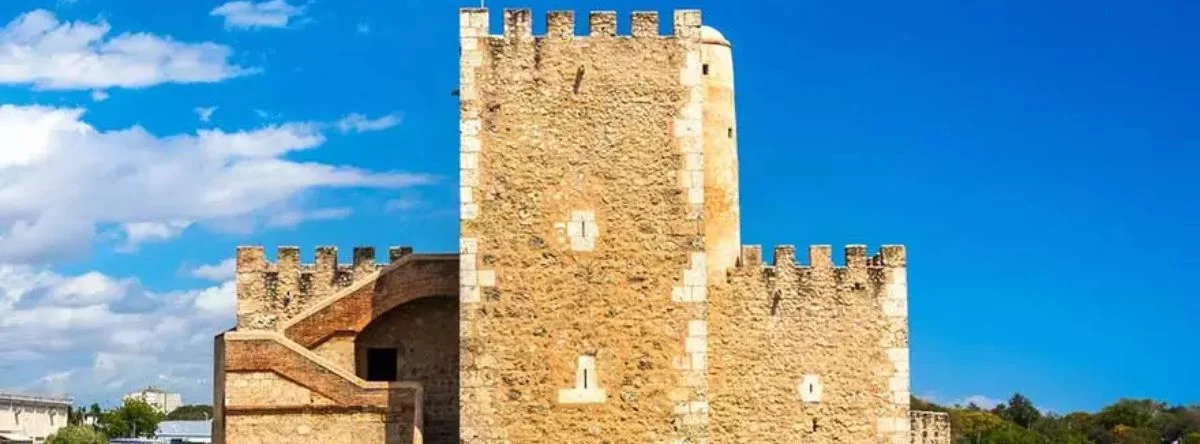
This fortress was built by the Spanish during the colonial times. Its name is due to its location, very close to the Ozama River, although it is also known as the Fort of Santo Domingo. Its mission was to protect the city from the attacks of pirates and invaders. The exterior is built in a very similar way to that of medieval castles, and inside there are endless tunnels and dungeons where prisoners were kept.
Cathedral of Santa María la Menor
This temple is also known as the Cathedral of Santo Domingo dedicated to St. Mary of the Incarnation. It is the oldest cathedral in the Americas, since it dates back to the early 16th century and today it is the seat of the Archdiocese of Santo Domingo. Its construction was held back for several years due to a lack of funds. It is Gothic in style with ribbed vaults and inside it currently has 14 chapels, of which the most special are the chapels of Diego Caballero, Alonso de Suazo or Bastidas. The Archbishop’s Crypt and the Baptismal Chapel are also worth mentioning. It is also of great artistic value with several altarpieces, paintings and pieces of furniture. It was here where the remains of Christopher Columbus were kept for several years.
Ruins of the Monastery of San Francisco
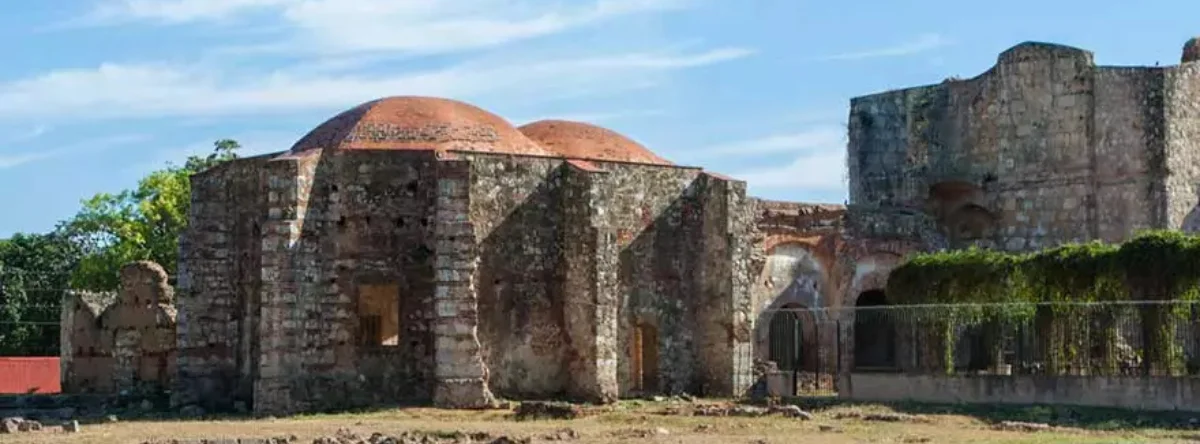
The construction of this building ended in 1560 and it became the first monastery in the New World. Since then it has had to resist numerous adversities: it was looted by pirates and it suffered earthquakes and hurricanes. Throughout its history it has had different uses. In addition to its religious function during Spanish times, it was also used by the French to guard their artillery. Later, during the time of the Haitians, the temple’s materials were used for other constructions. Finally, a cyclone caused extensive damage until ending up in its current state, whose ruins continue to be one of the emblems of the history of Ciudad Colonial and Santo Domingo.
Visiting the Colonial City of Santo Domingo is a journey to the origins of the New World and a step-by-step discovery of the history that shaped the Americas. Its streets, monuments, and squares allow visitors to understand the cultural and heritage value of the Dominican Republic beyond its beaches.
To complete the experience, many travelers choose to stay at hotels in Punta Cana, from where it is easy to organize excursions to Santo Domingo and other historic areas of the country. In this context, Lopesan Hotel Group offers accommodations designed to combine beachfront relaxation with the opportunity to explore Dominican cultural richness, enjoying the perfect balance between history, comfort, and Caribbean relaxation.