Cocoa is part of the agricultural and cultural identity of the Dominican Republic. This Caribbean country has established itself as one of the world’s most highly regarded producers thanks to the quality of its beans and a cocoa-growing tradition that goes back several centuries. In many parts of the country, cocoa is still grown on small family-run farms, where knowledge is passed down from one generation to the next and working the land remains closely tied to the surrounding environment.
Dominican cocoa also stands out for its diversity. The country is home to different cultivation systems, bean varieties and fermentation methods, all of which have a direct influence on the final flavour of the chocolate. This careful approach has helped the Dominican Republic strengthen its position in the international market, particularly in the organic and premium cocoa segment, which is also reflected in some traditional Dominican desserts.
If you are staying in Punta Cana, stepping into this world is also a different way to get to know the local culture. In the surrounding area, there are excursions that take you to cocoa plantations, where you can see how it is grown and discover the journey the bean makes from tree to chocolate. It is an experience that helps explain why Dominican cocoa now holds such an important place in the country’s agricultural tradition.
The history of Dominican cocoa
Cocoa has been part of the Dominican Republic’s agricultural history for centuries. Although it is now mainly associated with high-quality chocolate, its presence on the island is linked to broader historical processes that include colonisation, the development of tropical agriculture and the evolution of international trade, all within the wider history of Punta Cana and the country itself. Over time, cocoa cultivation has gone through different stages that have shaped both the rural economy and the agricultural landscape of many parts of the country.
The origins of cocoa in the Dominican Republic
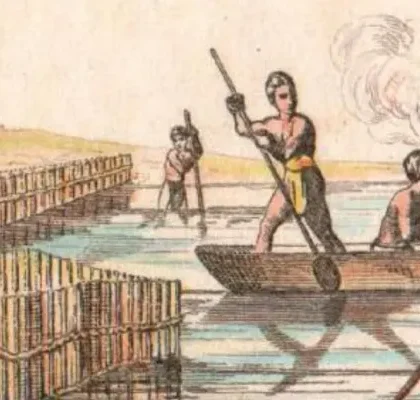
Cocoa is native to tropical America, especially the regions of Mesoamerica and the Amazon. During the colonial period, its cultivation spread across several parts of the Caribbean. On the island of Hispaniola, it found particularly favourable conditions for growth, which allowed the crop to become established in different agricultural areas of the country.
Over time, many small family farms adopted cocoa as one of their main crops, and it became integrated into the rural economy of numerous communities.
The role of cocoa in the colonial economy
During the 18th and 19th centuries, cocoa began to gain greater importance in regional trade. Although sugar dominated much of the Caribbean economy, cocoa offered a different agricultural model, one that was more compatible with family-run farms.
The growing demand for chocolate in Europe boosted the bean trade and led Dominican cocoa to begin circulating in international markets.
The evolution of the cocoa sector in the country
Over time, the Dominican cocoa sector introduced improvements in bean fermentation and drying processes, which raised its quality. Today, the Dominican Republic has established itself as one of the Caribbean’s leading producers and one of the world’s main exporters of organic cocoa.
Cocoa cultivation in the Dominican Republic
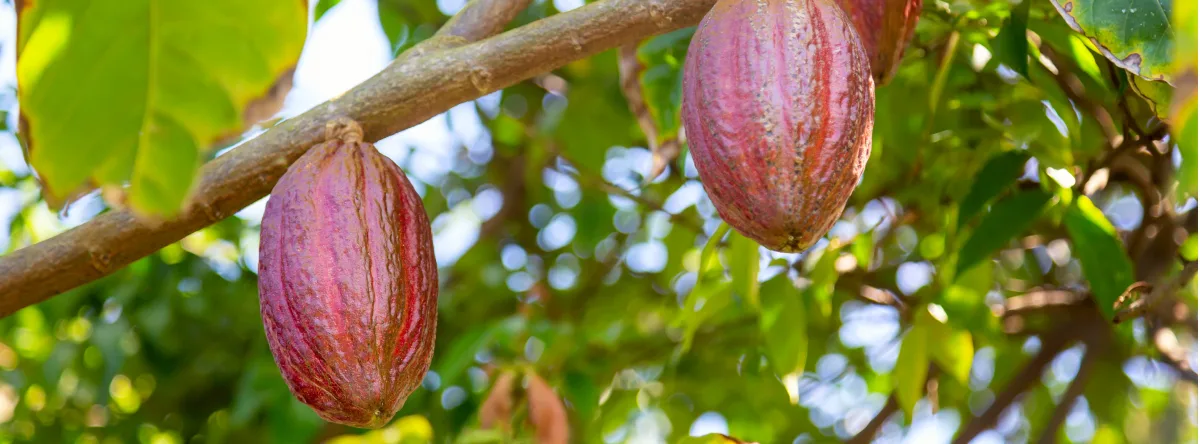
Dominican cocoa is grown in several parts of the country where the tropical climate and humidity favour the development of the tree. Plantations are usually part of lush agricultural landscapes, as cocoa grows best in partial shade. This cultivation system has helped preserve small and medium-sized farms, many of them run by farming families who have devoted decades to this activity.
Main cocoa-producing regions
The main cocoa-producing regions of the Dominican Republic are in the north and north-east of the country. Provinces such as Duarte, María Trinidad Sánchez, Sánchez Ramírez and Espaillat account for a significant share of national production. In these regions, frequent rainfall and soils rich in organic matter create highly favourable conditions for cultivation.
Many of these rural areas have a long cocoa-growing tradition. Plantations often coexist with other tropical crops and form part of the agricultural landscape of these provinces.
How Dominican cocoa is grown
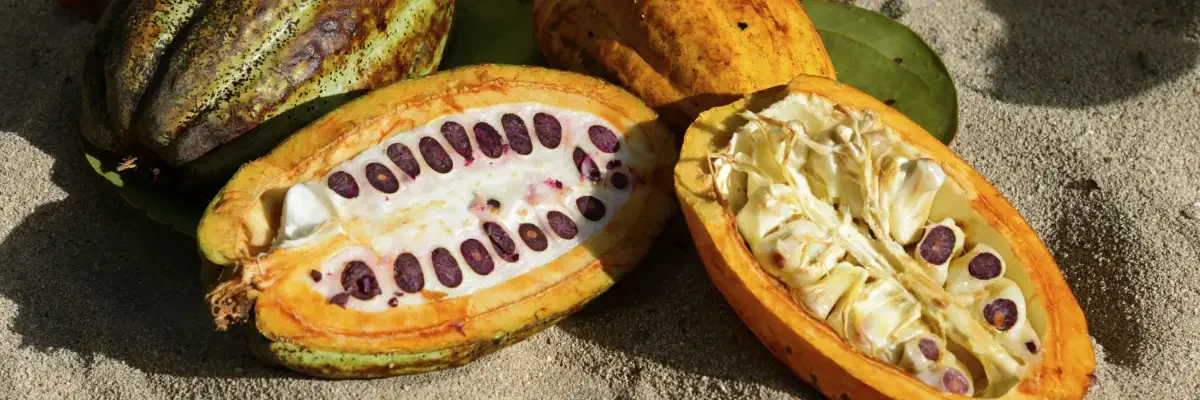
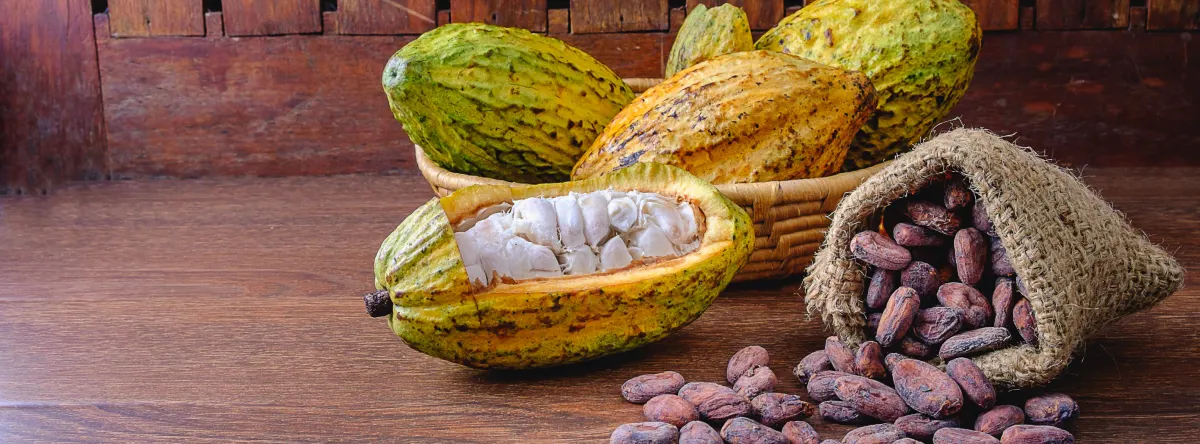
Cocoa cultivation begins with the planting of young trees, which take several years to produce their first pods. Once mature, the trees bear fruit for much of the year. Inside each pod are the seeds that are later turned into cocoa.
After the harvest, the seeds are extracted and go through a process of fermentation and drying. These stages are essential for developing cocoa’s characteristic aromas. Once the process is complete, the beans are sorted and prepared for sale.
Dominican cocoa producers
The Dominican cocoa sector is made up of thousands of small-scale producers working on farms spread across different parts of the country. To make it easier to market their beans, many farmers organise themselves into cooperatives that bring together cocoa production across the Dominican Republic and coordinate sales on international markets.
These organisations also provide technical training, logistical support and certification systems that help improve cocoa quality and ensure sustainable farming practices. Thanks to this model, Dominican cocoa maintains a steady presence in the international chocolate trade.
Visiting a cocoa plantation in Punta Cana
Although the main cocoa-producing areas are inland, you can still discover this world through cocoa tours in Punta Cana. On these visits, you can see up close how the cocoa tree grows, how the pods are harvested and what happens to the seeds once they are removed from the fruit.
As you walk through the plantation, guides usually explain the different stages of the process: opening the pods, fermenting the beans and drying them in the sun, all essential steps in helping cocoa develop its aromas. On some farms, you can also see traditional methods of preparing cocoa or enjoy small tastings that give you a better sense of its flavour within Dominican gastronomy.
After learning about the cocoa-making process and visiting some of its plantations, the next step is choosing somewhere to stay from which to organise these experiences and remain connected to the local setting. At Lopesan Playa Bávaro, that connection can continue throughout your stay in spaces such as The Chocolat Experience, within The Boulevard, where the world of cocoa is still very much present. From there, the trip takes shape as an experience defined by care, attention and hospitality, expressed through four distinct proposals:
- Lopesan Costa Bávaro Resort, Spa & Casino – A balcony opening onto the Caribbean, where architecture and greenery come together to create an unforgettable stay.
- Lopesan Caoba Lagoon Resort, Spa & Casino – An oasis that pays tribute to water through its lagoon-style pools and artificial cenotes, complemented by carefully curated gastronomy in a sophisticated setting.
- Lopesan Serenity Bay Resort, Spa & Casino – Designed for rest, with a peaceful atmosphere by the sea.
- Lopesan Splash Cove Resort, Spa & Casino – Created for families, with spaces centred on leisure and shared enjoyment.
Set the pace of your trip and let the surroundings do the rest.