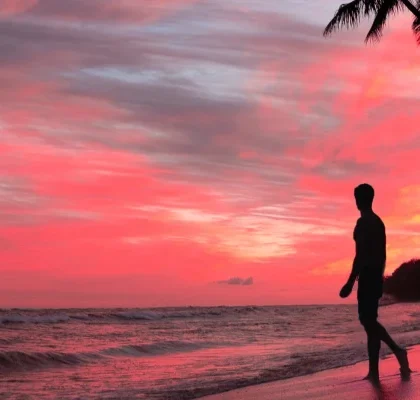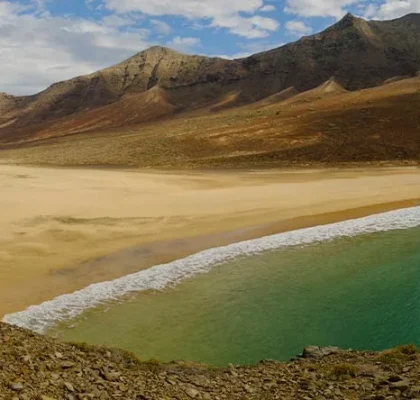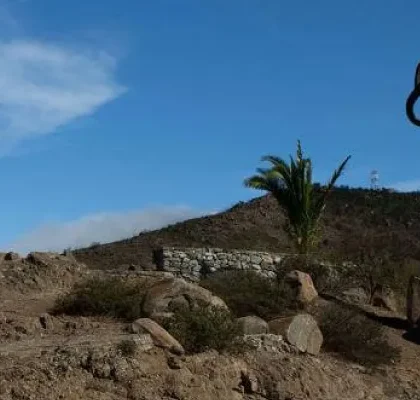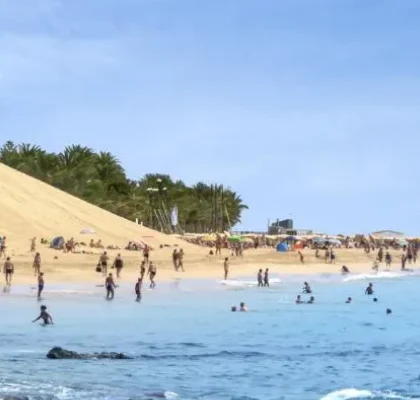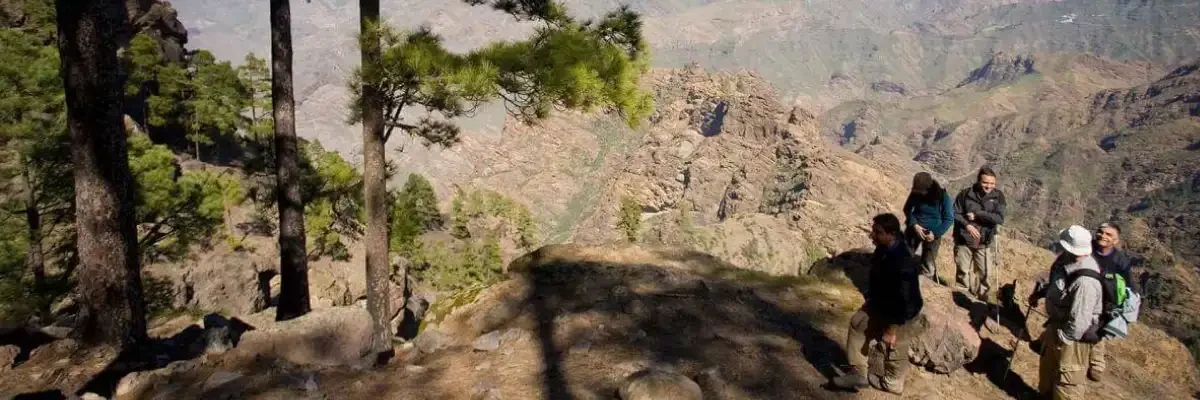
The terrain in southern Gran Canaria allows you to gain altitude quickly, moving from sandy beaches to the edges of ravines in just a few kilometres. As you walk, you discover a volcanic landscape of contrasts, with the Atlantic always in the background while you pass through cardonales, reservoirs and palm groves.
If you enjoy routes shaped by strong sunlight and steep elevation changes, this is the place for you. Here you can experience the island’s most rugged and vertical side, reaching natural viewpoints that are only accessible on foot. If you are ready to explore beyond paved roads, these are the routes worth noting.
From the coast to the cliffs: essential routes in the south
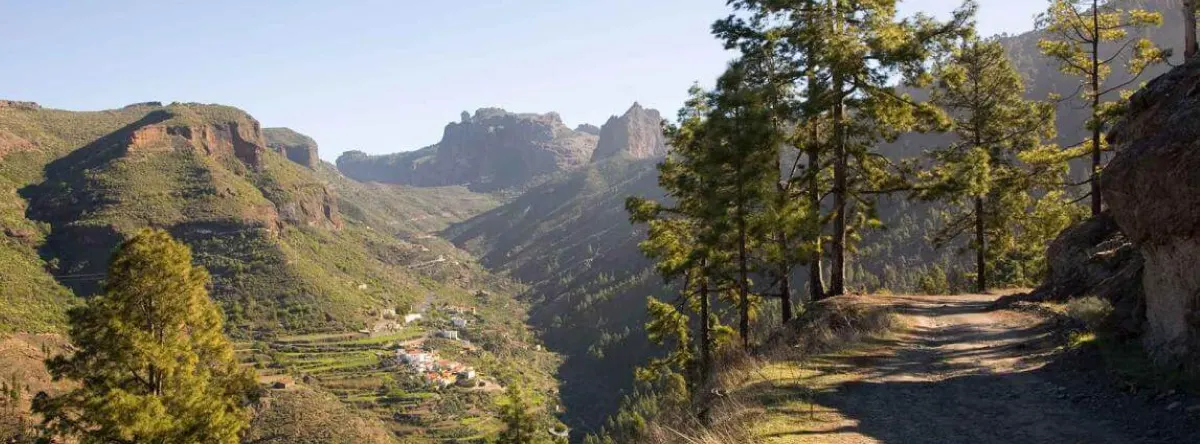
Southern Gran Canaria requires a shift in mindset compared to the greener trails of the north. The landscape is harsher, and the terrain can be deceptive: what looks like a gentle slope quickly turns into a demanding climb over loose volcanic ground. These routes connect the coast with the interior, crossing deep ravines where silence is broken only by the wind or the water stored in higher reservoirs.
Barranco de Fataga
Barranco de Fataga is one of the most spectacular gorges in southern Gran Canaria. Walking here means following a channel flanked by steep cliffs rising hundreds of metres, sheltering an extensive palm grove below. The contrast between ochre rock and the green of Canary Island palms gives the landscape a distinctive character.
The classic route links the village of Fataga with the Degollada de las Yeguas viewpoint, offering a steady climb rewarded by panoramic views at every stage. The path combines rock and earth, and temperatures can be intense, so starting early is key. As you gain elevation, the ravine opens up, revealing how the channel flows directly towards the Maspalomas dunes, connecting the mountains with the sea in a single view.
Los Azulejos de Veneguera and the ascent to Inagua
The route through Los Azulejos is probably the most visually striking in the southwest of Gran Canaria. It begins at the famous coloured rock faces, where oxidation has created green, blue and ochre tones that appear almost painted onto the cliffs. The start is spectacular, but the trail quickly becomes technical, with a steady incline that demands effort. Access is straightforward, as the path begins right off the GC-200 road between Mogán and La Aldea.
The ascent towards the Inagua Integral Nature Reserve requires a steady pace and careful footing, as loose stone is constant on the steeper sections. As you climb, the landscape shifts from dry ravines to the first areas of Canary pine forest. On clear days, Mount Teide appears in the distance across the Atlantic. It is a physically demanding route, but one that rewards you with sweeping views over the untouched ravines descending towards Veneguera and the coast of Mogán.
The Amurga massif
If you are looking for complete isolation in southern Gran Canaria, the Amurga massif is ideal. It is one of the most arid and least explored areas of the island, a vast block of volcanic rock separating the Fataga and Tirajana ravines. There are no well-trodden paths or shade here; just open terrain of rock, cactus and a landscape defined by its scale.
The route climbs along endless ridges towards points such as the Talayón de Amurga. From the top, the sense of isolation is absolute, with a 360-degree view stretching from the Maspalomas dunes to the central highlands. It is a demanding route, not so much technically, but in terms of navigation and the heat retained by the terrain. It suits those looking for a truly remote experience, with the Arco del Coronadero as a visual highlight before descending.
From Barranco del Águila to Chira reservoir
This route connects the driest southern landscapes with one of Gran Canaria’s major reservoirs. It begins in the bed of Barranco del Águila, a deep canyon with vertical walls and a stark volcanic terrain. The ascent is steady and requires good physical condition, as the elevation gain becomes noticeable while leaving the coastal plains behind.
As you climb, vegetation gradually appears, with shrubs and wild olive trees lining the path towards the Chira reservoir. Set between cliffs, this body of water contrasts sharply with the dryness of the ravine below. It is an ideal place to rest before deciding whether to continue towards higher ground or begin the descent.
As altitude increases, weather conditions can change quickly compared to the coast. Sunshine in the ravine can turn into mist or cooler winds near the reservoir. It is a route that requires effort, but one that offers one of the most striking landscape transitions on the island.
Tips for hiking in the south of the island
Hiking in southern Gran Canaria differs greatly from routes in the north. The environment is far more arid, so these points are essential before setting out:
- Sun exposure: Solar radiation in the ravines is intense, and natural shade is scarce. Protection is essential, and it is best to avoid midday hours on longer routes.
- Water: There are no water sources along these trails. Always carry extra water, as heat and elevation quickly deplete your reserves.
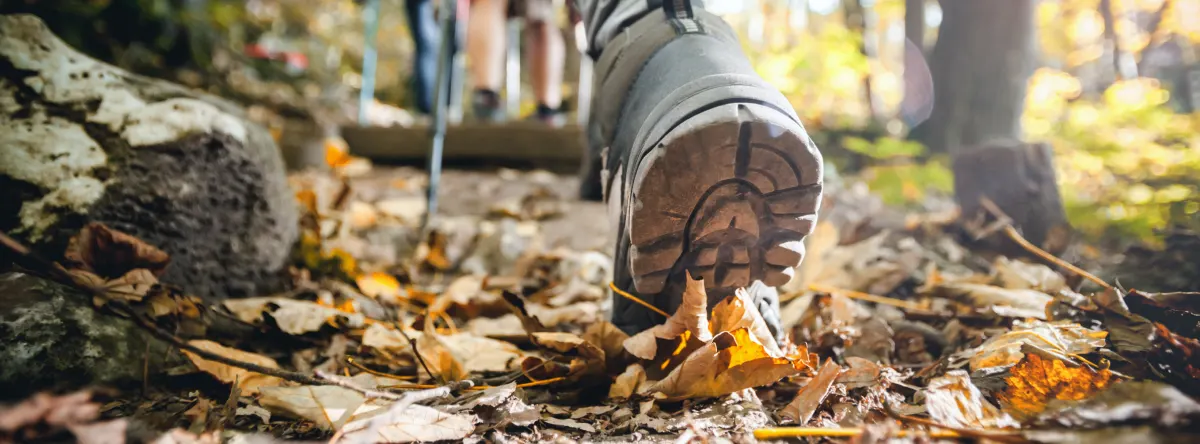
- Sturdy footwear: Volcanic ground often consists of loose gravel (picón). Proper grip is essential to avoid slipping on steep descents.
- Limited signal: In ravines such as Águila or Fataga, mobile coverage is often lost. Download maps in advance and inform someone of your planned route.
Rest after the hike: where to stay in Gran Canaria
Gran Canaria is an island of contrasts, offering far more than sun and beaches. It is a place defined by dunes and ocean views, cliffs that rise dramatically and trails that cross the island’s volcanic core.
If you are looking for a balance between activity and relaxation, the Lopesan hotels in Gran Canaria offer spaces designed for complete rest. Areas such as Meloneras, Maspalomas, Playa del Inglés and San Agustín feature resorts and adults-only hotels focused on comfort and detail.
After a day of hiking, there is no better reward than waking up to Atlantic views and ending the day with a sunset by the sea. Whatever your plan, choosing the right accommodation in Gran Canaria shapes the experience as a whole.