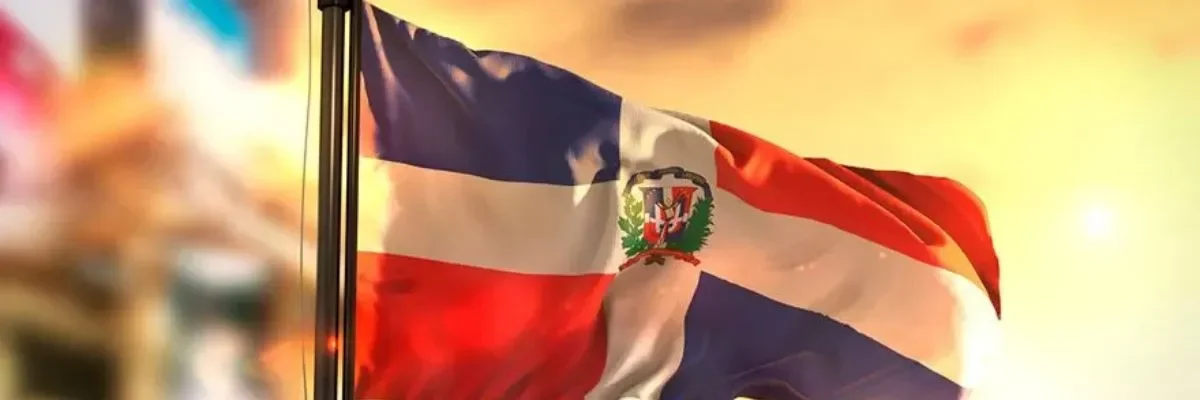
The flag of the Dominican Republic is much more than a national symbol. Its colours, the white cross that divides them and the coat of arms at its centre tell a story that reflects the nation’s struggle for independence and its founding ideals. Learning about its origins and symbolism offers a glimpse into Dominican identity, shaped by values such as freedom, faith and unity.
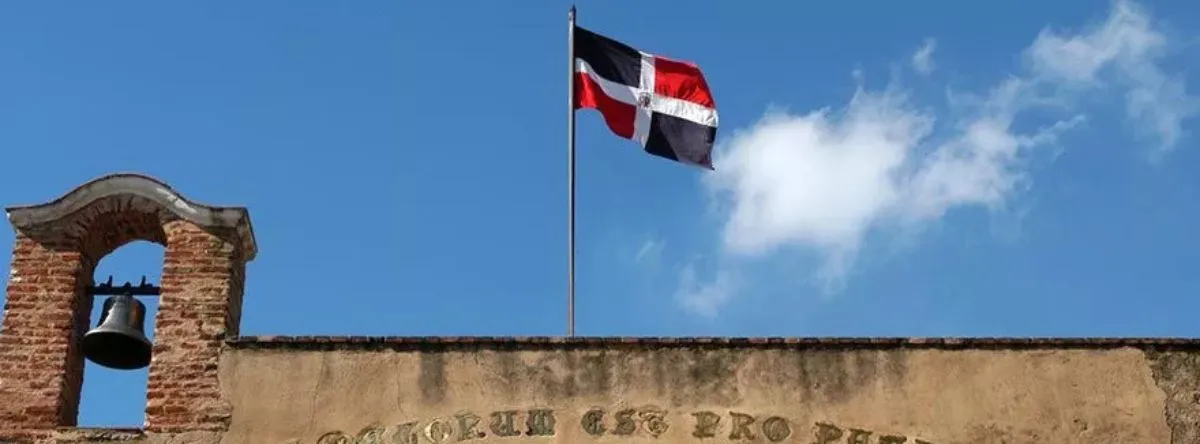
If you travel to Punta Cana or stroll through cities like Santo Domingo, you’ll see the flag flying proudly over public buildings, schools and squares. Recognising its elements adds depth to your experience, connecting you to the spirit of the country you’re visiting.
The history of the Dominican flag
The origins of the Dominican flag date back to 1838, when Juan Pablo Duarte —known as the father of the nation— designed it. That same year, his project was approved by La Trinitaria, the secret society that dreamed of independence.
However, it wasn’t until 27 February 1844 that the flag was raised for the first time at the Puerta del Conde in Santo Domingo, marking the country’s independence from Haiti. That date remains engraved in the national calendar as Independence Day.
A few months later, on 6 November 1844, the flag was officially adopted in the nation’s first constitution. It was described as featuring alternating ultramarine blue and vermilion red quarters, a central white cross, and the national coat of arms at their intersection.
The symbolism of its colours
Each colour on the Dominican flag carries a meaning deeply rooted in the country’s history:
- Red: represents the blood shed by the heroes of independence.
- Blue: symbolises liberty, progress and God’s protection over the nation.
- White: found in the central cross, stands for unity and peace among Dominicans.
Together, these colours combine the memory of sacrifice with the values that guide the Dominican Republic today.
Flag Day
Every 27 February, Dominicans celebrate Flag Day and commemorate their national independence. The capital, Santo Domingo, hosts military parades and official ceremonies, particularly along George Washington Avenue —better known as the Malecón.
Beyond official acts, the celebration takes to the streets with music, dancing and traditional food and drink. It’s one of the country’s most significant festivities and a vibrant expression of national pride.
For travellers, it’s a chance to experience Dominican culture up close — a joyful mix of patriotism and warmth.
The early Dominican flag
In the first years after independence, several variations of the flag existed. These early versions, known as the old Dominican flag, retained the red and blue colours, but their arrangement and symbolism gradually evolved until the definitive design was established in 1844.
Understanding these historical variations helps trace the process of building a national identity after separating from Haiti.
Other national symbols
In addition to the flag, the country has other official emblems that form part of its national identity.
The national coat of arms
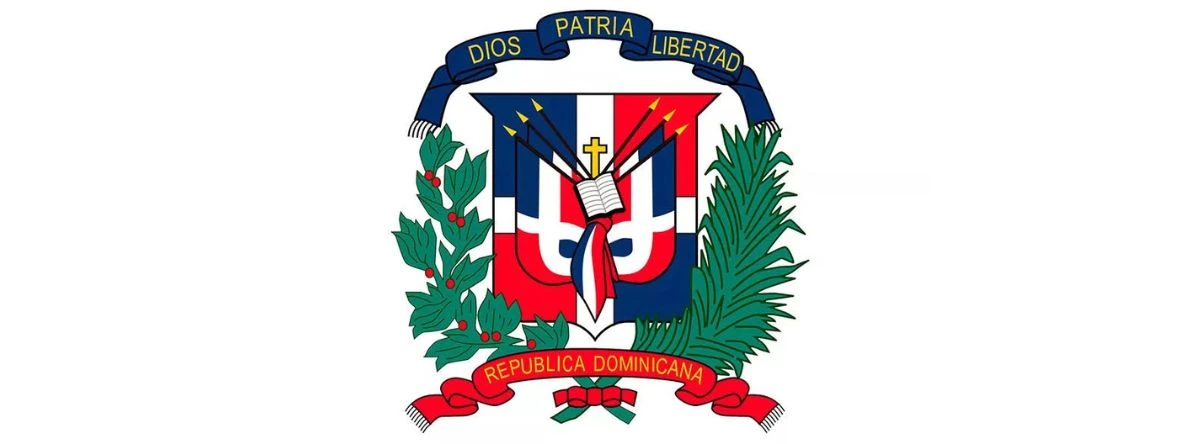
At the centre of the flag sits the Dominican coat of arms, which mirrors the flag’s colours divided by a white cross. An open Bible and a cross represent Christian faith, while surrounding spears, flags, and branches of laurel and palm complete the composition.
Two banners frame the shield: a blue one reading “Dios, Patria, Libertad” (“God, Homeland, Liberty”), and a red one below bearing the words “República Dominicana”.
The national anthem
Written by Emilio Prud’Homme and composed by José Reyes, the anthem was first performed in 1883. The original lyrics sparked some debate for historical inaccuracies but were later revised, and in 1934 the anthem was officially adopted as a national symbol. Since then, it has accompanied official ceremonies and national celebrations across the country.
The flag in everyday life
Today, the Dominican flag flies proudly over government buildings, schools, military bases and embassies. It’s also part of daily life — present at festivals, sporting events and even in local businesses.
In Santo Domingo, it’s easy to spot the flag waving over plazas, parks and institutional façades. For visitors, its constant presence conveys the strength of national identity and Dominican pride.
The Dominican flag and other national flags
The story of the Dominican flag becomes even more fascinating when viewed alongside those of neighbouring or historically linked nations.
The Haitian and Dominicanflags reflect two countries that share an island yet chose distinct symbols to define their identities.
The Cuban and Dominicanflags share roots in the 19th-century independence movements, though each expresses different ideals.
The Spanish and Dominicanflags recall the colonial past, while the United Statesand Dominicanflags evoke the political and cultural ties built over time.
A flag that unites past and present
The flag of the Dominican Republic not only recalls the country’s struggle for independence, but also represents its present and projects its identity into the future. Its colors and symbols stand for values such as sacrifice, freedom, and faith, as well as the pride and unity of the Dominican people, which are deeply rooted in everyday life and local traditions.
If you are planning a trip to discover the essence of the country, staying at the Lopesan resorts in Playa Bávaro allows you to experience Dominican culture without giving up beachfront relaxation. From this privileged area of Punta Cana, it is easy to combine cultural experiences, local gastronomy, and regional excursions with the comfort and services of a well-designed vacation in the Dominican Republic, tailored to be enjoyed at your own pace.