The salt flats of Gran Canaria not only bear witness to an age-old tradition on the island, but also play an important role in its economic activity. They are much more than just production centres: they are living relics, full of history and culture.
In this article we will take you on a tour of the most important salt mines in Gran Canaria. We will show you the ancient art of salt production and reveal the peculiarities of each site: from the historic Salinas de Tenefé to the picturesque Salinas del Bufadero, each one tells a unique story.
History and tradition
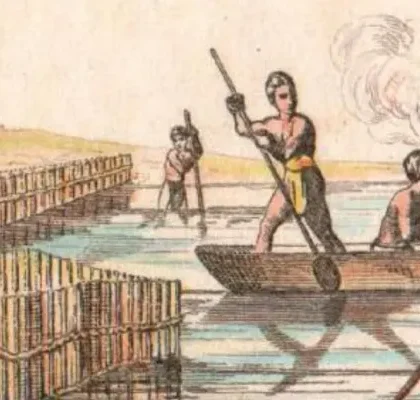
The history of the salt mines of Gran Canaria dates back to pre-Hispanic times, when the first inhabitants of the island collected sea salt in the coastal ponds. This natural resource, essential for daily life, marked the beginning of a long tradition of salt production on the island.
With the arrival of the Spaniards in the Canary Islands in the 15th century, a new era of salt production began. Once the techniques had been adapted to local conditions, artificial salt pans were built for large-scale salt production. The first salt works in Gran Canaria date back to 1500, founded by Sancho de Herrera y Ayala in Lanzarote.
The process of salt extraction
When we think of Gran Canaria’s salt mines, we often imagine the end product: the white crystalline salt that enhances our food. However, behind each grain there is a fascinating process that combines the magic of nature with the meticulous work of the salt workers.
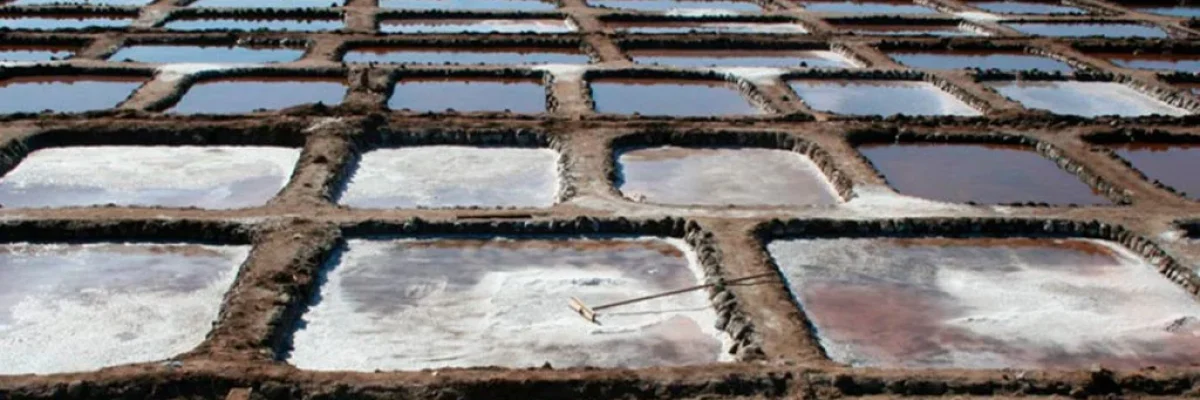
It all starts with the crystallisation phase in the lagoon. This is where seawater is channelled into shallow lagoons. At this stage, the sun and wind play a crucial role, as the heat and breeze help to evaporate the water, allowing the salt crystals to form and settle in the lagoon. It is a beautiful natural spectacle.
Then comes the time of harvesting, when the salt workers collect the salt crystals that have formed, taking care not to disturb the bottom layer of the lagoon so that future crystallisation can take place.
After harvesting, the salt is taken to the storage stage and placed in bins. Here the salt is stacked to dry and remove residual moisture. This step requires patience and experience to determine when the salt is ready for the next process.
Washing is an essential step. Fresh water is used to clean the salt and remove impurities while maintaining the integrity of the crystals.
The salt is then spread out to dry. This can be done naturally in the sun or artificially, depending on the climate.
In the milling and grading stage, the dried salt is processed and graded according to its size and intended use, either as fine or coarse salt.
Iodisation is another important step, where iodine is added to the salt. This process is essential for public health and ensures that salt contributes to the recommended daily intake of iodine.
Finally, at the packaging stage, the iodised salt is packaged in various formats for distribution and sale. Each pack marks the end of a detailed process and the beginning of its use in kitchens.
The rigour and quality of each of these stages is fundamental to the production of high quality salt that combines traditional techniques with modern methods.
The salt flats of Gran Canaria
Gran Canaria is famous for its beaches and landscapes, but it is also a place where history and nature come together in the island’s traditional salt flats. These salt-producing enclaves are essential to the local economy, but also represent a cultural heritage and a deep connection to the region’s maritime past.
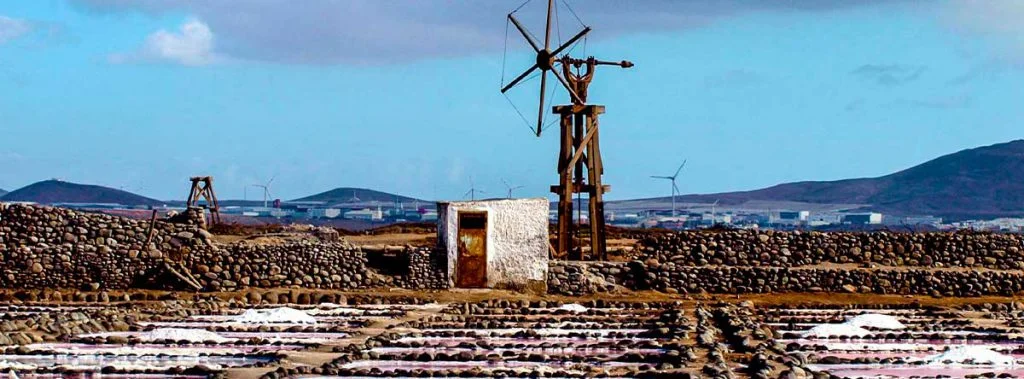
Tenefé salt flats
Located in the municipality of Santa Lucía, the Tenefé salt flats in Gran Canaria are a destination that combines natural beauty and traditional salt production. This place is attractive not only for its beautiful surroundings, but also for the exceptional quality of the pure salt produced here.
Known as the cradle of Gran Canaria’s wind, the Tenefé salt mines have the honour of producing the most awarded salt in the Canary Islands. This recognition is no coincidence; it is the result of an unwavering commitment to the artisanal practices that have been at the heart of its production for over 250 years. This meticulous and environmentally friendly process ensures that each grain of salt harvested is loaded with essential trace elements that are beneficial to the body.
These saltworks are a living testimony to the harmony between traditional practices and nature, offering visitors and consumers an authentic experience and a product of unparalleled quality.
Agaete salt flats
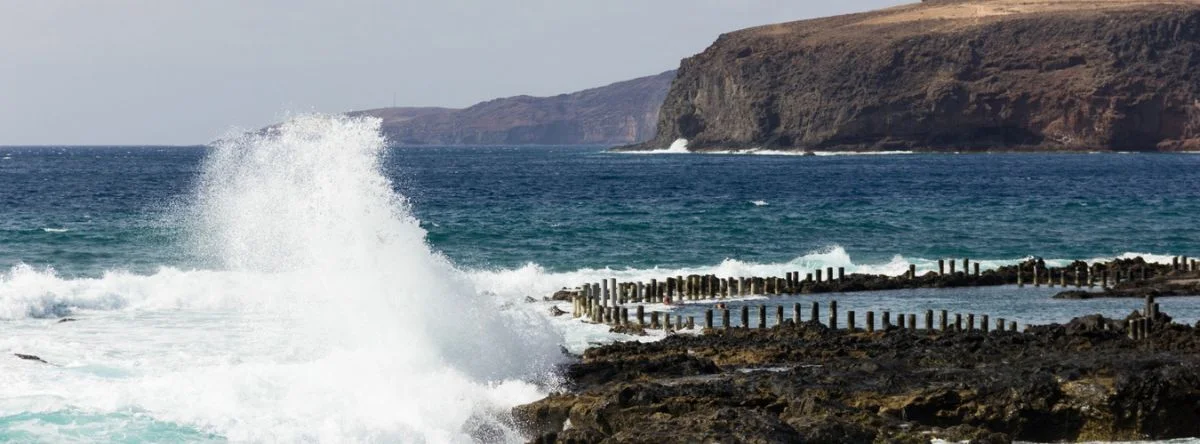
The Salinas de Agaete in Gran Canaria, 32 km from Las Palmas, are an oasis of peace and natural beauty. They are salt flats transformed into natural pools, an ideal place to enjoy a relaxing bath. Sculpted by the action of the water on the volcanic rock, these pools are surrounded by concrete structures that resemble medieval fortresses and offer protection from the sea’s waves.
The transformation of the salt flats into these beautiful natural pools has given Agaete a unique attraction. Access to this enclave is easy, both on foot and by car, from El Muelle street, where there is a car park nearby. A visit to these salt flats is also an excellent opportunity to get to know Las Salinas de Gran Canaria beach, a charming place that completes the experience perfectly with its tranquil atmosphere and beautiful views of the sea.
For a complete and safe experience, it is advisable to wear suitable footwear that will allow you to move comfortably over the rocky areas and enjoy the surroundings without any mishaps. It is also important to check the sea conditions before planning a day of swimming in the natural pools to avoid strong waves. Sea conditions can vary and although the concrete structures offer some protection, extra caution is required during periods of high swell. Swimmers are advised to be aware of weather warnings and to follow the advice of the weather forecast.
Salinas del Bufadero (Arucas coastal salt flats)
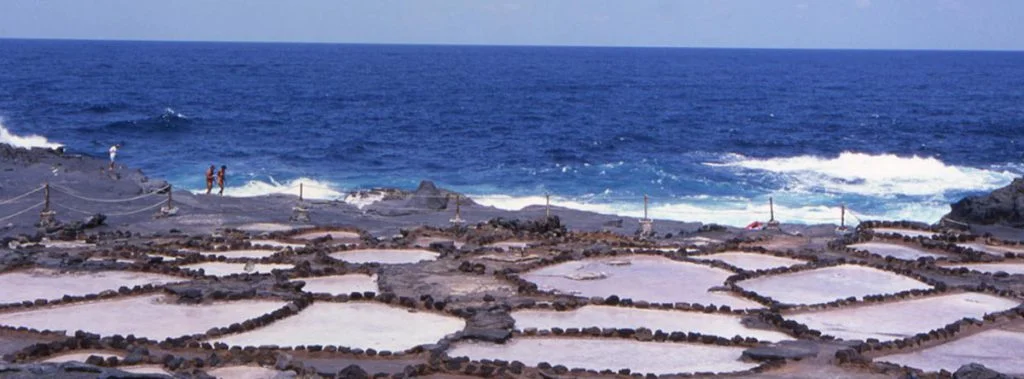
The Bufadero Salt Mines in Gran Canaria, also known as the Arucas Salt Mines due to their location in this emblematic town in Gran Canaria, represent a unique chapter in the history of salt production in the Canary Islands. Accessible from the Puertillo beach, they are the only salt pans in the archipelago that maintain a model of extraction on stones, a traditional method that gives a unique value to their production.
With a history dating back to the 16th or 17th century, they have survived the passage of time thanks to a meticulous restoration process. They continue to work today, preserving a legacy handed down from generation to generation.
One of the most remarkable features of the Salinas de Bufadero is the production of a type of salt that crystallises naturally in the form of flowers. This salt, known for its scarcity and its exceptional biological and gastronomic properties, has become a sought-after product all over the world.
A visit to these saltworks is an opportunity to see the traditional techniques still in use. The salineros carry out the process of “picado”, which involves breaking the crystals on the surface to speed up crystallisation, and “arrollado”, which involves piling up the salt to make it easier to drain off the water. These methods reflect the skills and knowledge that have been fundamental to salt production in the region.
Bocacangrejo salt flats in Vargas
Located in the municipality of Agüimes, the Bocacacangrejo salt flats have become a symbol of the region’s biodiversity. Built at the end of the 19th century, they have preserved their original structure. Consisting of a series of interconnected ponds filled with seawater, the salt is harvested by hand after evaporation by the sun.
The salt produced here is also renowned for its high quality. As it is unrefined, virgin sea salt, it retains all its nutritional properties and is appreciated both locally and internationally. If you would like to see how this ancient process is carried out, the Bocacangrejo Salt Mines offer guided tours to discover the fascinating world of salt production and its important role in the history and ecology of Gran Canaria.
From the historic Salinas de Tenefé to the majestic Salinas del Bufadero, each of these salt flats is a unique window on Gran Canaria’s cultural heritage. These salt flats, with their biodiversity and ancient production techniques, not only enrich the heritage of Gran Canaria, but also invite you to explore its nature and history.
If you are planning to visit these natural and cultural wonders of the Canary Islands, but have not yet decided where to stay, the Lopesan Hotel Group offers you the perfect solution: find your perfect accommodation in Gran Canaria and live an unforgettable experience!