If you want to treat yourself to an authentic delicacy, queso de flor from the Canary Islands is a local product you need to discover and try if you visit this wonderful archipelago.
Queso de flor from the Canary Islands can be the perfect accompaniment to enjoy a delicious meal. A refreshing wine, spicy potatoes with mojo sauce, tender goat meat and, as a starter, a rich Canarian cheese that is a true delight. Is your mouth watering? Ours certainly is!
From the Lopesan Group Blog, we want you to enjoy new flavours, and we are sure that trying queso de flor from the Canary Islands is an experience you should not miss the chance to taste.
What is Queso de Flor?
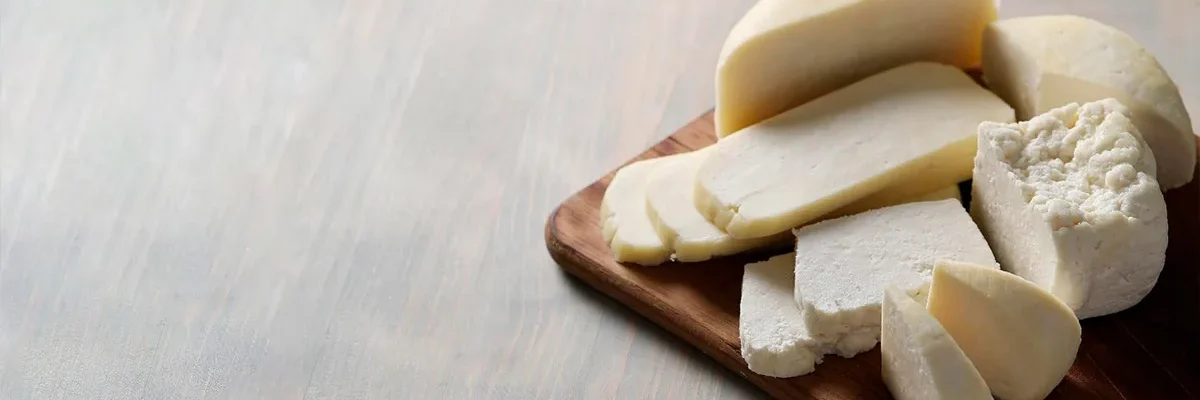
Among the cheeses known as queso de flor in the Canary Islands, probably the best known is Queso de Flor de Guía, or simply Queso de Guía. So, if you have ever heard a chef mention it or read a recipe featuring this delicious delicacy, now you know exactly which cheese it refers to.
Within Spanish gastronomy, the process of making and maturing cheese is one of the most notable, alongside ham and wine. Queso de flor from the Canary Islands is part of that list of irresistible delicacies that you should try and savour.
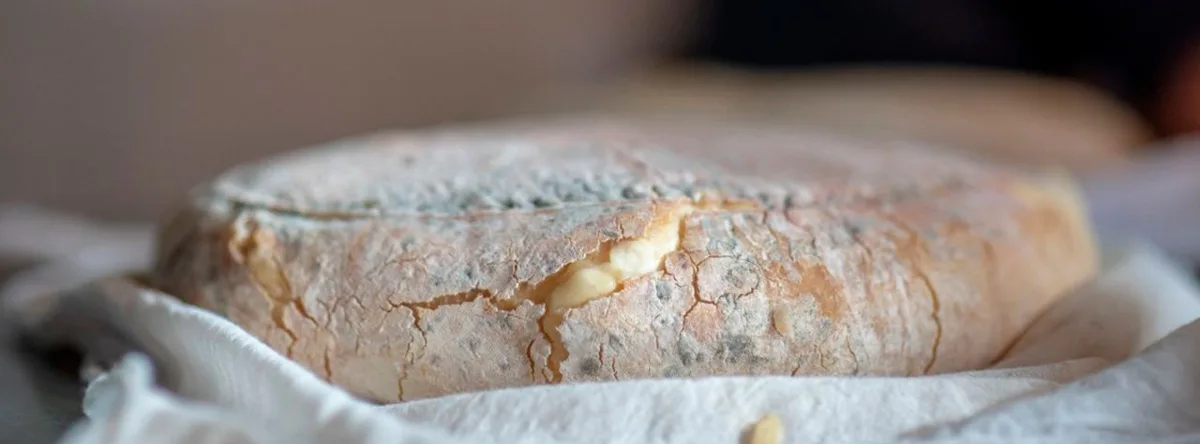
This product is 100% native to the Canary Islands, made with cow’s and sheep’s milk from the islands. It has a yellowish rind around the edges and a semi-fat or fatty texture that melts in the mouth with every bite.
Where is Queso de Flor Made?
Although there are also varieties in Fuerteventura and other islands, it is mainly in Gran Canaria where this 100% artisanal product is produced. So, if you are visiting Gran Canaria, you are very likely to find this wonderful product on the menus of traditional restaurants or in artisan shops.
It is mainly made in three municipalities located in the northwest of the island: Gáldar, Moya and Santa María de Guía. In each of these places, specialised producers carry out the entire process from scratch.
To see the whole production process in Santa María de Guía, you can visit La Casa del Queso, where they explain how queso de flor is made and invite you to enjoy a tasting of different varieties.
Origin of Queso de Flor
At the beginning of the 16th century, after the conquest by the Crown of Castile, many Portuguese and Extremaduran settlers arrived on the island of Gran Canaria. In both Portugal and Extremadura, cheese was made using the cardoon flower, which is used to curdle sheep’s milk. These new inhabitants taught the local population how to produce this type of cheese, using goat’s and sheep’s milk.
This is where the origin of queso de flor in the Canary Islands lies, together with its main denominations: Queso de Guía and Queso de Flor de Guía.
How Are the Varieties of Queso de Flor Prepared in the Canary Islands?
Queso de flor in the Canary Islands must be made with the best ingredients so that its flavour is truly exquisite.
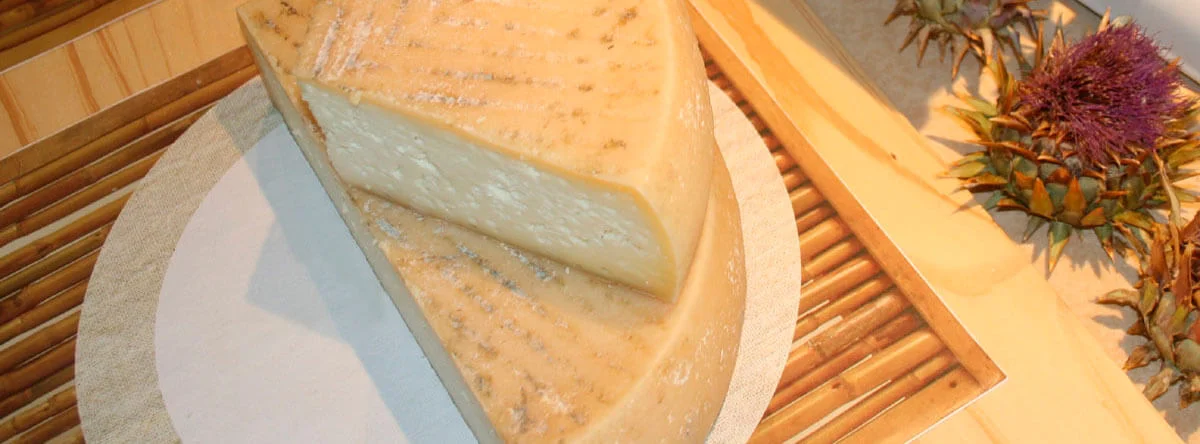
To achieve this, the cardoon flowers must not be dried after blooming in April and May; instead, producers must preserve them fresh. The exception is the Queso de Media Flor de Guía variety, which does use completely dried cardoon flower in its vegetable rennet.
In addition, the different varieties of queso de flor come from the combination of sheep’s and cow’s milk, with a height of 4 to 8 cm.
If there is one key distinction in the preparation of the three varieties, it lies in the proportion of cardoon flower. For example, the percentage of cardoon flower in Queso de Guía is less than 50%, while in Queso de Media Flor de Guía it is higher.
Protected Designation of Origin
Its intense flavour and traditional production process earned it the Protected Designation of Origin (P.D.O.) in 2010. This classification was requested in 2007, and three years later, Queso de Flor de Guía was recognised with this special distinction in the islands.
This factor is important because not every Canarian product becomes part of this certified category. To achieve it, Queso de Flor must pass certain controls established by the Canarian Institute of Agri-Food Quality (ICCA):
- Daily documentation of litres of cow’s and sheep’s milk.
- Counting the number of pieces of the different queso de flor varieties.
- Compliance with the organoleptic and physical characteristics stipulated in the P.D.O. regulations.
- Annual tastings of the different queso de flor varieties.
- The minimum values must be exceeded during analysis.
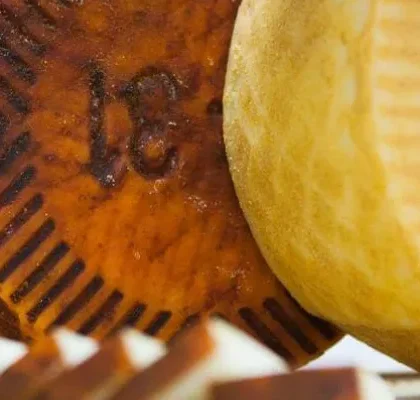
When queso de flor from the Canary Islands passes all the tests established by the ICCA, it receives numbered labels in lilac, green or brown. Depending on the variety, each one carries a specific colour.
If you are interested in identifying them, here is the label guide that will help you recognise which type of queso de flor from the Canary Islands it is:
- Lilac: corresponds to Queso de Flor de Guía.
- Green: Queso de Media Flor de Guía.
- Brown: Queso de Guía.
Many recipes have been created using the different varieties of queso de flor in the Canary Islands. If you take this delicacy home with you, you can prepare anything from gratinated artichokes, lasagne, quiche, salads or even combine it with fruit as a snack. Go ahead and try it!
Without a doubt, the Canary Islands have a unique gastronomy and local products as special as Queso de Flor de Guía, an authentic culinary treasure of Gran Canaria that is well worth discovering during your trip.
If you are thinking of visiting the island and enjoying its culture, gastronomy and landscapes, staying at one of the Lopesan Group hotels in Gran Canaria is the best option. In our accommodation, you can discover Canarian gastronomy, visit charming towns such as Santa María de Guía, explore the island’s interior and enjoy a complete holiday combining culture, nature, beach and the best gastronomic offer in Gran Canaria.