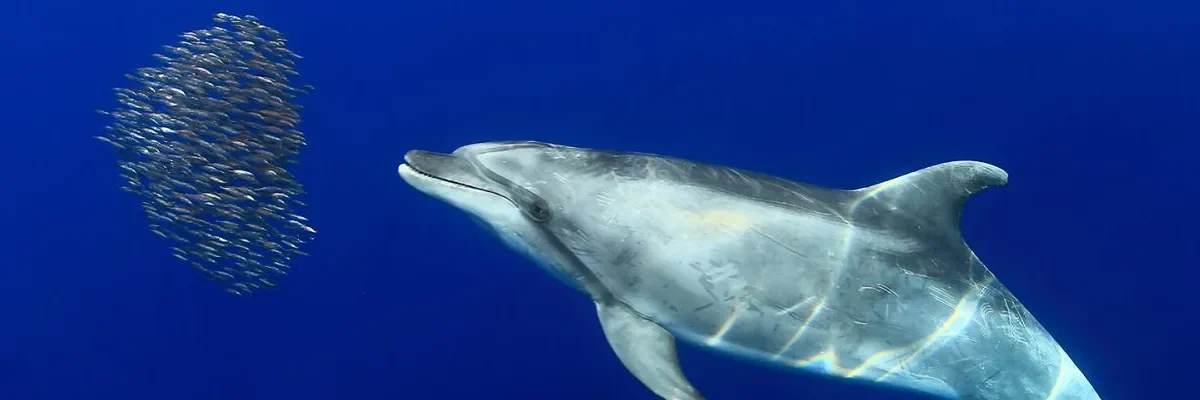
The waters surrounding Fuerteventura (and Lanzarote) are home to a third of the planet’s cetacean species, so this region is of vital importance for the feeding, reproduction, breeding and migration of these majestic marine creatures. Sperm whales, beaked whales, pilot whales and various species of dolphins find refuge in these waters.In addition to cetaceans, the marine fauna of Fuerteventura is also formed by other fish and marine animals. The island is characterised by its strong contrast between windward and leeward, which contributes to the diversity of species. The rocky beaches are home to burgados, limpets, majorero mussels and Moorish crabs, while the windward areas are rich in plankton, which favors greater biodiversity. This diversity makes Fuerteventura a key point for the conservation and study of numerous species.
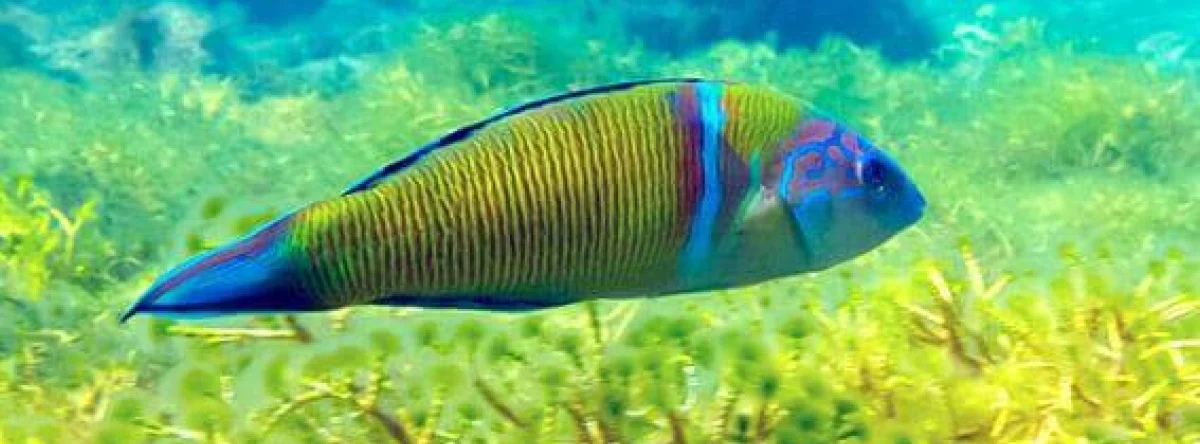
Coastal fauna of Fuerteventura
Fuerteventura’s coastal fauna is incredibly rich due to the region’s varied atmospheric and oceanographic conditions. The waters surrounding the island are an ideal habitat for many marine species, from small invertebrates to large fish and crustaceans.
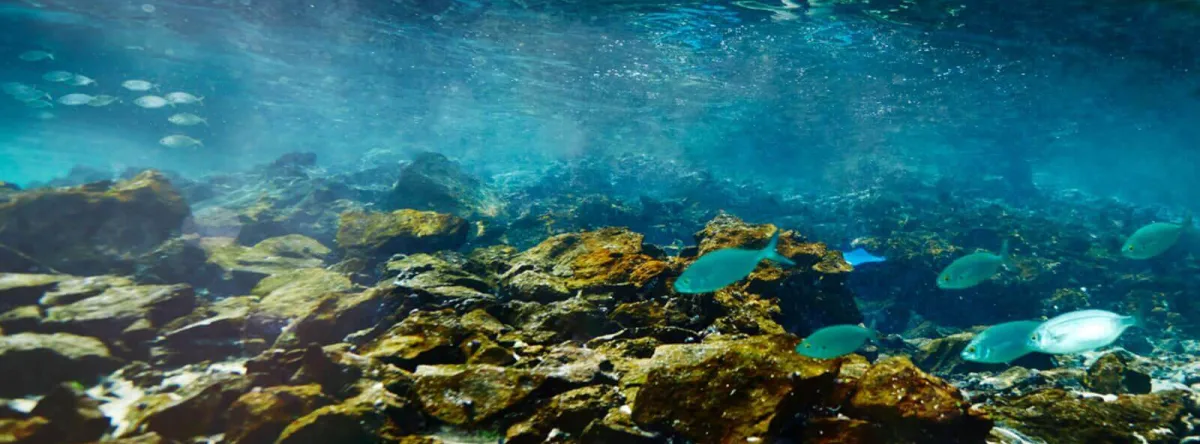
The difference between the windward and leeward areas, with their different exposures to wind and currents, favors the abundance and variety of marine life in Fuerteventura, which increases its attractiveness and the interest of marine life lovers. Let’s see some of the species that can be found in these waters:
Loggerhead sea turtle
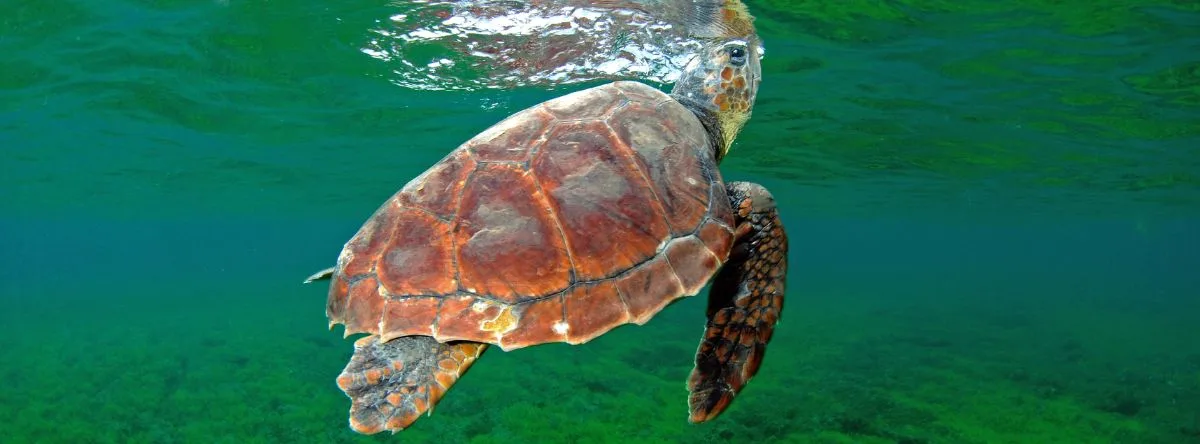
The loggerhead turtle (Caretta caretta) is a species that was once common on Fuerteventura’s coasts. However, due to heavy human pressure, these turtles stopped coming to the island to lay their eggs. Since 2006, efforts have been made to reintroduce this species to the island. Adult loggerheads, which can reach up to 90 cm in length and weigh around 135 kg, feed on crustaceans, molluscs, fish and jellyfish. This species can live up to 67 years, but is critically endangered due to high mortality at sea of both juveniles and adults.
Majorero mussel
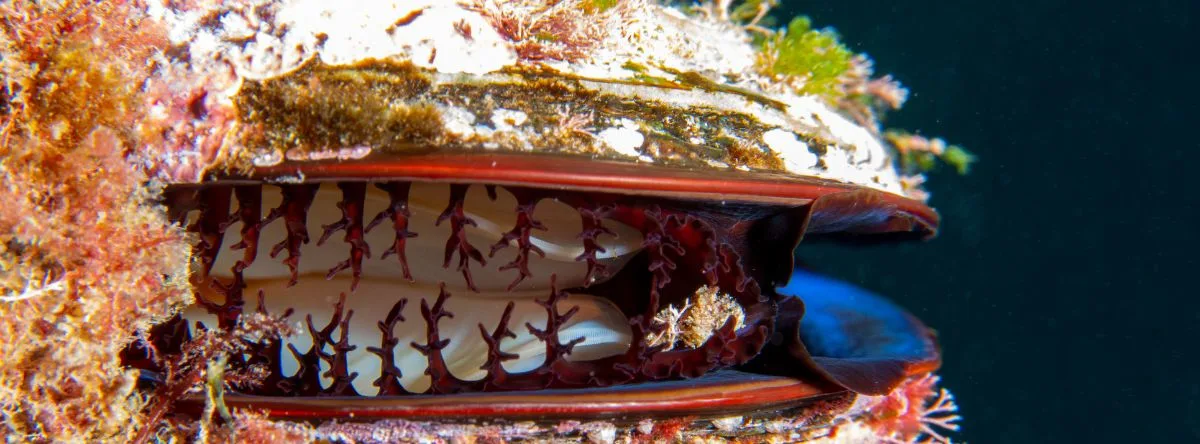
The Majorero mussel, scientifically known as Perna perna, is a brown bivalve mollusk found mainly on the Atlantic coasts of Fuerteventura. Its characteristic feature is that it forms dense clusters, especially on the windward coasts, where the oceanographic conditions are more severe and the winds are stronger.
Each Majorero clam reaches an average size of 9.5 cm. Its meat is highly prized and accounts for almost 40% of the total weight of the mollusc, especially during the reproductive stage (November and December). The Perna perna, also known as the Canary, Caribbean or Atlantic oyster, is protected by local legislation. Its extraction is prohibited throughout the island in order to preserve the population and ensure the conservation of the species.
Sea bream
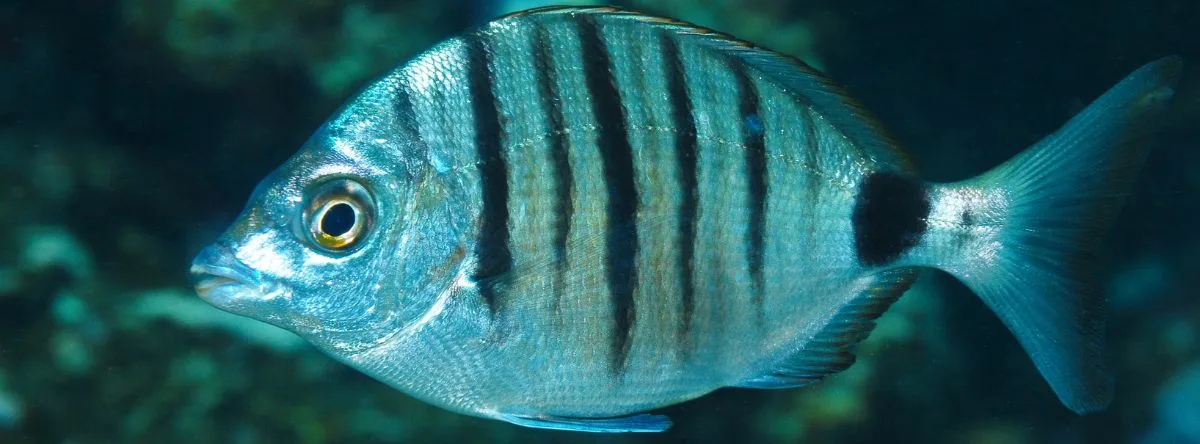
The sea bream is one of the most abundant fish along the coasts of Fuerteventura. It can reach up to 50 cm in length and weigh around two kilos. It is easily recognisable by its oval body, large and compressed, shiny silver-grey with black cross bands and a black spot on the tail. It prefers rocky bottoms, areas with seaweed and meadows of Posidonia oceanica and lives at depths between 0 and 30 metres. It is almost nocturnal, hiding in crevices and caves during the day and coming out to feed at dusk. It has a certain preference for areas with waves and rough waters.Omnivorous, their diet includes small invertebrates, crustaceans, worms, molluscs and algae. Sea bream are monoecious and their breeding season extends through spring and summer, when they form small schools to spawn.Their eggs are pelagic, meaning that they float and develop in the open waters of the ocean, away from the seabed and shore. After hatching, the young tend to stay in shallow waters near the coast. They can live up to 10 years and are an indicator of a healthy marine ecosystem. The minimum size for commercialisation is 22 cm, although specimens of 25 cm and half a kilo are common in the markets.
Black moray
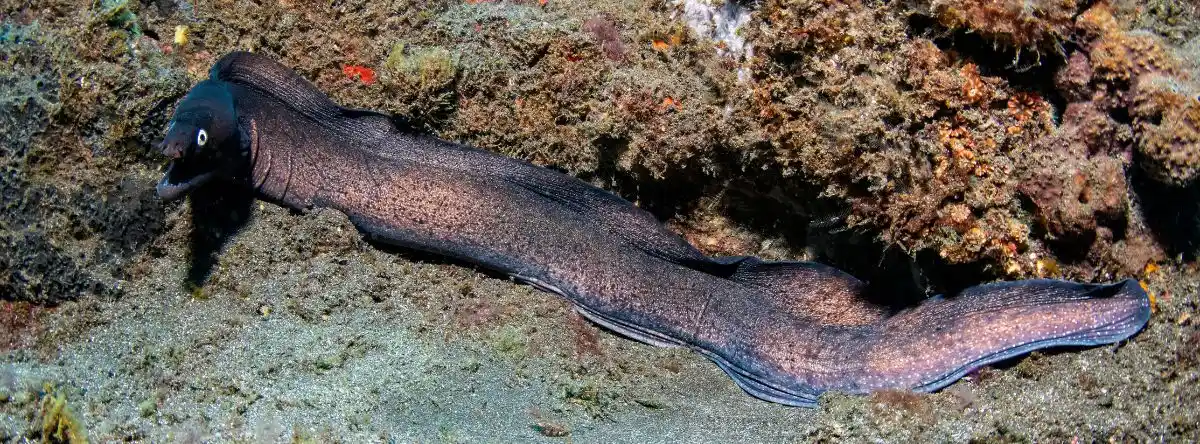
The black moray (Muraena augusti) is an anguilliform fish found in the coastal waters of Fuerteventura. It is characterised by an elongated, snake-like body with a hard, scaleless skin that is dark brown or black, giving it its common name. The black moray can reach 1.5 metres in length.
This nocturnal predator hides in crevices and caves in reefs and rocky areas during the day and comes out to hunt at dusk. Its diet consists mainly of fish, crustaceans and cephalopods. Despite their intimidating appearance and powerful jaws full of sharp teeth, black morays are not aggressive towards humans unless they feel threatened.
The black moray is fundamental to the marine ecosystem of Fuerteventura, as it regulates the populations of its prey and helps to maintain the ecological balance of its environment. The presence of this fish is a sign that the marine ecosystem is in good condition and well conserved.
Octopuses
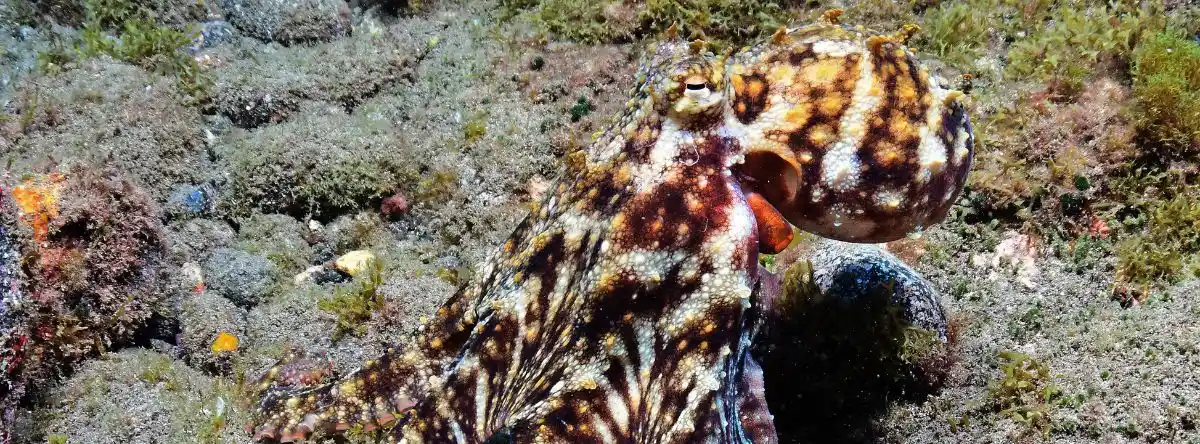
Octopuses, especially the common octopus (Octopus vulgaris), are prominent inhabitants of Fuerteventura’s waters. These cephalopods are known for their intelligence and their ability to camouflage themselves, which allows them to adapt easily to different marine environments.
With their soft, flexible bodies, octopuses can hide in the crevices and cavities of reefs and rocky bottoms during the day and come out to hunt at night. Their diet includes crustaceans, molluscs and small fish, which they catch with their eight powerful tentacles and suckers.The reproduction of octopuses is equally interesting: females lay thousands of eggs, which they care for until they hatch, at which point they die. Once hatched, young octopuses are completely independent.
Fauna you can see while scuba diving offshore
Grouper
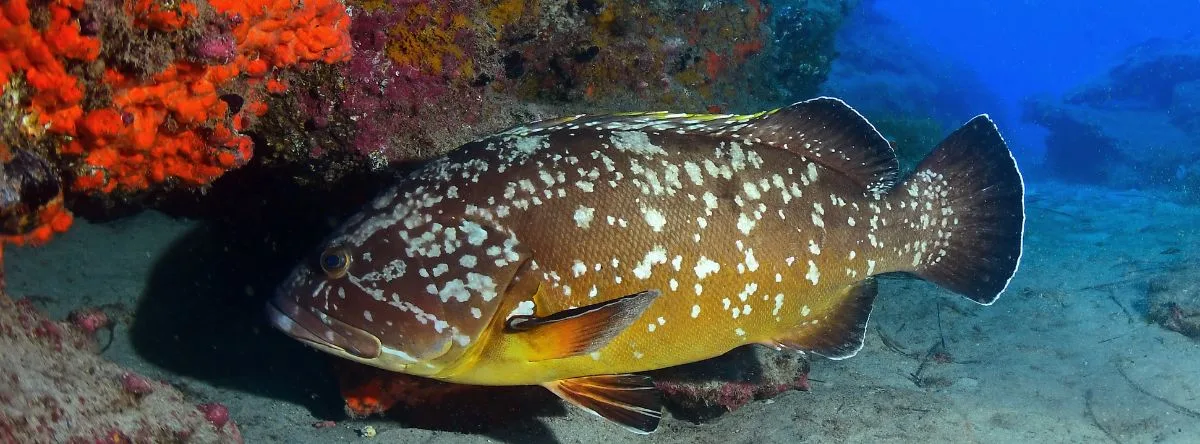
The grouper (Epinephelus marginatus) is one of the most impressive fish you can find diving off the coast of Fuerteventura. This fish, which can reach considerable sizes, has a robust body and a variable colouration that can include brown, green and yellow tones, often with spots. The grouper is a solitary predator that inhabits rocky bottoms and reefs, where it hides in caves and crevices.
Its diet consists of fish, crustaceans and molluscs caught with its powerful jaws. Known for their longevity, groupers can live for several decades and play a very important role in the marine ecosystem, controlling the populations of other species. Their presence is a good indicator of the health of the underwater environment.
Cherne
The cherne (Polyprion americanus), also known as the black grouper, is another characteristic fish that can be seen on offshore dives. With a robust body and a colouration that varies from grey to black, this fish inhabits deeper waters, preferring rocky bottoms and submarine canyons. It feeds on fish and cephalopods and its presence indicates a healthy and thriving marine ecosystem. Meeting this majestic fish is an unforgettable experience for divers and highlights the rich biodiversity of the island’s seabed.
With these few brushstrokes we have offered you on the marine fauna of Fuerteventura, you know what you have to do: look for accommodation in Fuerteventura and discover the magic hidden in its waters. At Lopesan Hotel Group we are waiting for you with our exclusive facilities and all the comfort you need. Come and visit us!