Vogtland Nature Park is part of the larger Erzgebirge/Vogtland protected area in south-west Saxony. This region of hills and low mountains is characterised by extensive forests, damp meadows, streams, small towns and villages, and walking trails through some of the greenest landscapes in this part of Germany.
There’s plenty of variety to discover. Within just a few miles, you’ll come across forest paths lined with fir trees, peaceful valleys, reservoirs, viewpoints and reminders of the mining heritage that has shaped the region for centuries. You’ll also find long-distance walking trails, including the Kammweg Erzgebirge-Vogtland and Vogtland Panorama Weg, alongside shorter routes that you can explore in just a few hours.
In this article, we’ll explore the landscapes you’ll find in Vogtland Nature Park, the walking routes you can follow, how the area changes throughout the year and the activities you can enjoy during your stay in Vogtland.
Where is Vogtland Nature Park?
Vogtland Nature Park is located in south-west Saxony, within the Erzgebirge/Vogtland protected area. It covers the middle elevations of the Vogtland region and stretches towards the higher reaches of the Ore Mountains, close to the Czech border.
Its location helps explain much of the scenery. Although this isn’t a high mountain region, you’ll find rolling hills, extensive forests, valleys, streams and small villages scattered along country lanes. Schöneck, Klingenthal, Markneukirchen and Bad Elster are useful places to get your bearings and combine time in nature with local culture and outdoor activities.
If you’re planning to explore the region, it’s worth knowing that the park makes a good starting point for discovering other nearby attractions. For more ideas, take a look at our guide to things to do in Vogtland.
What landscapes will you find in Vogtland Nature Park?
Vogtland Nature Park is home to some of south-west Saxony’s most distinctive scenery. Mountain forests, open meadows, streams, wetlands and small villages are scattered among gently rolling hills. Rather than having one main attraction, much of the park’s appeal lies in exploring the countryside and discovering how the landscape changes along the way.
Forests cover a large part of the park, and many walking trails lead through them. Some paths wind between fir trees, while others open out onto mountain meadows, hedgerows, fields and natural viewpoints. This changing scenery, where woodland meets the rural landscape, is one of Vogtland’s most recognisable features.
There’s plenty of water scenery to discover too. Mountain streams, damp valleys and areas of peat bog create a cooler, greener landscape that feels quite different from other inland parts of Saxony. You’ll also find traces of the region’s mining heritage, including former extraction sites, historic tunnels and cultural landmarks that connect today’s landscape with the history of Erzgebirge and Vogtland.
Walking routes in Vogtland Nature Park near Schöneck
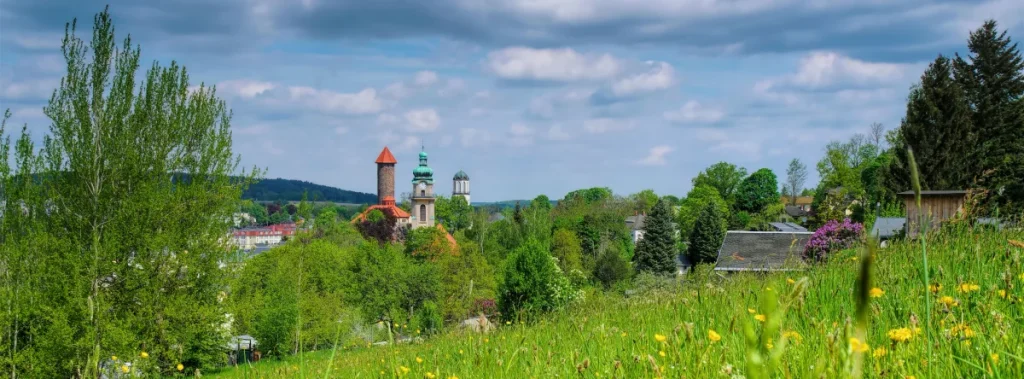
Around Schöneck and Muldenberg, you’ll find short walks and half-day routes along marked trails, through woodland and beside stretches of water. Some paths pass close to Hohe Reuth and IFA Schöneck Hotel & Ferienpark, although they don’t all start at the hotel. So, if you’re looking for hotels in Vogtland for your holiday, proximity to these trails could be a useful consideration when choosing where to stay.
Here are a few walking routes to consider:
- Kinderwanderweg Eckis Naturlehrpfad – An easy 2.6 km circular trail around Schöneck, with information boards and activity stations dedicated to woodland and nature. The route is suitable for pushchairs and designed with families in mind.
- Barrierefreie Wanderung um die Muldequelle – An accessible 3.8 km circular route around the source of the Rote Mulde. It starts at Schöneck railway station and takes approximately one hour and 15 minutes.
- Kinderwanderweg Moosmännleinspuren Schöneck – A 4.7 km circular walk starting at the Schöneck tourist information office. Along the way, children can enjoy play areas, activities and puzzles.
- Von Schöneck nach Muldenberg – A 6.3 km linear route following part of the Kammweg to Muldenberg. Once you reach the reservoir, you can walk along the dam wall. The estimated walking time is one hour and 35 minutes.
- Rolli-Tour zur Talsperre Muldenberg – A 7.4 km circular route starting in Meiler, passing Neuwaldteich and crossing the foredam of Muldenberg Reservoir. Allow approximately two and a half hours.
- Winterwanderweg zur Vorsperre Muldenberg – An easy 8 km circular winter walking route towards the Muldenberg foredam, with an estimated duration of two hours.
- Wanderung 1 – Innerer Ringweg – An 11.1 km circular route descending from Schöneck towards Schilbach before returning via Bockmühle and the lower chairlift station. Rated moderately difficult, it takes approximately two hours and 55 minutes.
- Wanderung 2 – Äußerer Ringweg – A challenging 15.6 km circular route around Schöneck, with 254 metres of ascent and an estimated walking time of four hours.
With so much choice, you can enjoy anything from gentle family walks and waterside trails to longer hikes lasting several hours during your stay in Vogtland.
Lakes and waterside scenery in Vogtland
Many walking and cycling routes in Vogtland take you past reservoirs, streams and small dams. The area around Schöneck and Muldenberg offers several places to stop by the water, whether you’re exploring on foot or by bike.
Near Schöneck, Muldenberg Reservoir (Talsperre Muldenberg) is one of the most accessible places to visit. Several walking and cycling routes pass through the surrounding area, where you’ll find forest paths, places to rest and views across the reservoir. Neuwaldteich also features on some of the shorter routes around Hohe Reuth.
Beyond Muldenberg, Vogtland has other lakes and reservoirs where you can enjoy walks, cycle rides or short stops during a day exploring the region. For more ideas, take a look at our guide to the lakes of Vogtland.
Wildlife, plants and protected habitats
Vogtland Nature Park protects a wide variety of habitats within a relatively compact area. Mountain forests, damp meadows, streams, small dams, peatlands and farmland all form part of a landscape still closely connected to traditional land use.
These habitats support woodland and freshwater wildlife, including kingfishers, Eurasian pygmy owls and the freshwater pearl mussel, a river-dwelling mollusc that is particularly sensitive to water quality. The area’s meadows and mountain habitats are also home to plants such as orchids, gentians, arnica and fire lilies.
Vogtland Nature Park in winter
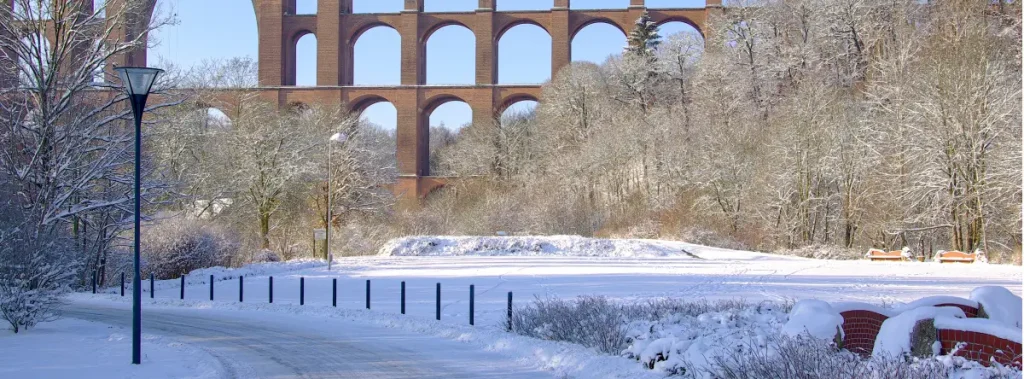
In winter, Vogtland Nature Park offers snow-covered walking trails, cross-country skiing routes and small downhill skiing areas with lifts. Schöneck and Klingenthal are among the main centres for winter activities, with marked routes, access to ski slopes and facilities for snow sports.
Around Schöneck, you’ll find winter walking routes towards Muldenberg, including Vorsperre Muldenberg, a foredam situated upstream of the main reservoir. There are also dedicated cross-country skiing trails, a familiar feature of this higher part of Vogtland during the winter months.
Klingenthal has a strong connection with winter sports, particularly ski jumping and Nordic combined. Vogtland Arena is one of the area’s best-known sporting venues.
The Kammloipe Erzgebirge/Vogtland is another highlight of the park’s winter trail network. This cross-country skiing trail links Vogtland with the Ore Mountains, taking skiers through snow-covered forests, mountain villages and upland scenery.
Best time to visit Vogtland Nature Park
Vogtland Nature Park changes considerably with the seasons, so the best time to visit depends on the kind of trip you have in mind. Spring and summer are lovely times for walking, cycling and spending time beside lakes and reservoirs. The days are longer, trails are generally easier to access and the meadows and woodlands are full of colour.
Autumn is another wonderful season for exploring the park. Forests turn golden and red, temperatures are often pleasant for walking and the trails feel quieter than during the height of summer.
In winter, Schöneck and Klingenthal become particularly appealing when snow arrives. It’s a good time for winter walks, cross-country skiing and enjoying the smaller ski areas, provided conditions allow. If you’d like to choose your travel dates more carefully, take a look at our guide to the weather in Vogtland before planning your stay.
Where to stay when exploring Vogtland
If you’re planning to explore Vogtland Nature Park, choosing the right base can help you make the most of your time in the region. Schöneck is close to short walking routes, cycling trails, woodland areas and winter activities, making it a convenient place to spend several days without having to travel long distances.
This is where you’ll find IFA Schöneck Hotel & Ferienpark, a three-star hotel suited to families, couples and active travellers. It offers a practical base for exploring the surrounding area, with opportunities to relax after a walk and the flexibility to combine nature, leisure activities and quieter moments throughout your stay.