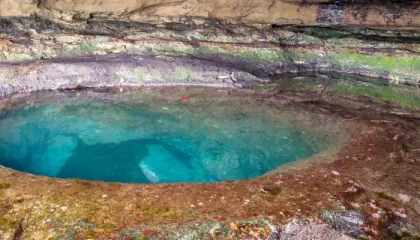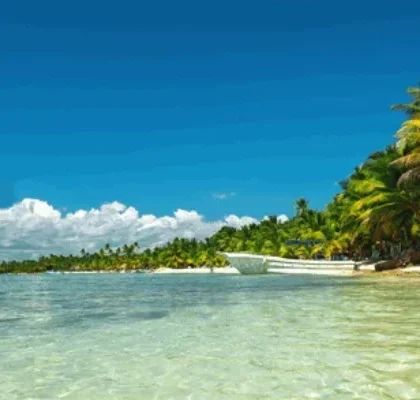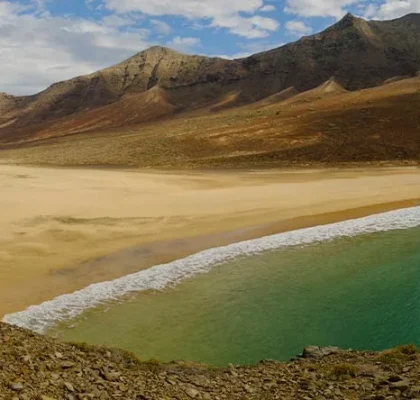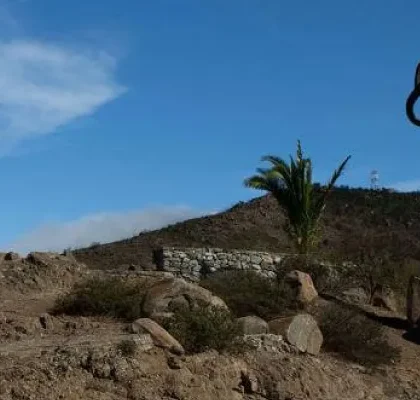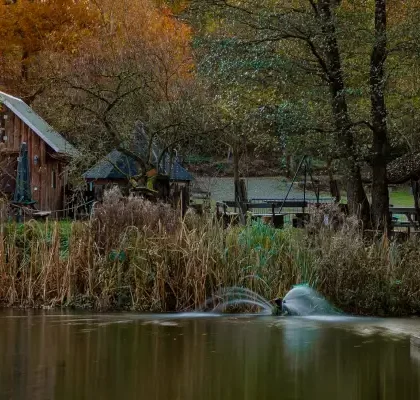
Although most travellers arrive in search of the turquoise blue of its coastline, the country’s richness extends far beyond the sand. The nature in the Dominican Republic is among the most diverse in the Caribbean. Its landscape ranges from desert-like dunes to tropical rainforest and peaks rising above three thousand metres. Exploring these environments reveals every side of an island that offers both relaxation by the sea and a sense of untamed adventure.
This diversity is organised through a network of protected areas that runs across the country and shapes its natural character. National parks, reserves and areas of special interest form a varied map, where ecosystems exist within short distances of one another. Visiting them does not require long journeys, but it does offer a different way of understanding the destination, beyond the coastline and with a clear focus on the landscape.
National parks in the Dominican Republic
The country’s commitment to its natural environment is reflected in a network of protected areas that cover nearly a quarter of its territory. National parks in the Dominican Republic act as sanctuaries where diverse ecosystems coexist, often sheltering species found nowhere else in the world.
If you are looking for nature tourism in the Caribbean, you will find options for every preference. There are gentle walks through coastal mangroves as well as demanding routes across the Cordillera Central. Each park has its own identity and offers a different perspective on Dominican geography, allowing you to connect with the island’s most untamed side.
Los Haitises National Park
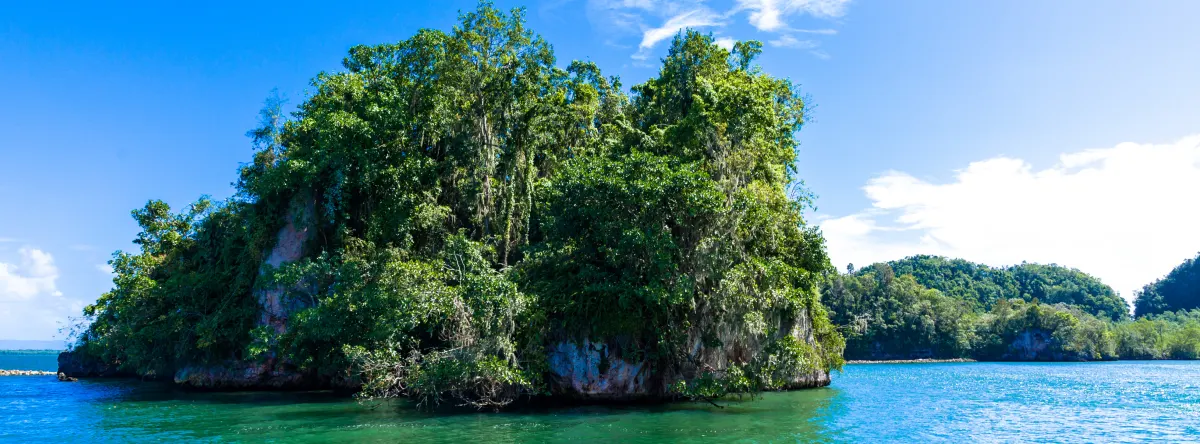
Located in Samaná Bay, Los Haitises is one of the most visited parks for tourism in the Dominican Republic. Its name, which in the Taíno language means “highlands” or “mountainous land”, refers to its unique geological formation: a series of karst formations known as mogotes rising from the water and covered in dense vegetation.
The best way to visit is by boat, navigating through its extensive mangroves and exploring caves that contain original pictographs and petroglyphs from the island’s early inhabitants. Beyond its historical value, it is a key destination for nature tourism in the Caribbean, providing refuge for a wide variety of bird species, including pelicans and frigatebirds, which nest on the small cays scattered along the coast.
Cotubanamá National Park
Cotubanamá National Park (formerly Parque Nacional del Este) is the main guardian of biodiversity in the southeast. Its significance lies in being one of the few places where tropical rainforest reaches the very edge of the sea, creating an essential biological corridor for many species. It is home to the royal palm and endangered species such as the Caribbean manatee, which finds shelter in its coastal lagoons.
Its limestone terrain has also led to the formation of a network of caves that function as natural museums, preserving rock art that tells the story of the indigenous chiefdoms that once ruled this region before the arrival of Columbus.
Pico Duarte and the heart of the Cordillera Central
If you thought nature in the Dominican Republic was limited to the coast, Pico Duarte will change your perspective. At 3,087 metres, it is the highest point in the Caribbean. Here, tropical landscapes give way to dense pine forests and temperatures that can drop below zero in winter.
Reaching the summit is a key experience for those who want to discover the country’s mountainous side. Routes begin in Jarabacoa and cross José Armando Bermúdez National Park. It is a demanding but rewarding journey, where the silence of the mountains and panoramic views of the entire range offer a perspective of the island that few travellers experience.
Lake Enriquillo and Cabritos Island
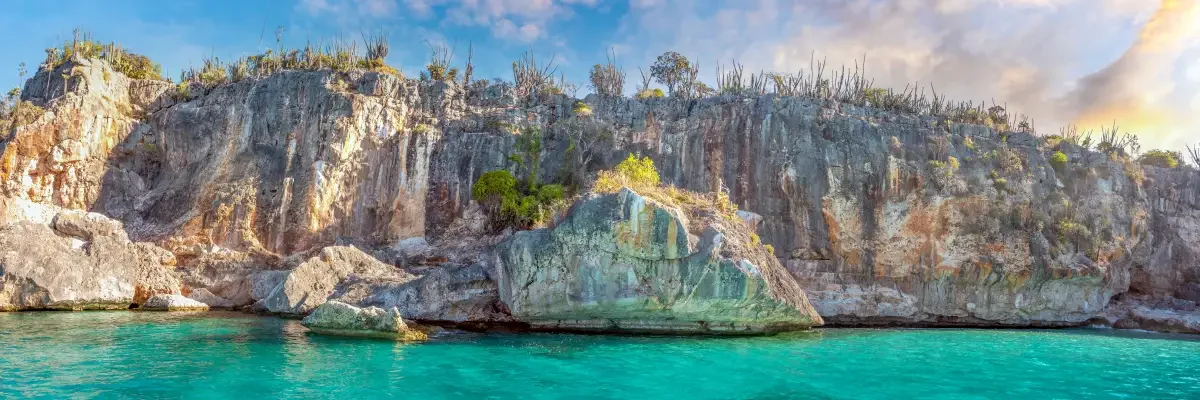
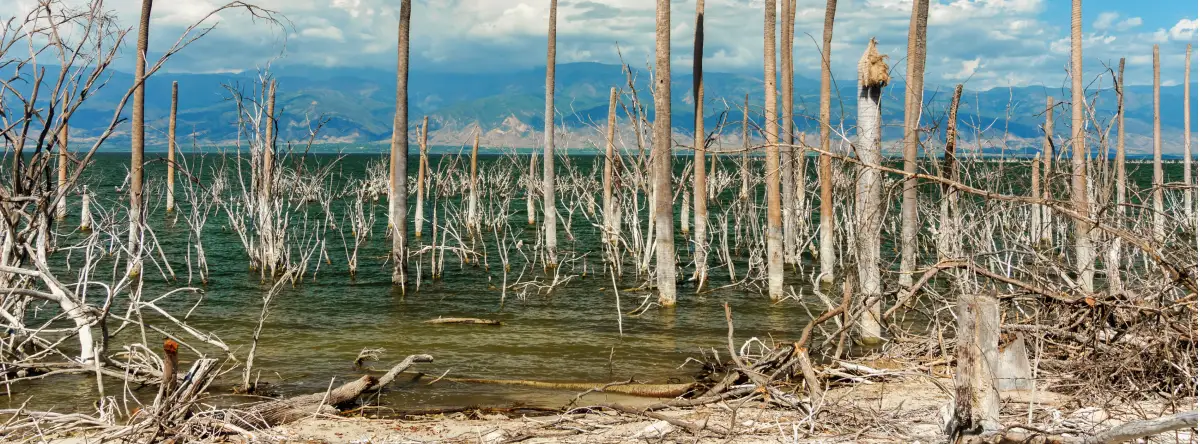
In the southwest lies one of the most striking natural areas in the Dominican Republic. Lake Enriquillo is the remnant of an ancient marine channel and sits around 40 metres below sea level. The landscape here is dry and stark, with cacti and bare trees emerging from the saltwater, creating an almost prehistoric scene.
It is an ideal place to observe wildlife that cannot be seen elsewhere on the island. On Cabritos Island, located at the centre of the lake, American crocodiles and two species of land iguana coexist, notable for their size. Flamingo colonies can also be found along the shores, making this a key stop for photography enthusiasts.
Tips for visiting national parks on the island
If you plan to leave the resort to explore the nature of the Dominican Republic, bear in mind that climate and terrain can vary significantly.
- Footwear and clothing – If you are hiking through rainforest or mountainous areas, wear closed shoes with good grip and breathable clothing. At Pico Duarte, remember that temperatures drop sharply at night.
- Official guides – In most national parks in the Dominican Republic, hiring a certified local guide is required or strongly recommended. They ensure safety and help you notice wildlife and plant species that you might otherwise miss.
- Respect for the environment – These are protected areas. Do not take shells, stones or plants, and make sure you leave no trace of your visit to help preserve this Caribbean heritage.
After exploring the nature of the Dominican Republic, Lopesan hotels in Playa Bávaro, Lopesan Costa Bávaro Resort, Spa & Casino, Lopesan Caoba Lagoon Resort, Spa & Casino, Lopesan Serenity Bay Resort, Spa & Casino and Lopesan Splash Cove Resort, Spa & Casino, maintain that connection with the environment thanks to its privileged location in Playa Bávaro, as well as providing access to a magnificent private Beach Club.